

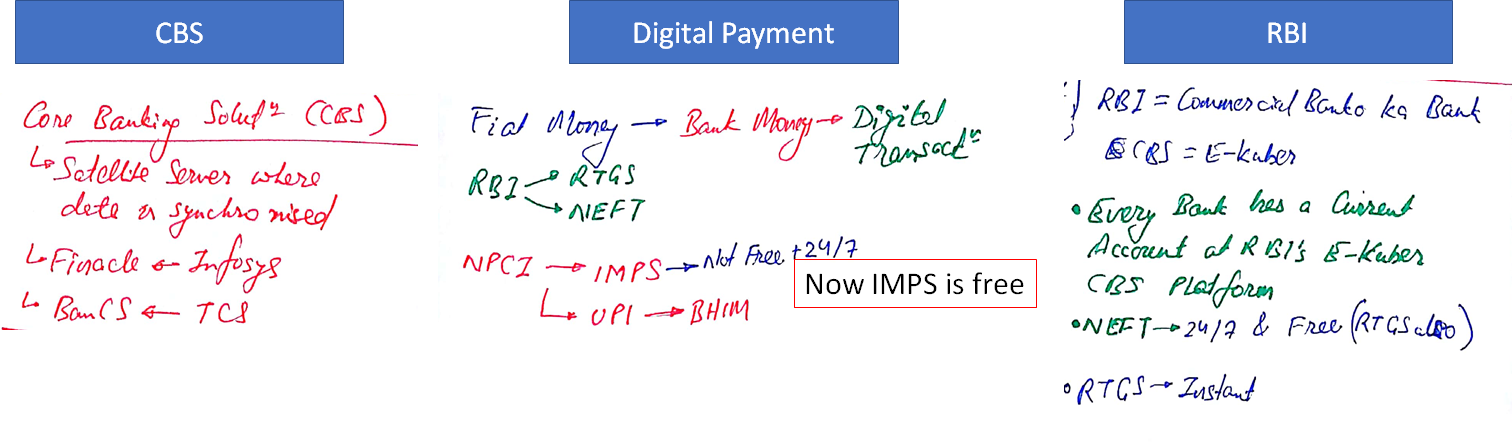
Digital payments
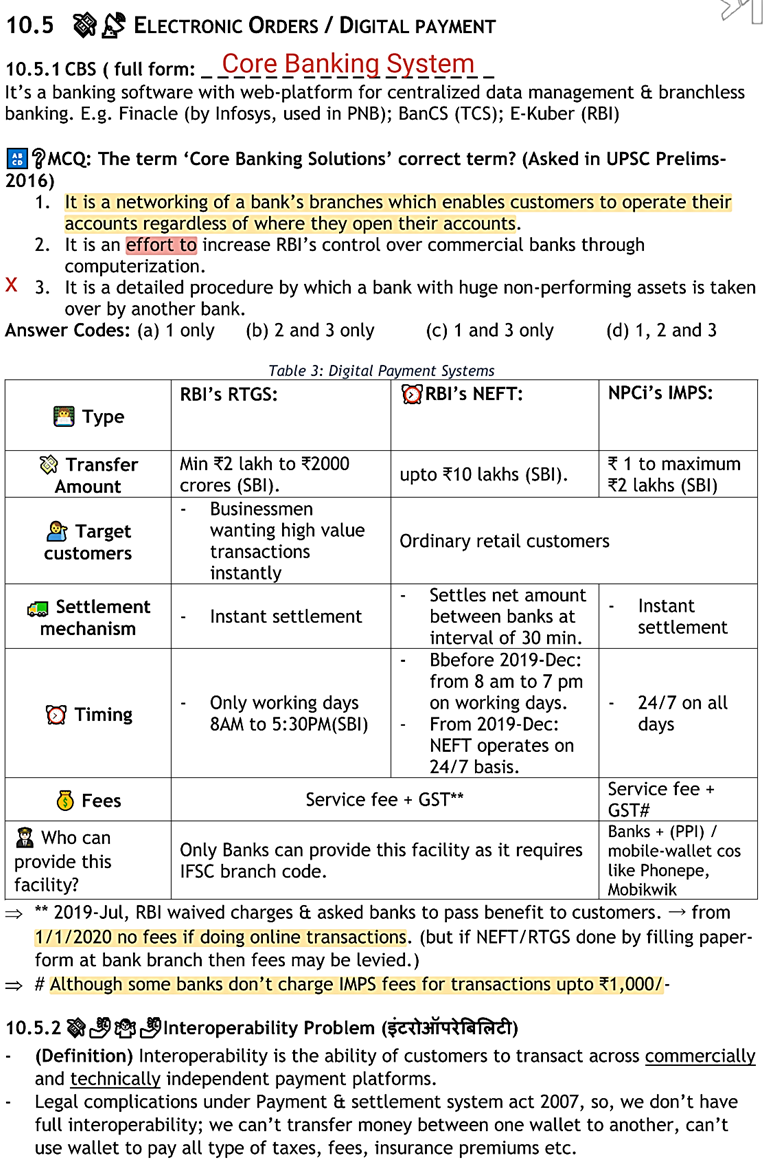
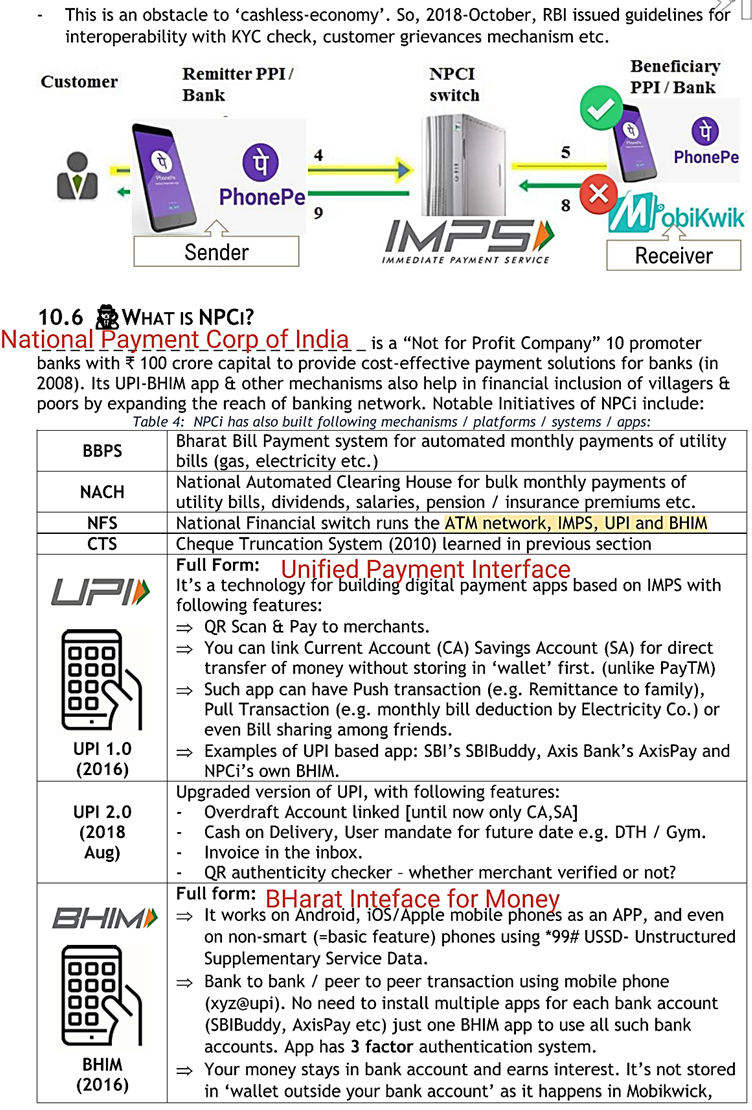
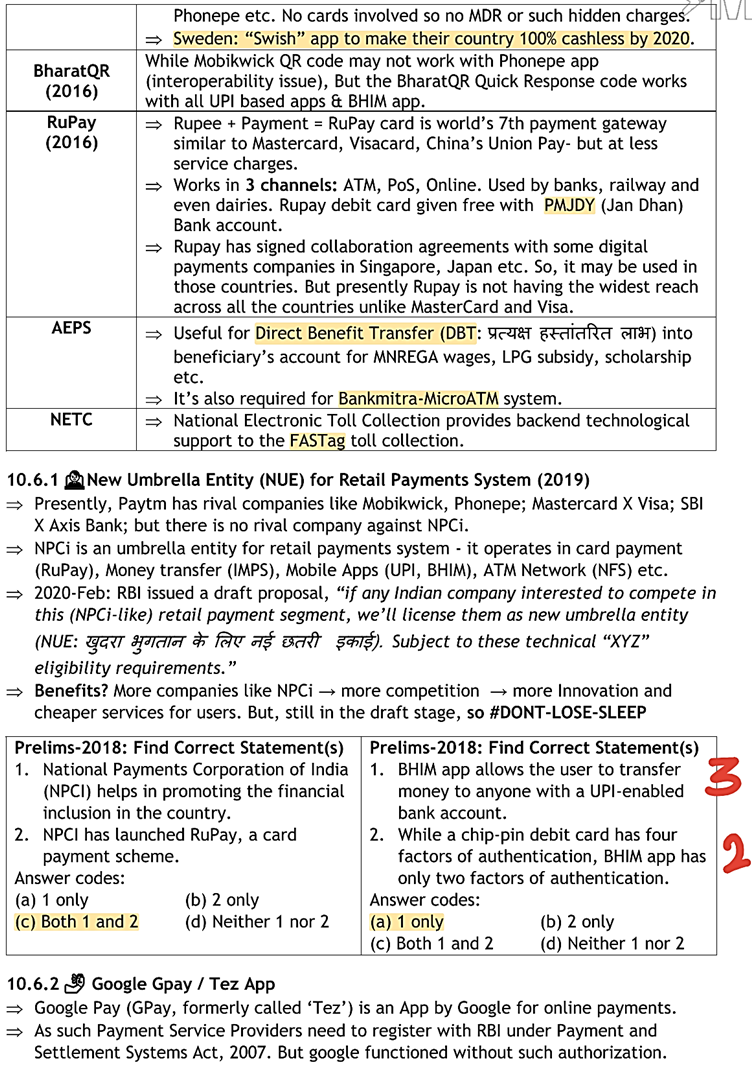

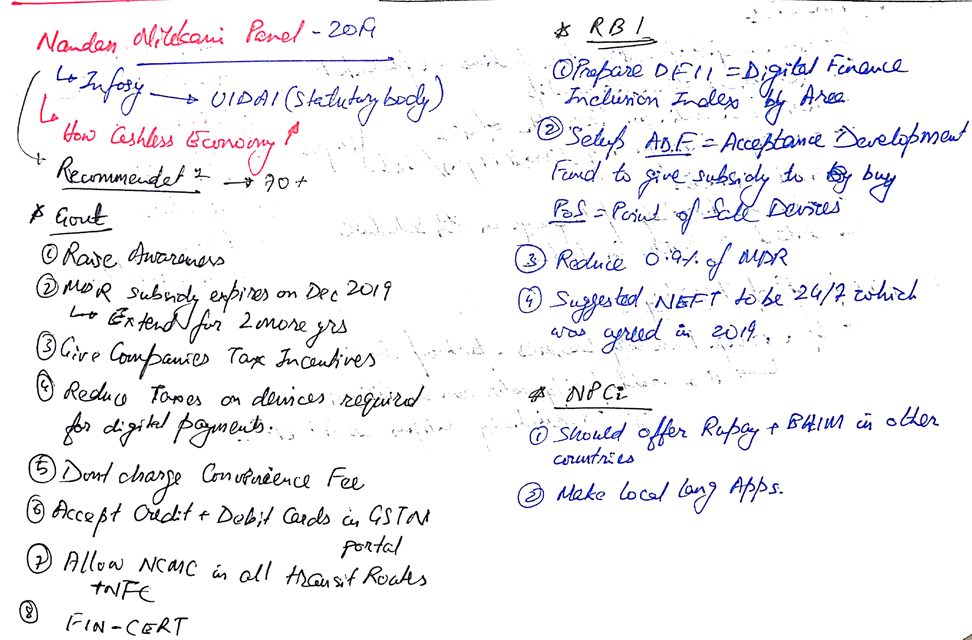
🚕 FASTag for paying toll fees at highways (2017)
FASTags are prepaid rechargeable tags that allow for automatic toll collection at
electronic toll collection gates Radio-frequency Identification (RFID)technology.
✓ 2013 onwards Govt required vehicle manufactures to install RFID tags on windscreens.
✓ 2017: National Highways Authority of India (NHAI= statutory body under Highways
ministry) launched 2 mobile apps MyFASTag and FASTag Partner to facilitate
Electronic Toll Collection (इलेक्ट्रॉनिक पथकर/टोल वसभल ).
✓ FASTag is vehicle specific and once it is affixed to a vehicle, it cannot be transferred
to another vehicle.
✓ NPCi’s has National Electronic Toll Collection (NETC) provides technological support.
✓ Highways Ministry is also trying to bring inter-operability of the
FASTags i.e. single FASTag can be used for paying ₹
- at State Highways Toll Plaza (under State Governments’ purview) as well as
- at National Highways Toll Plaza (under Union Government’s purview).
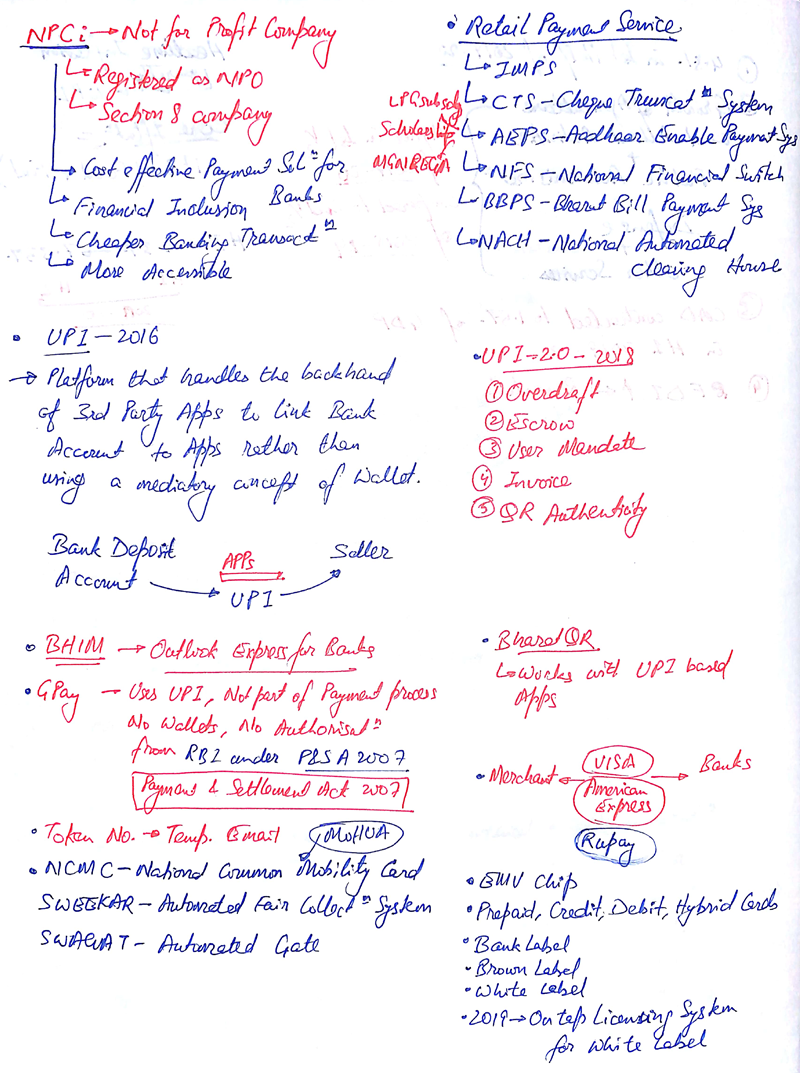
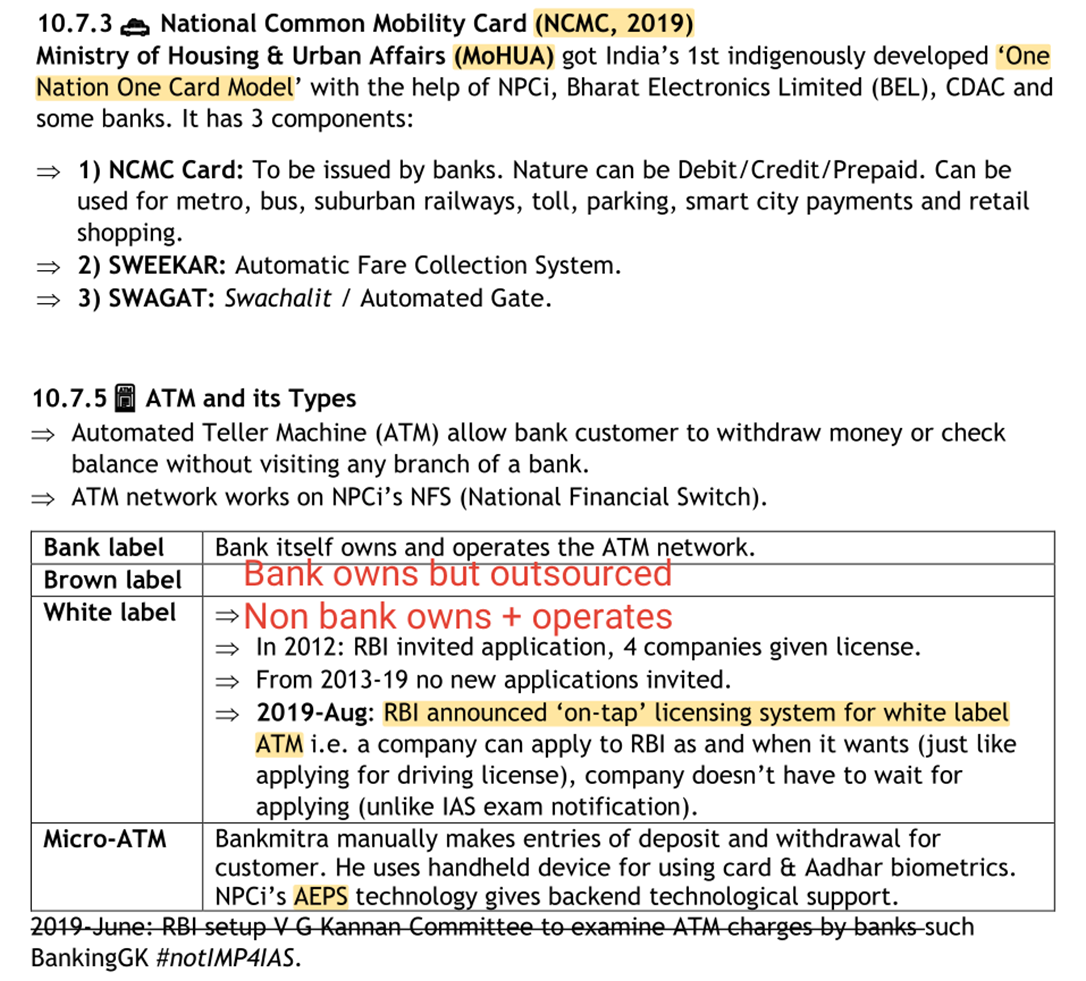
💳 Card Types based on Security Features:
- Magnetic Card: 60s technology. Data on magnetic strip. But, such data can be
duplicated, cloned, skimmed while swiping the card = fraud. So, RBI stopped such
cards from 1/1/2019 using powers under Payment & Settlement Act. - EMV card= Europay, MasterCard, and Visa chip
infrastructure with encryption. RBI had ordered migration in 2013– finally effective
from 1/1/2019. Two sub-types
o (A) EMV-Contact: cards must remain in Point of Sale (PoS) Terminal during
transaction.
o (B) EMV-contactless cards: simply tap the card on terminal using RFID (radio-
frequency identification) technology. HomeWork: Read about RFID & NFC from
Sci-Tech book/internet.
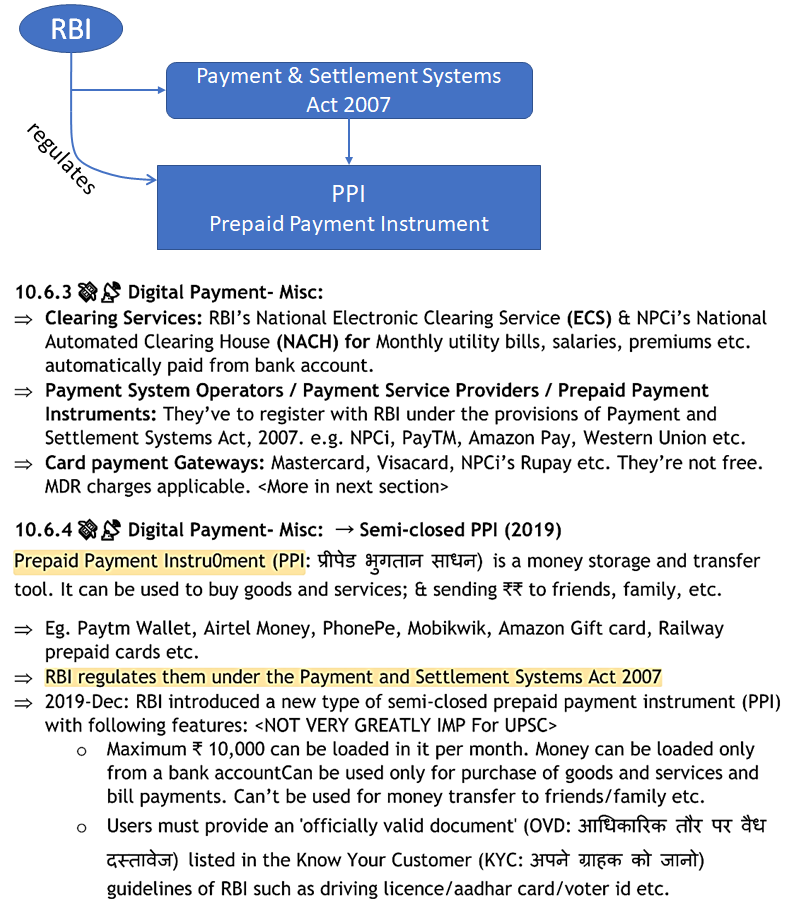
📧 Card Tokenization
Amazon, Paytm & other sites / app allow users to store their card information (owner’s
name, card number, expiry date) so next transaction can be finished faster without
having to re-type those details.
But such facility also exposes customer to hacking, privacy, identity theft, misuse so,
Tokenization = Token number is generated for a given credit/debit card.
Card customer gives the token number during any type of online / physical shop
transaction → so his original card number, its expiry date etc. are masked/hidden
from the third party seller / wallet / app / portal = more security and privacy. RBI
released guidelines in 2019-Jan.
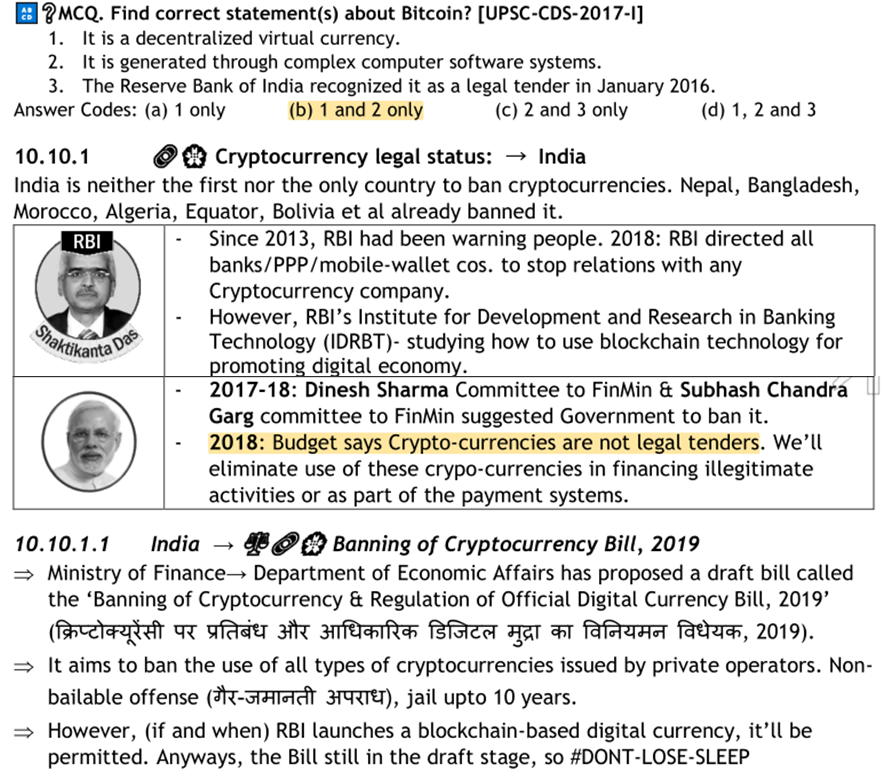
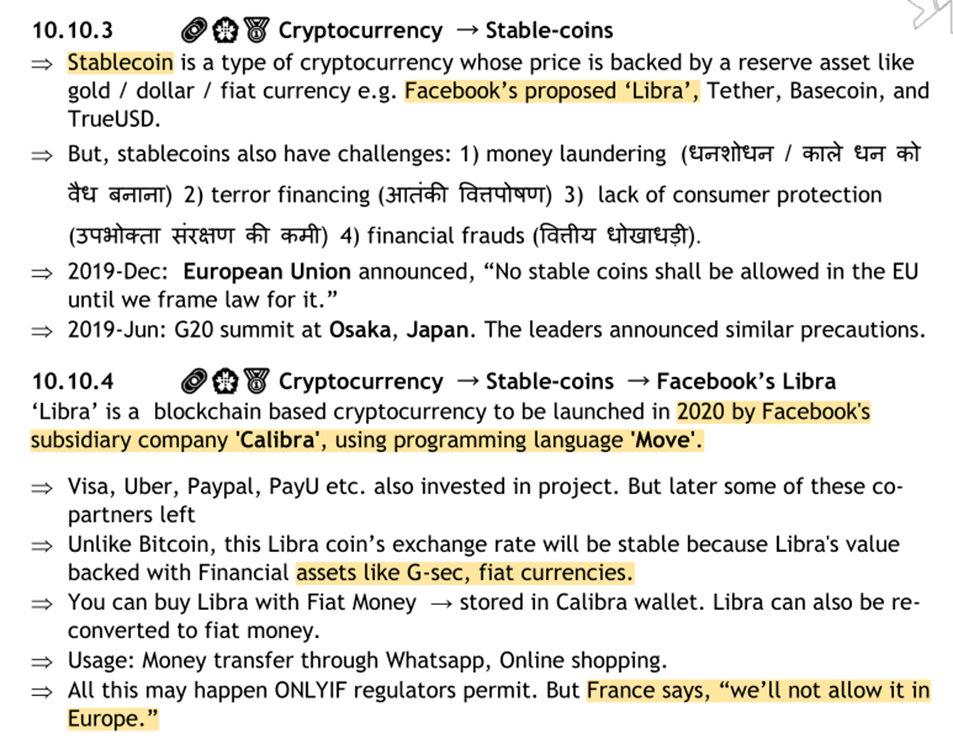
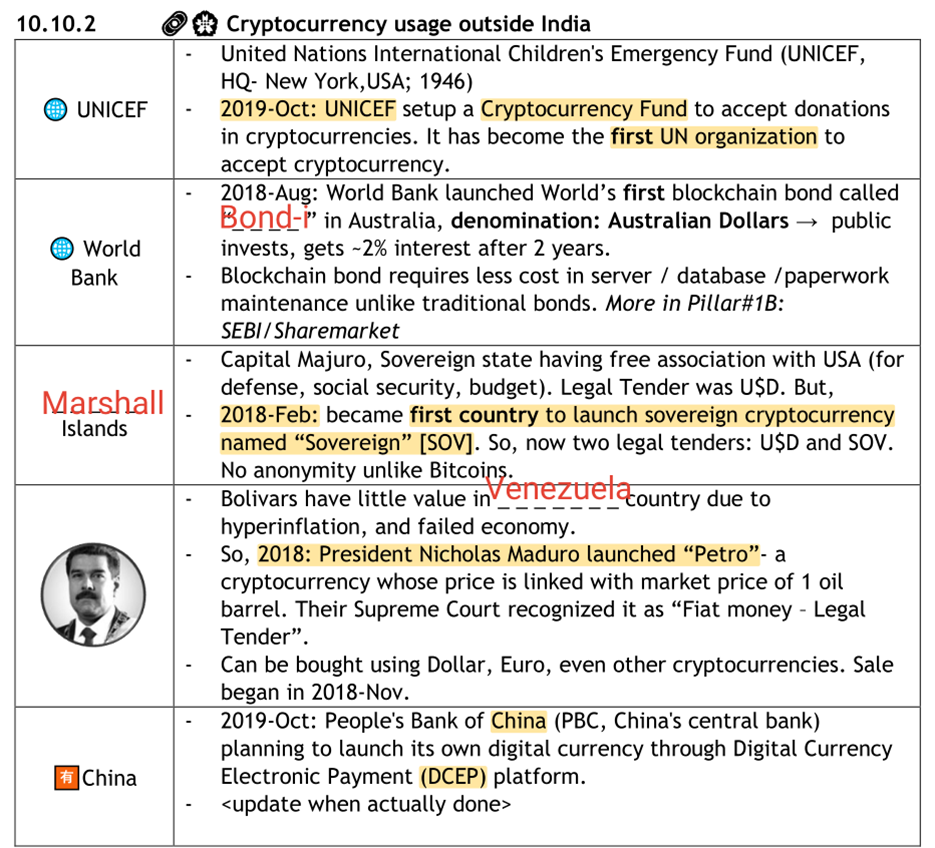
SC–> struck down the “April 6, 2018 circular” of RBI of India. The circular has stopped crypto-currency traders and exchanges from accessing the banking system.
SC held that an outright ban on cryptocurrencies would be a disproportionate measure by the GOI.
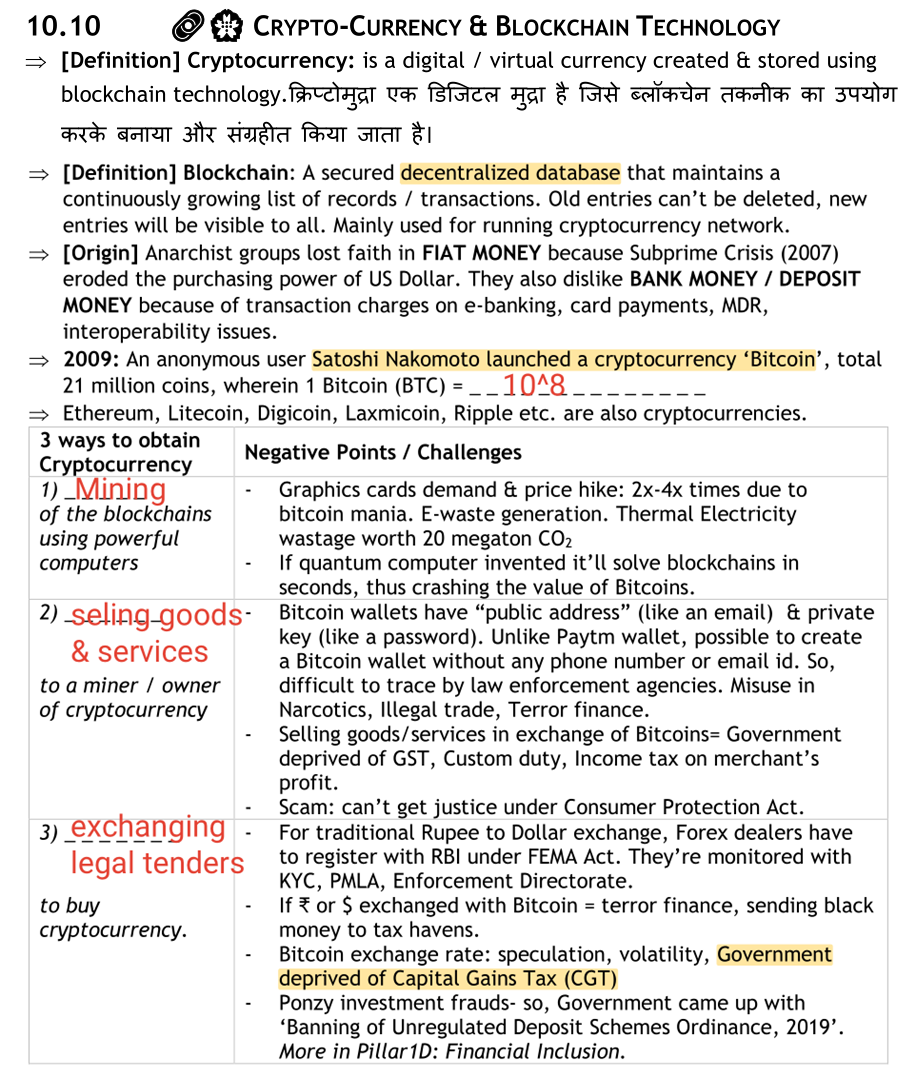
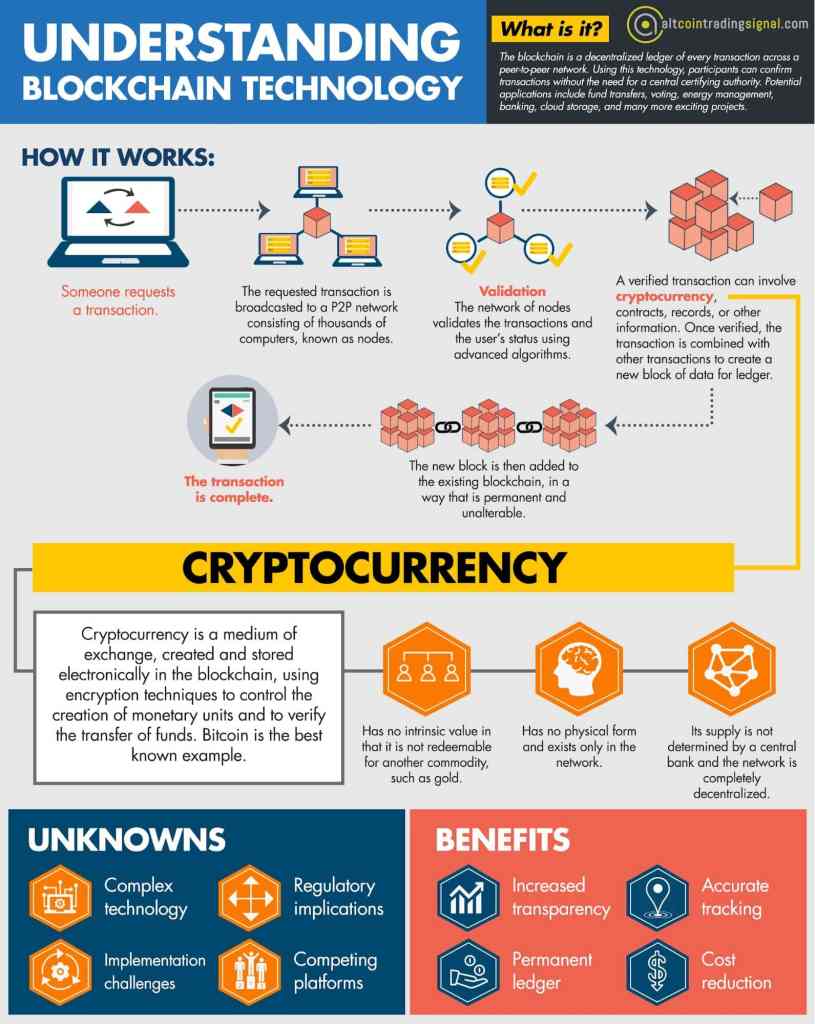
Certainly given a fillip to crypto-currency. The decentralised nature and lack of regulation make the management of cryptocurrencies.
There is a need for regulating crypto-currency exchanges, which will provide robust information sharing and coordination mechanisms between regulators and enforcement agencies within and outside the countryhallenging, owing to the anonymity of users and lack of central authority.
Licensed crypto-currency exchanges can also help in the implementation of anti-money laundering (AML) and terrorism financing (CFT) laws.
 MY BOX