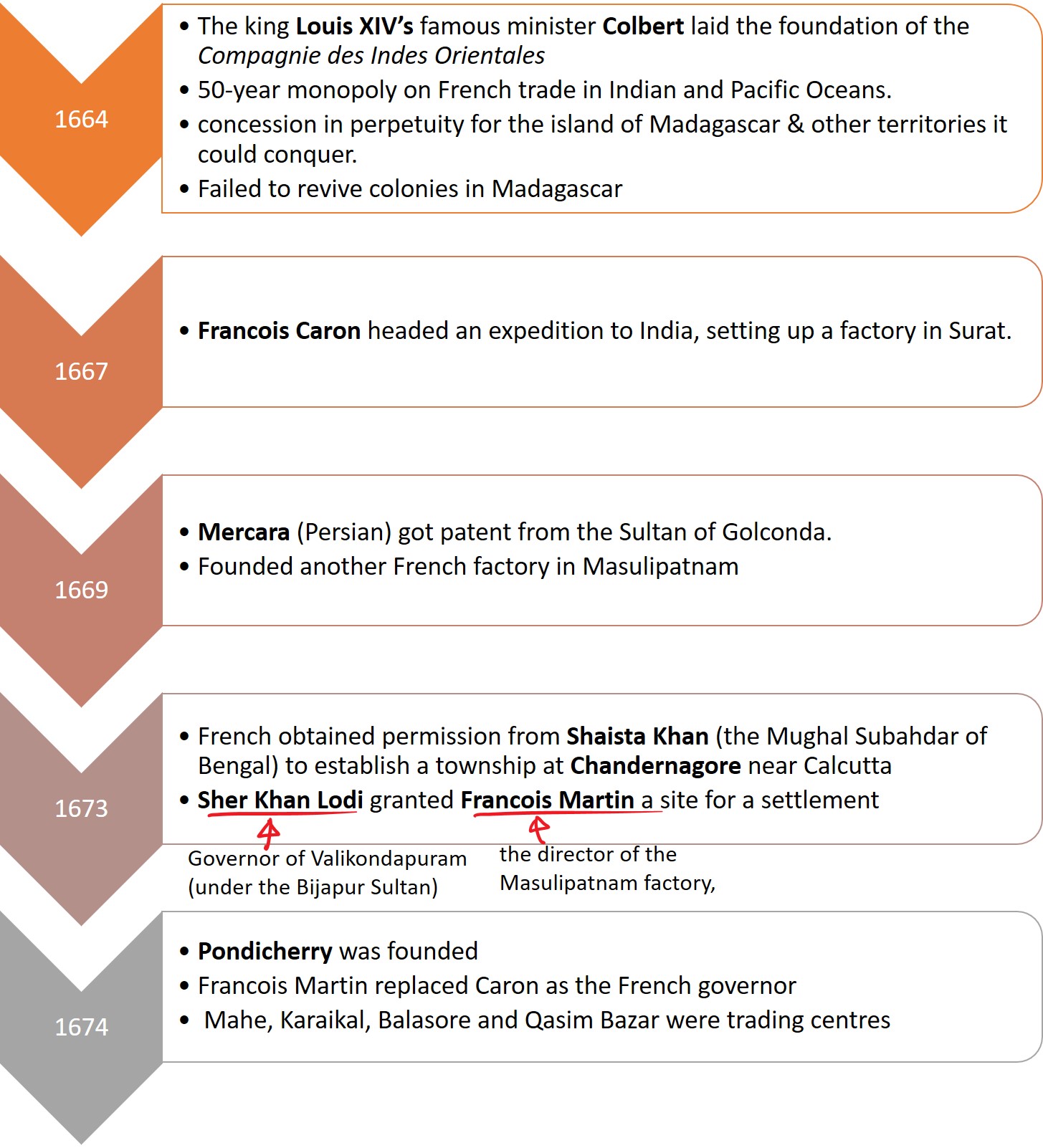
Early Setbacks to the French East India
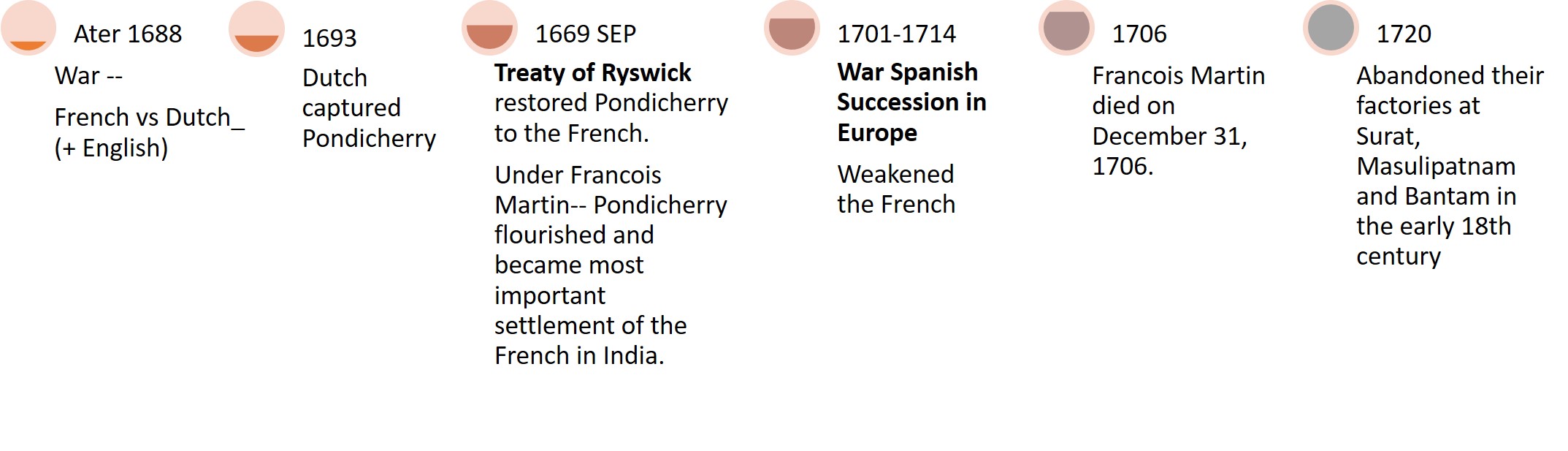
- French reorganised as the ‘Perpetual Company of the Indies’
- 2 active and wise governors- Lenoir and Dumas, between 1720 and 1742 brought back French strength.
Peace of Ryswick– series of treaties signed in the Dutch city of Rijswijk between 20 September and 30 October 1697. They ended the 1688 to 1697 Nine Years’ War between France, and the Grand Alliance, which included England, Spain, Austria, and the Dutch Republic.
The Dutch captured Puducherry in 1693 but returned it to France by the Treaty of Ryswick in 1699.
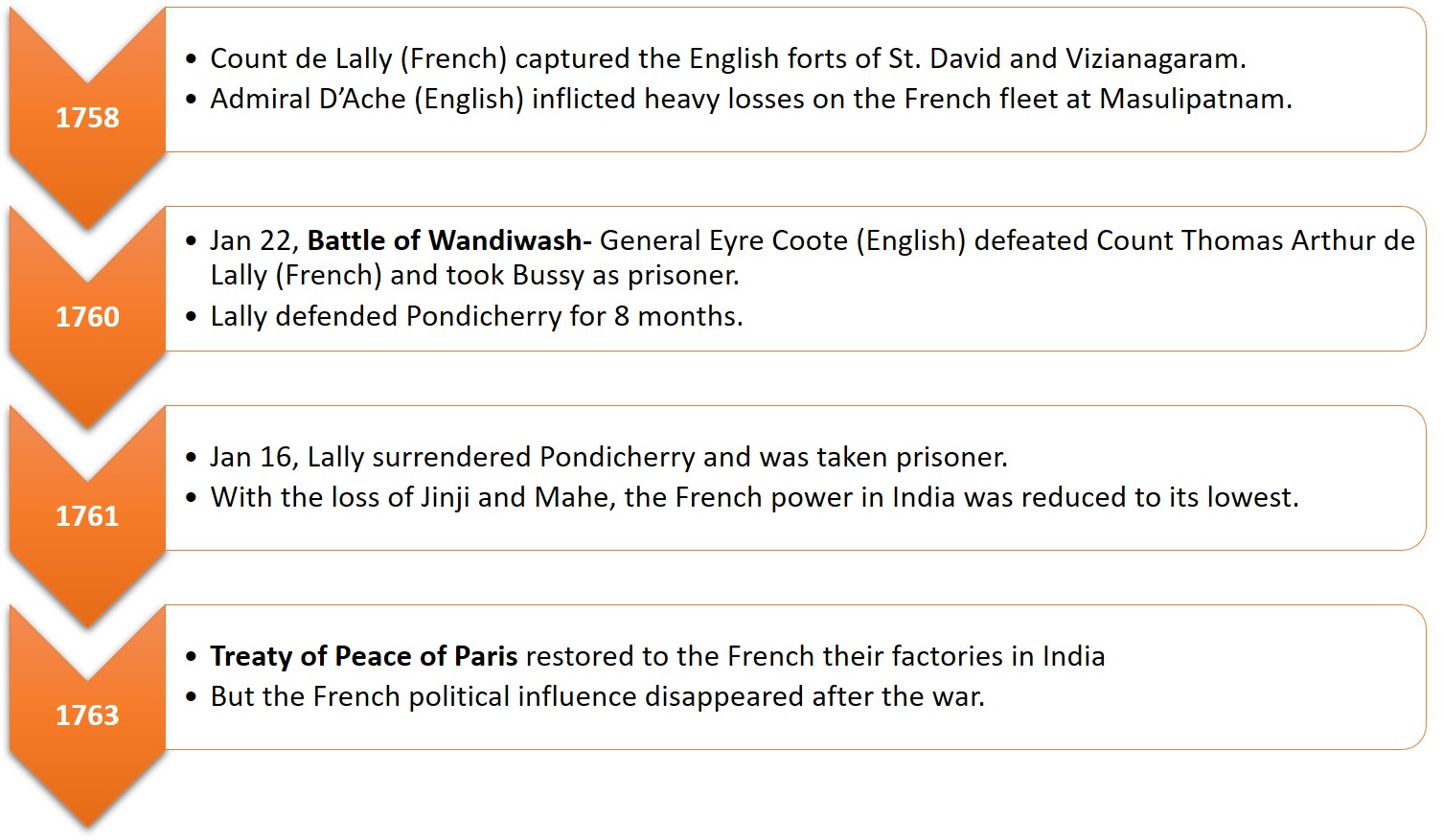
The French acquired Mahe in the 1720s, Yanam in 1731, and Karaikal in 1738. During the Anglo-French wars (1742–1763), Puducherry changed hands frequently. On 16 January 1761, the British captured Puducherry from the French, but the Treaty of Paris (1763) at the conclusion of the Seven Years’ War returned it.[2]
The British took control of the area again in 1793 at the Siege of Pondicherry amid the Wars of the French Revolution, and returned it to France in 1814. When the British gained control of the whole of India in the late 1850s, they allowed the French to retain their settlements in the country. Pondicherry, Mahe, Yanam, Karaikal and Chandernagar remained a part of French India until 1954.
The Anglo-French Struggle for Supremacy: the Carnatic War
- French vs English
- It began with the outbreak of the Austrian War of Succession (1740- 1748).
- In 1740, the political situation in south India was uncertain and confused.
- Nizam Asaf Jah of Hyderabad was old and fully engaged in battling the Marathas in the western Deccan.
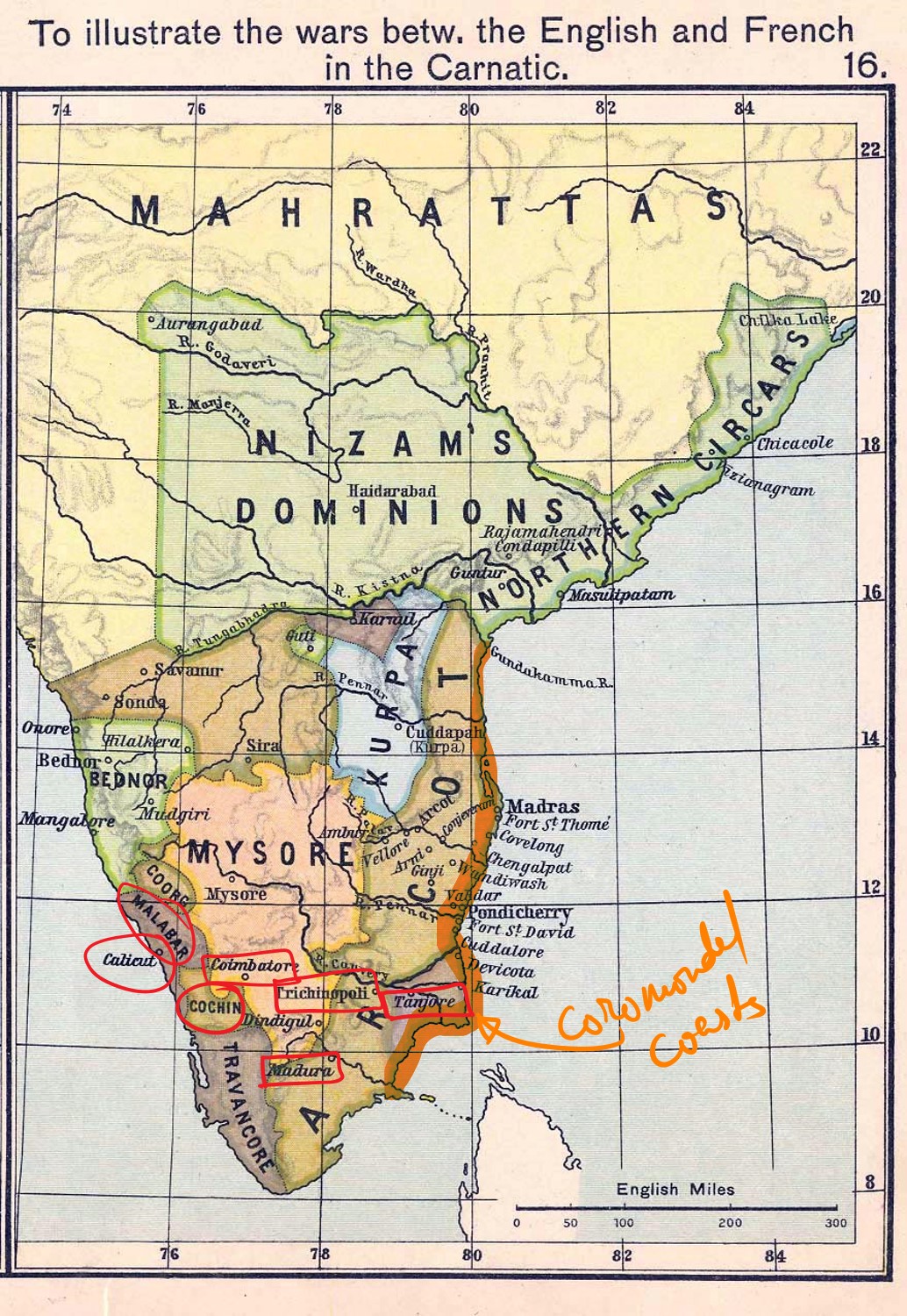
- In the south –the Coromandel coast without any strong ruler
- South west — remnant of the old Vijayanagara empire in interior Mysore, Cochin and
- Travancore in the Malabar coast.
- On the east the small states of Madura (Madurai), Tanjore (Thanjavur) and Trichinopoly (Thiruchirapally).
1st Carnatic war (1740-48)
- Extension of the Anglo-French rivalry in Europe
- Ended with the Treaty of Aix-La Chapelle.
- French weaker than English in India
- The English navy under Barnet seized some French ships
- France retaliated by seizing Madras with Navy and backup of Mauritius, the Isle of France, under Admiral La Bourdonnais
- Madras was handed back to the English and the French got their territories in North America
- Battle of St. Thome (in Madras) fought between the French forces and the forces of Anwar-ud-din, the Nawab of Carnatic
- Small French army under Captain Paradise defeated the strong Indian army under Mahfuz Khan –eye-opener for the Europeans
- Brought out the importance of naval forces
2nd Cranatic War (1749-54)
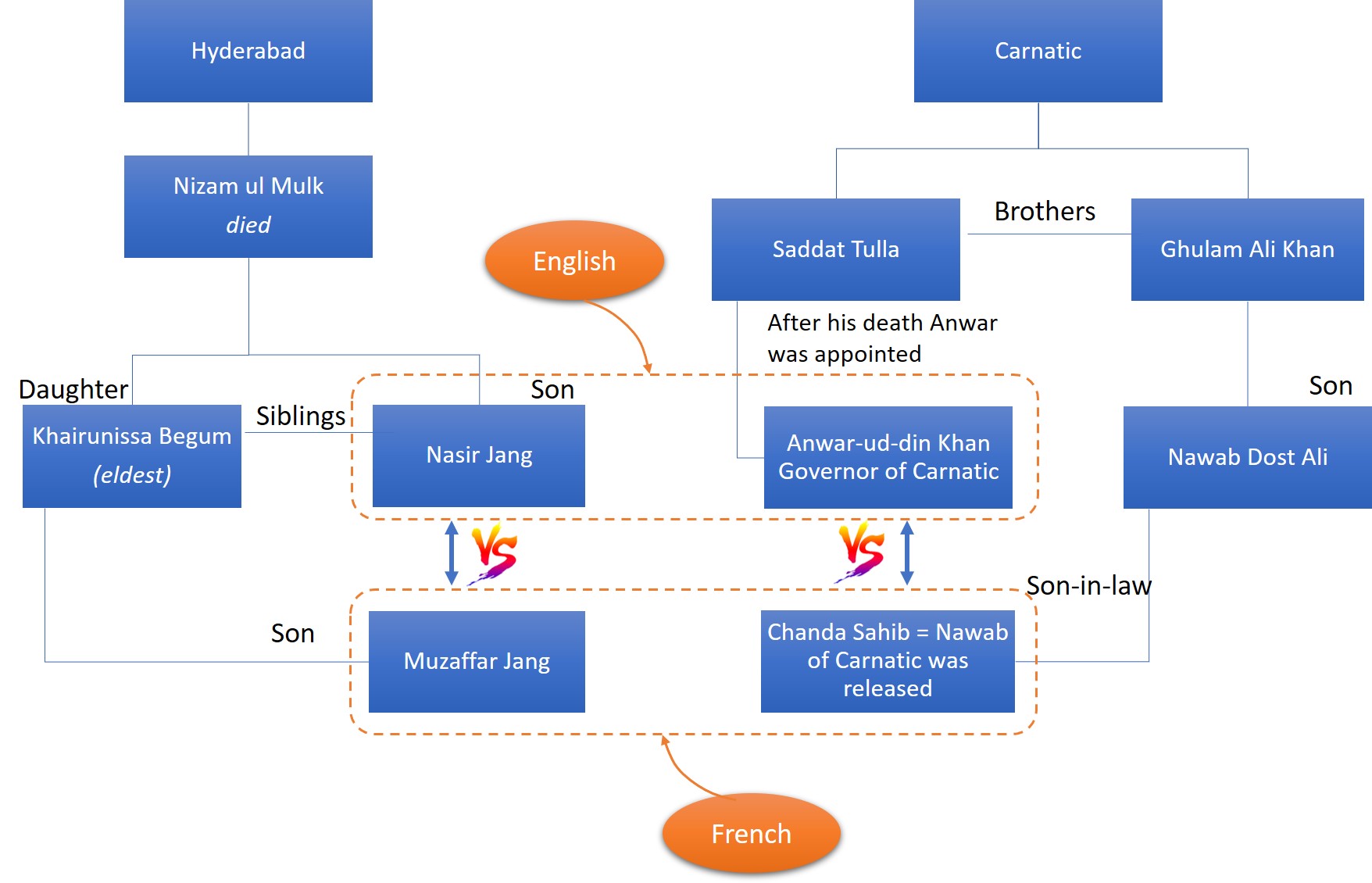
Dupleix, the French governor who had successfully led the French forces in the First Carnatic War, sought to increase his power and French political influence in southern India by interfering in local dynastic disputes to defeat the English.
It all started with the death of Nizam-ul-Mulk, the founder of the independent kingdom of Hyderabad, in 1748.
- French team defeated and killed Anwarud-din at the Battle of Ambur (near Vellore) in 1749.
- Muzaffar Jang became the subahdar of Deccan
- Dupleix was appointed governor of all the Mughal territories to the south of the River Krishna.
- Hyderabad & territories near Pondicherry and some areas on the Orissa Coast (including Masulipatnam) were ceded to the French.
- Battle of Arcot (1751) was fought– planned by Robert Clive.
- French autorities called back Dupleix 1954.
- Godeheu (next French governor General) adopted a policy of negotiations with the English and concluded a treaty with them.
- The English and the French agreed not to interfere in native princes.
- Each party left possession of the territories actually occupied by them at the time of the treaty.
- According to historians, the fear of serious repercussions in America prompted the French to suspend hostilities in India.
Arcot War
- Chanda Sahib besieged Trichinopoly Muhammad Ali (Son of Anwar-Ud-Din)
- English failed to assist Ali
- Robert Clive Proposed to English Governor Thomas Saunders for diversionary attack on Arcot
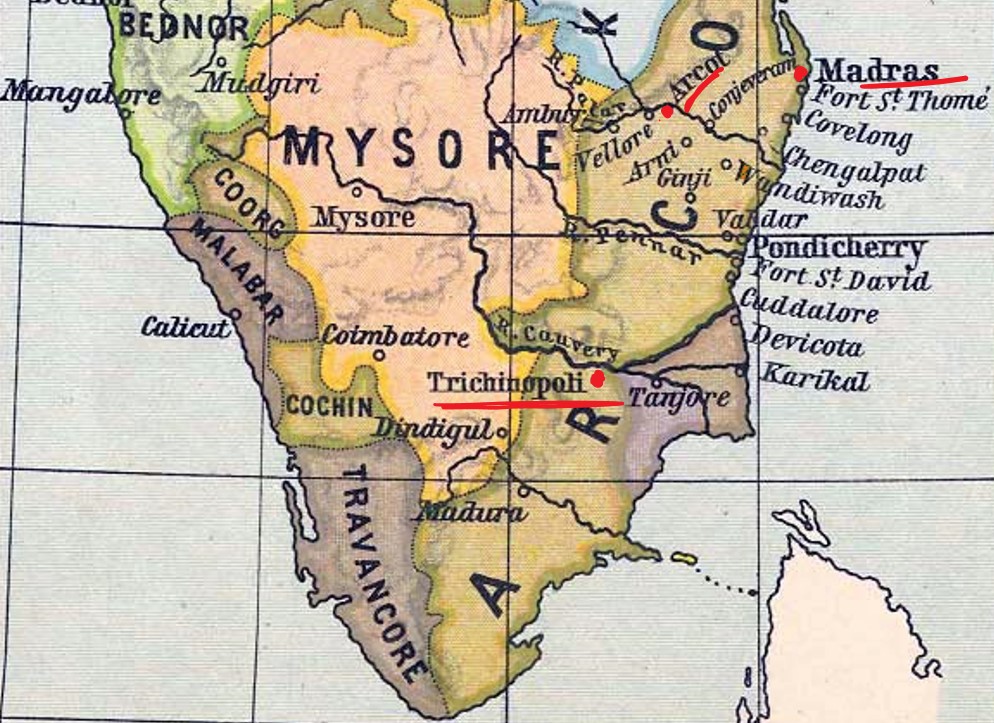
- 26 August 1751, with 200 Europeans and 300 sepoys, Clive marched from Madras to Arcot, (117 km) in 5 days crossing heavy rain.
- Took the fort easily as Garrison fleds away.
- Sahib sent 4,000 men from Trichinopoly, still Clive sieged for 53 days -from Sep 23 to Nov 14.
- Mysore, Tanjore and the Maratha chief, Morari Rao, came to the aid of Trichinopoly and of Clive.
- Trichinopoly was first relieved of its siege
- They were forced to surrender in June 1752 when Muhammad Ali executed Chanda Sahib
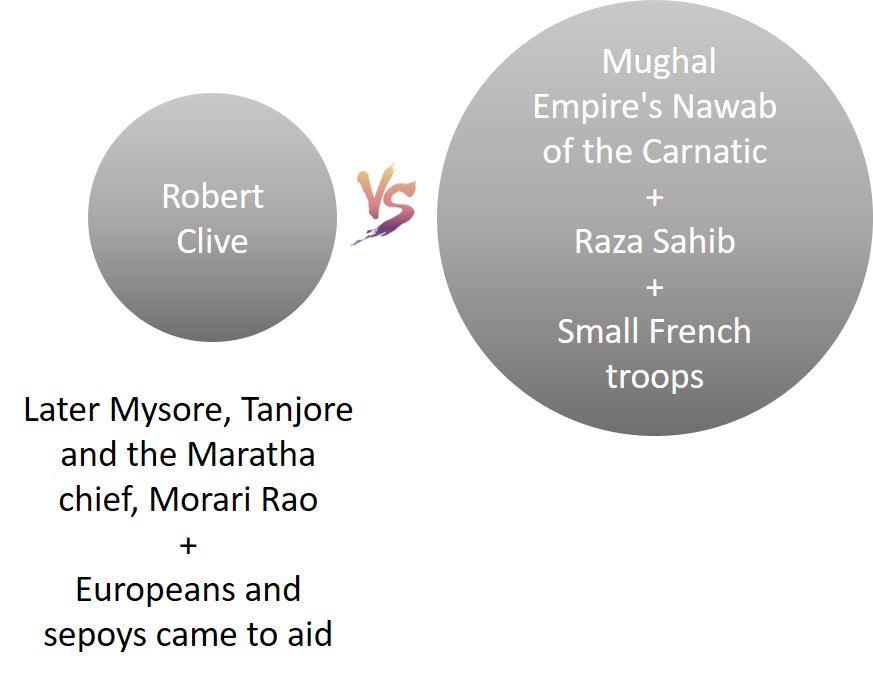
Implications: It became evident that the countenance of Indian authority was no longer necessary for European success; rather Indian authority itself was becoming dependent on European support. Muhammad Ali in the Carnatic and Salabat Jang in Hyderabad became clients rather than patrons.
3rd Carnatic War (1758-1763)
In Europe, when Austria wanted to recover Silesia in 1756, the 7 yrs War (1756-63) started.
After 3rd Carnatic war- The English became the supreme European power in the Indian subcontinent, since
- The Battle of Bidara in 1759- Dutch were defeated.
- The Battle of Plassey, in 1757- Nawabs of Bengals were defeated.
- The Battle of Wandiwash 1960-The true turning point for control of the subcontinent – left the English East India Company with no European rival in India.
 MY BOX