Origin story
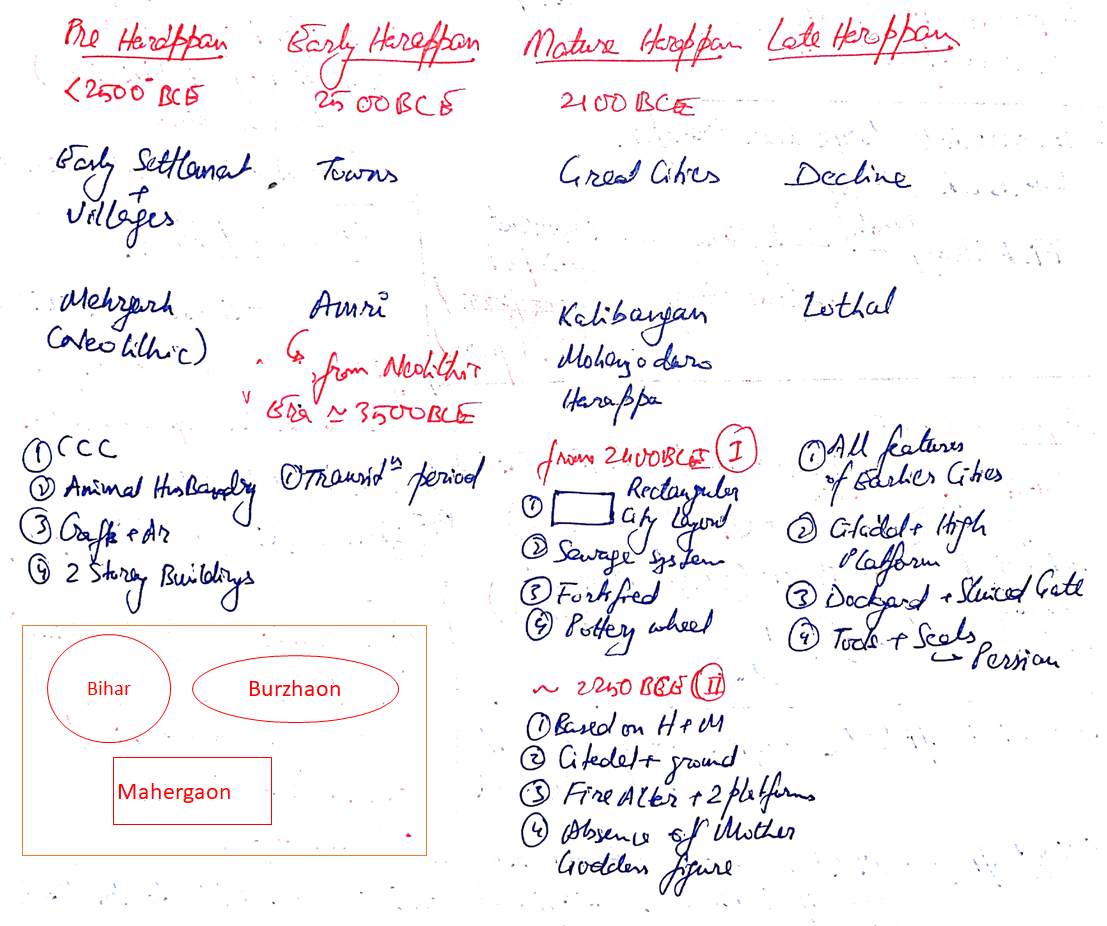
- 1826— Mason (British engg) found evidences
- 1857— Cunningham (while laying tracks)
- 1871— ASI discoverd Burnt bricks
- 1921 – Harappa Excavated by Daya Ram Sahni
- 1922 – Mohenjodaro by R.D. Banerjee
- 1924 – Formal Announcement by John Marshall
- 1940s – Moritime Wheeler’s Discovery
- 1950s to 2000s – Further research discovery of more than 1400 sites by 2020
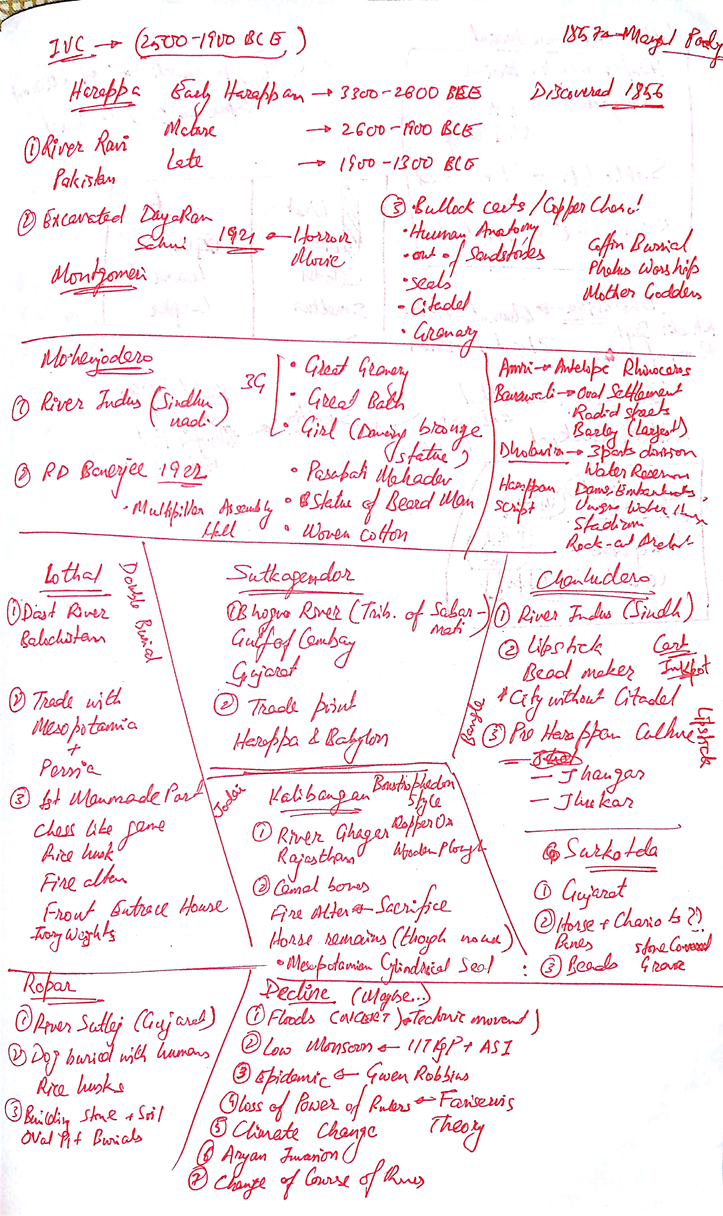
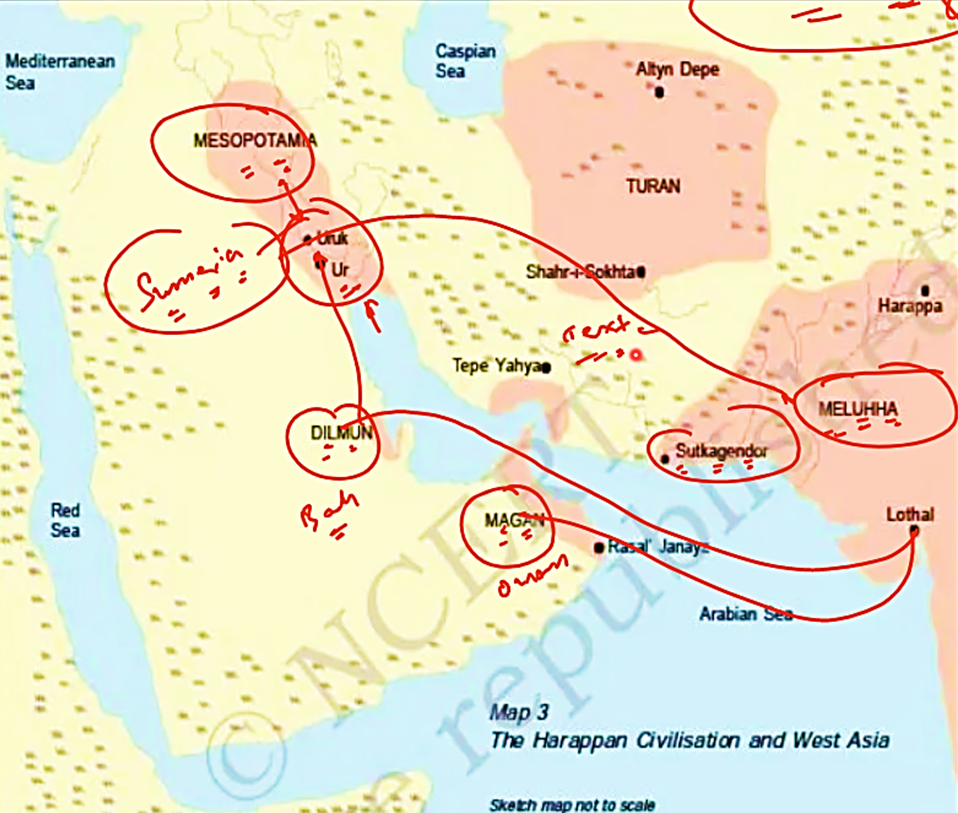
Cylindrical seals in shows trade bw Ur (Mesopotamia) and Lothal (Gujarat)
Drying of the river– gagar Hakra= Saraswati river but mentioned in later vedic period.. so not possible.
Decinin–
MOrtier Wheelr- Aryans attack
Fair Service- Eco Imbalance
Raikes- Eathquake
DAs +\Sood- Indus changed course
RS Sharma -Urban life ended but other aspects continues
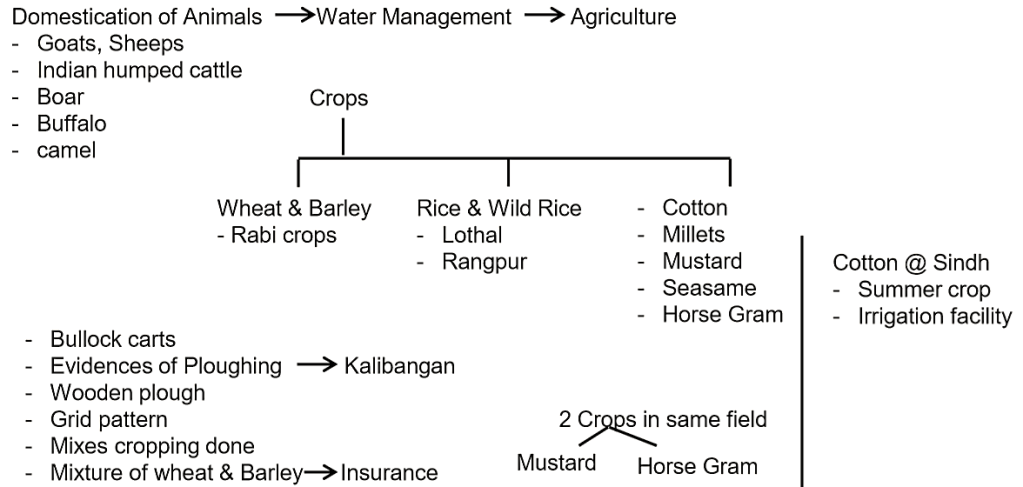
Establishment of specialised artisan groups
- Bronze smith, gold smith, brick makers, stone cutter, weavers, terracotta manufacturers
- Axes, chisels, knives, spearheads, arrowheads, small saws etc.
- Bronze art @ Mohenjodaro,
- Copper vessels – Harappa & Chanhudaro
- Specialist workshop
- Small gold ornaments
- Beads + Cornellian — Lothal, Chanhudaro
- Pendants, Amulets, Bangles— Balakot & Chanhudaro , Kalibangan
- Silver
- Specialized groups of artisans
- Boat-builders – Lothal
External
- Sumeria – Indus
- Sumerians refered Indus people as Meluha
- 2 intermediate stations – Dillmun & Magan
- Discovery of 2 Dozen seals @ Mesopotamia
- UR, Kish, Susa, Lagash etc.
- Indus beads, pottery, terracotta, ivory
- Rounds seals of gulf origin – indus motifs
Internal
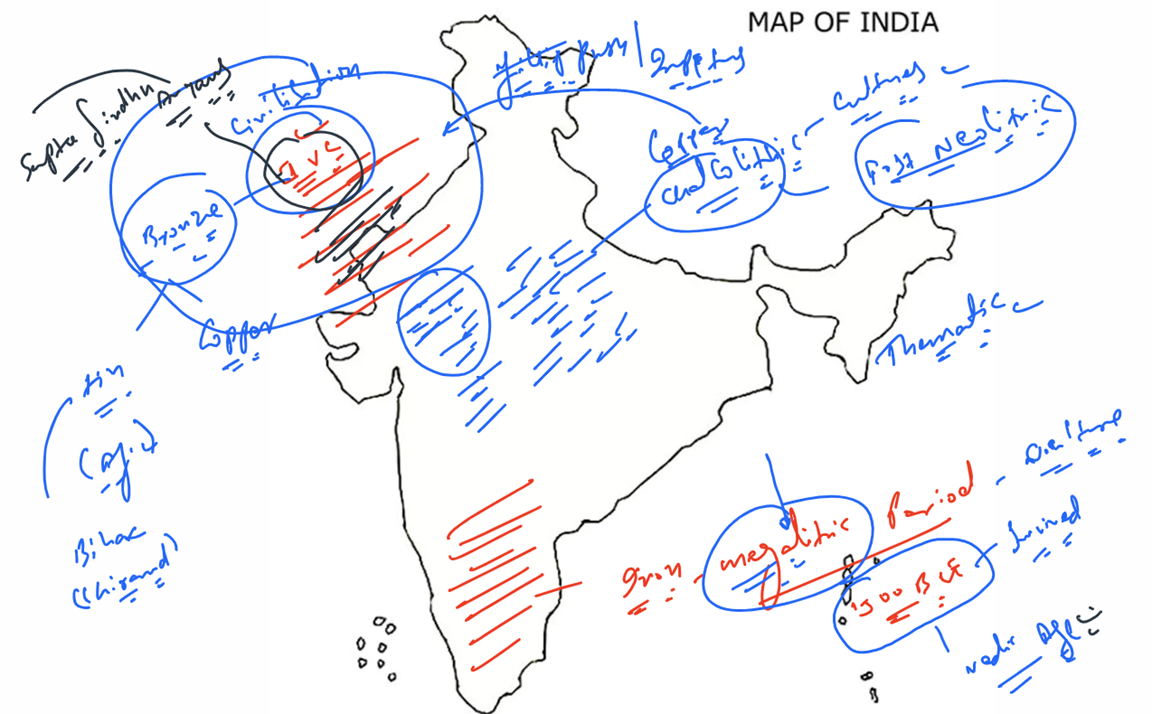
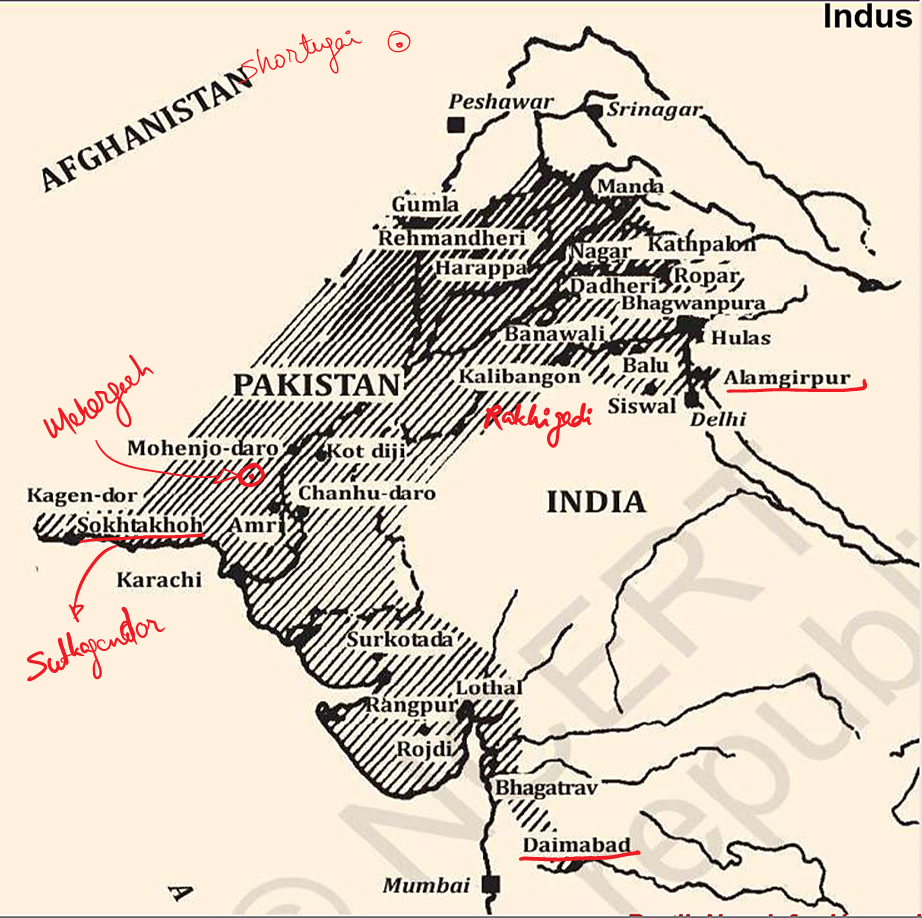
- Rajasthan
- Saurashtra – Agate
- Maharashtra – Amethyst
- West UP, Bihar – Tin
- South India – Gold
- Use of bullock carts
- Teracotta models – Ships seals – Ikka tipe chariots
- Copper & Bronze @ Chanhudaro & Harappa
- Sea route & Riverine routes also used
Imports
- Gold (AF, Iran)
- Copper (Bal, Arab)
- Tin (AF)
- Lapis lazuli (AF)
- Turquoise (Iran)
- Jade (Cen Asia)
Export –
- Agri Products–Wheat – Barley – peas – oil seeds – cotton
- Goods – beads, shells – terracotta, stone images
Pottery
Ceramic – pottery tradition –
- Wheel based – red & black painted also plain
- use of nature motifs birds, fish, animals, plants, trees pipal leaves
- birds holding – fish
- story of panchtantra @ Lothal
- Types – goblets, dishes, basins, flasks, vase, bottles, incense burner, storage jars
Seals
- Seals
- Usually made of steatite, and
- occasionally of agate, chert, copper, faience and terracotta,
- with beautiful figures of animals, such as unicorn bull, rhinoceros, tiger, elephant, bison, goat, buffalo, etc
- Boats, musical instrument, pipal tree
Religion
MOther Goddess
- Official religion Found on the seals, pottery
- – Common animal unicorn, bison, elephant, zebu, tiger, hare, buffalo –
Presence of rituals & colts with regional variations. - Pasupati mahadev Seal @ Mohenjodaro – Diff Animal – Yogic posturer – sitting posture different from padmasana
- Reflects Iranian Style
- Godess – seal @ Kalibangan – stops two spearmen from infighting
Killing of a buffalo by spearmen –
Tiger cooking @ tree diety
Pipal tree+ diety + fish + goat
Diety worshiped by humans
acrificial offering by 7 women
Fire Altars
Phallic cult– Linga like structures
Burial practices
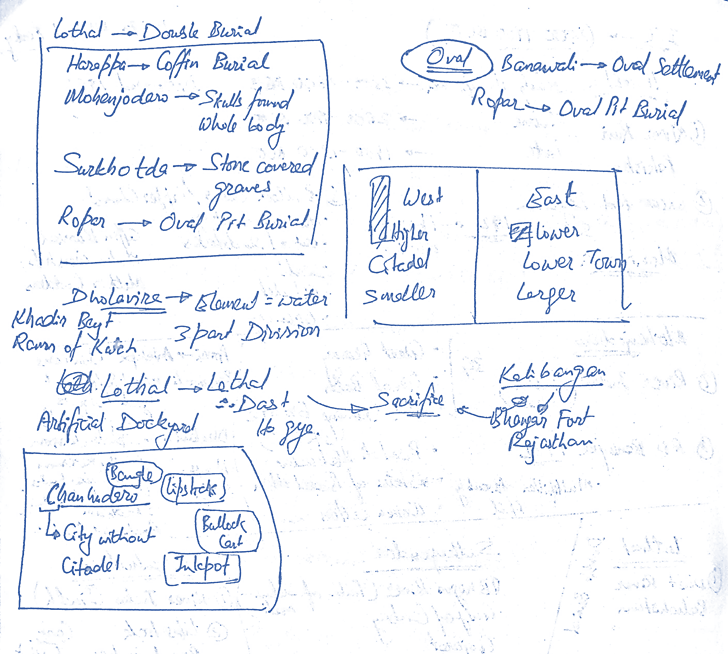
Complete burial–Mohenjodaro, Harappa, Kalibangan, Lothal and Rupar.
Post-cremation burial —
were popular at Mohenjodaro+ Lothal
The burial pit was lined with burnt bricks indicating the use of coffins
Wooden coffins were also found at Harappa
practice of pot burials is found at Lothal sometimes with pairs of skeletons
Boustrophedo script
Sculptures
Bronze
figure- Klibangan
bronze dancing girl- (tribhanga) Mohenjofaro
Ikka- Harappa, chanhudaro
Elephant, Rhino, Buffalo, charlot -Daimabad
bull – Kalibangan
copper dog and bird of Lothal
2 stone statues found- at Harappa and Mohenjodaro
Terracotta
Crude in the Indus Valley — North West
More realistic in Gujarat sites and Kalibangan, Dolavira, Lothal.
Mother Goddess
Namaste Harappa
 MY BOX