European industrialization England
- protectionism of their trades
- Drain of wealth
- Internal demand
- External demand
- Agricultural revolution
- Geography–> political stability–> economic growth
- Socio-Economic Political-Cultural condition are very important
- Pushed Industrialisation –>Modernization
Enlightment–> Scientific thinking–> engineering–> machines–> Ease of Labour–> Canal Mania
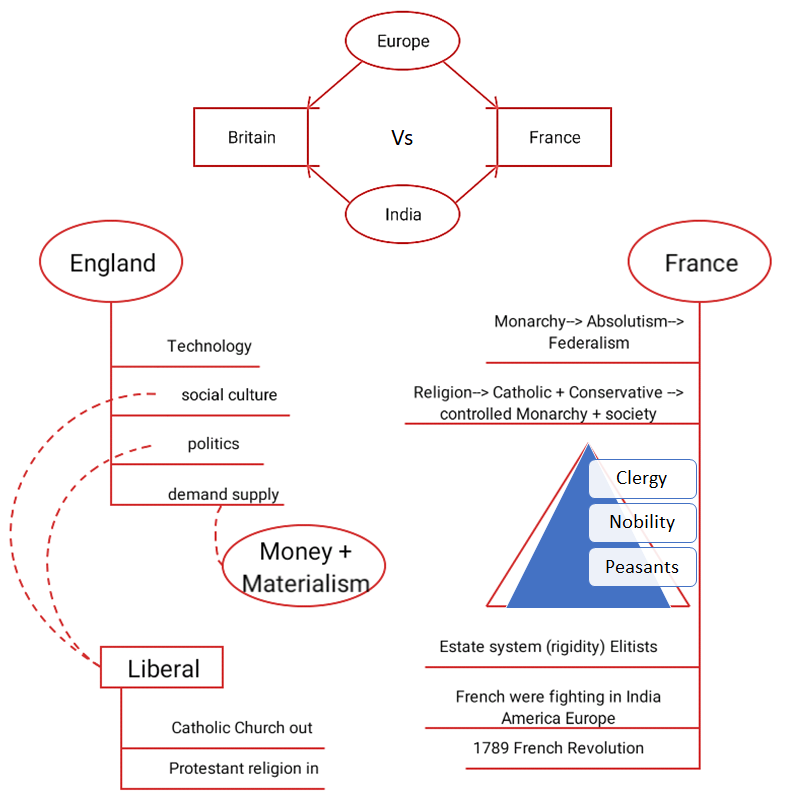
Europe 1750s Both money and power but why did Britain had industrialisation first
big diagram
Japan latecomer 2013
1920s–> USSR (eastern Europe) New Economic Policy
21st century
USA civil war industrialisation
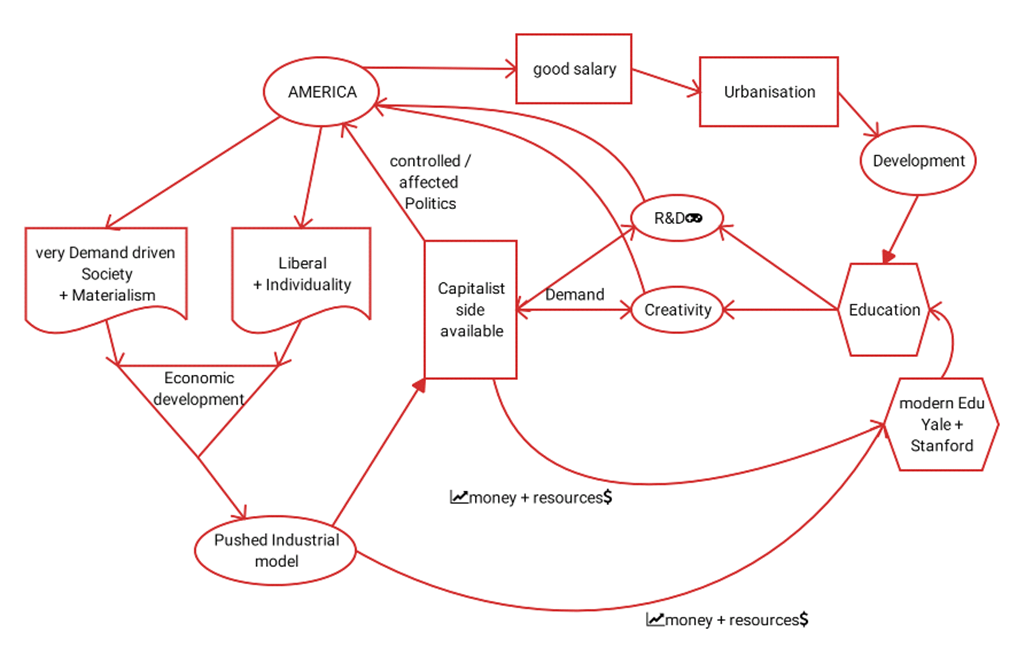
yhape diagram
USA’s Industrial Revolution is different
- Second industrial revolution (1870 to 1920)
- Based on Technological revolution
- Machine + line balancing
- Heavy industries
- Iron steel + mining
- Railroads + Waterways
England’s IR
- Labour intensive
- textile industries–> cotton industries
Politics –> USA promoted + protected–>
Industrialisation from external aggregation
+ No external competition
–> therefore, Internal Industries rose
Government
- You develop and manufacture
- We will provide you with market
- We will provide demand–> government will by themselves if no one buys
- We will provide you with money–> Banking systems–> Easy money system–> low interest rate
America was Geo-political isolated during the British versus France wars –> Politically stable
Geography
- Good fertile land
- Top 3 land area
- Natural resources
Industries in the north agriculture in the south.
End of slavery–> 1865 13th constitutional amendment act–> Free men–> labour force for Industries
Transportation revolution- 1776 –> Unification–> ease of movement road transport + railroad + waterways –> Infrastructure–> closed the demand vs supply mismatch–> Economic Boom
Done By Private companies
Why??–> Country based on liberty
5 great lakes connected by waterways canal–> later by ships and boats–> shifted to railroads–> Coasts connected to England–> Economic boom
Communication Revolution
- Print Postal
- Typewriter
- Telegraph
- Electricity
Communication–> trade + commerce–> information exchange–> Intellectual rose
By 1913–> USA as output was more than combined output of –> France Britain and Germany
 MY BOX