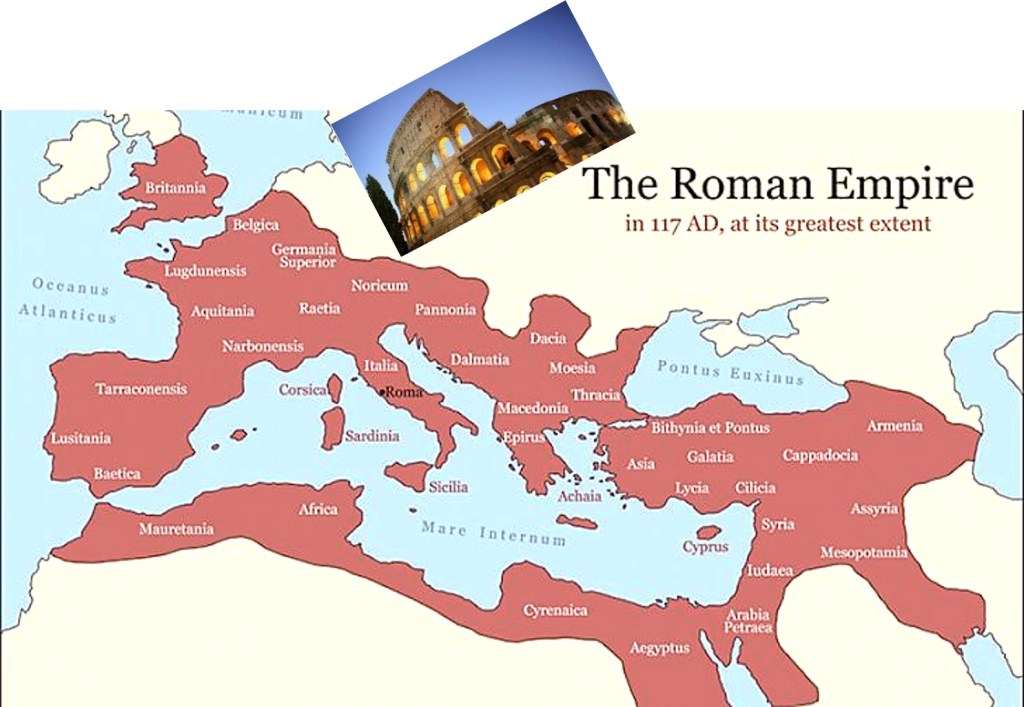
Fall of roman empire in 7th century.
Constantinople fell under Ottoman Turks.
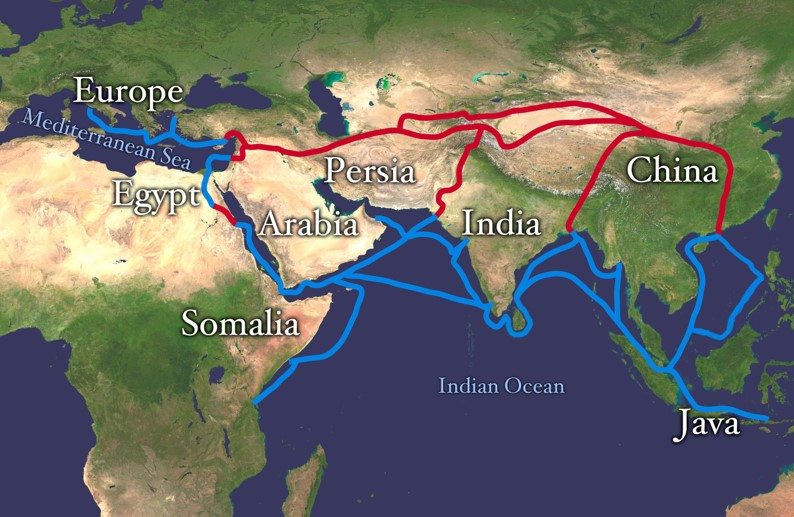
In 1453, Arabs had established their domination in Egypt and Persia thus cutting Europe’s way into East.
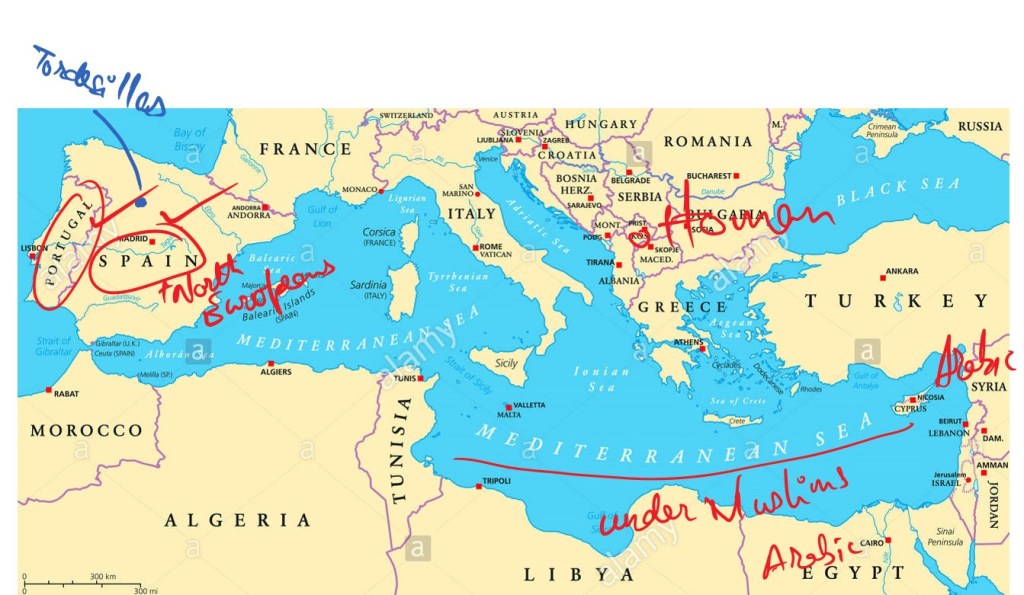
- Portugal had assumed the leadership in Christendom’s resistance to Islam
- Prince Henry of Portugal, who was nicknamed the ‘Navigator’
- Pope Nicholas V gave Prince Henry a bull in 1454 (spread Christianity).

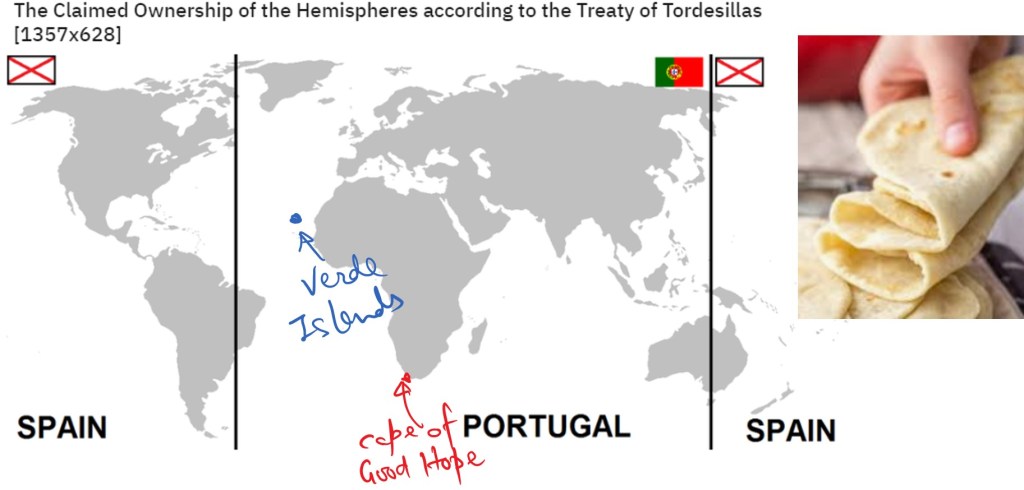
In 1497, under the Treaty of Tordesillas (1494).
The rulers of Portugal and Spain divided the non-Christian world between them by an imaginary line in the Atlantic, some 1,300 miles west of the Cape Verde Islands.
Vasco Da Gama & Sacred Games

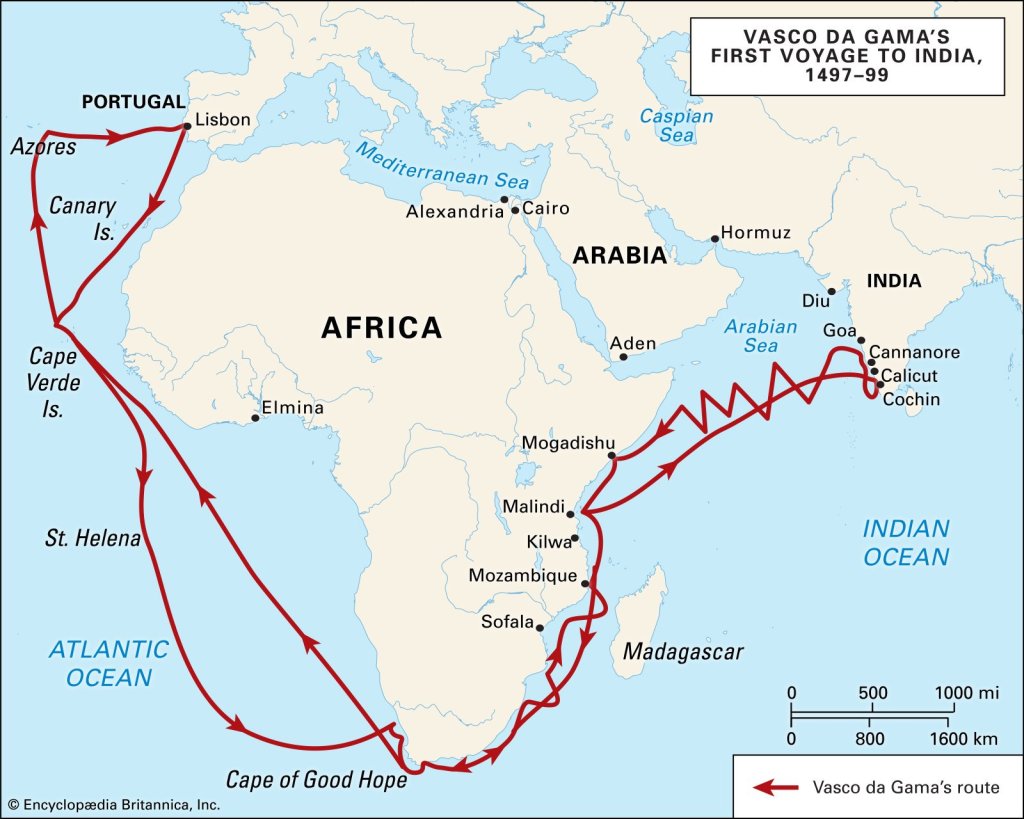
Vasco Da Gama came India in Calicut in May 1498.
Kenya ki malini port mein Kanji malam mila. Mandvi ka trader neel bechta tha.

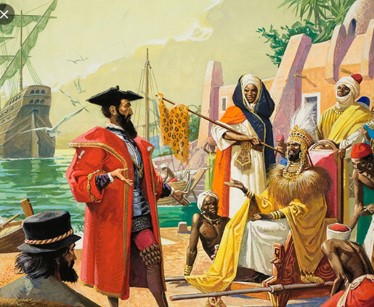
The Hindu ruler of Calicut, the Zamorin (Samuthiri), however, had no apprehensions as to the European’s intentions.
As the prosperity of his kingdom was due to Calicut’s position as an entrepot, he accorded a friendly reception to Vasco Da Gama.
- The Portuguese wanted to monopolise the hugely profitable eastern trade by excluding competitors, especially the Arabs.
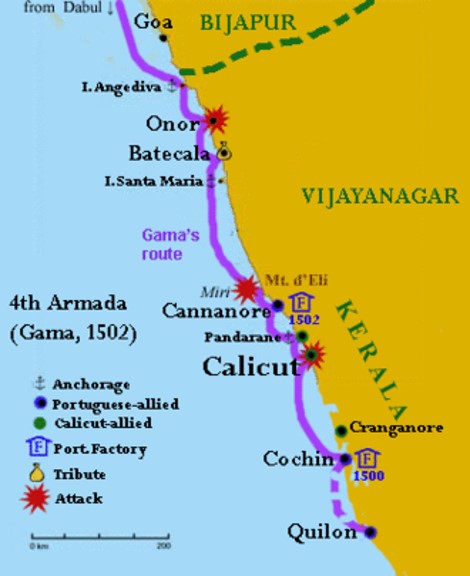
- Sept 1500-A voyage undertaken by Pedro Alvarez Cabral to trade for spices, negotiating and establishing a factory at Calicut. The Portuguese factory at Calicut was attacked by the locals, resulting in the death of several Portuguese.
- In retaliation, Cabral seized a number of Arab merchant ships anchored in the harbour, and killed hundreds of their crew besides confiscating their cargo and burning the ships.
- Calicut was bombarded by Cabral. Later, Cabral succeeded in making advantageous treaties with the local rulers of Cochin and Cannanore.
Vasco da Gama once again came to India in 1501. The Zamorin declined to exclude the Arab merchants in favour of the Portuguese when Vasco Da Gama combined commercial greed with ferocious hostility and wreaked vengeance on Arab shipping wherever he could. His rupture with the Zamorin thus became total and complete. Vasco da Gama set up a trading factory at Cannanore. Gradually, Calicut, Cannanore and Cochin became the important trade centres of the Portuguese. Gradually, under the pretext of protecting the factories and their trading activities, the Portuguese got permission to fortify these centres.

Francisco De Almeida
Almeida’s vision was to make the Portuguese the master of the Indian Ocean. His policy was known as the Blue Water Policy (cartaze system).
In 1505 —Francisco De Almeida was appointed as Governor in India for 3 years
- He was asked to consolidate the position of the Portuguese in India and to destroy Muslim trade by seizing Aden, Ormuz and Malacca.
- He was also advised to build fortresses at Anjadiva, Cochin, Cannanore and Kilwa.
- Opposition of the Zamorin + Mameluke Sultan of Egypt + Merchants of Venice + Egyptians raised a fleet in the Red Sea to stop the advance of the Portuguese.– (1 vs 4 in battle of Chaul 1507)
- In 1507, the Portuguese squadron was defeated in a naval battle off Diu by the combined Egyptian + Gujarat navies, and Almeida’s son was killed.
- Next year, Almeida avenged his defeat by totally crushing the two navies (1508 -Battle of Diu,).

Alfonso de Albuquerque
Albuquerque succeeded Almeida as the Portuguese governor.
- The real founder of the Portuguese power in the East
- Secured for Portugal the strategic control of the Indian Ocean by establishing bases overlooking all the entrances to the sea. Portuguese strongholds in
- East Africa, off the Red Sea,
- at Ormuz;
- in Malabar;
- at Malacca.
- Bolstered their stranglehold by introducing a permit system for other ships and exercising control over the major ship-building centres in the region.
- The nonavailability of timber in the Gulf and Red Sea regions for ship-building also helped the Portuguese in their objectives.
- In 1510–acquired Goa from the Sultan of Bijapur with ease;
- The principal port of the Sultan of Bijapur became “the first bit of Indian territory to be under the Europeans since the time of Alexander the Great”.
- The abolition of sati, encouraged to settle and take local wives.
- 1530: Declaration of Goa as the Portuguese capital.
- 1534: Bahadur Shah (Gujarat) vs Humayu (Mughal).. took help of Cunha (Portuguese) and gave island of Bassein & Promised Diu.
- 1535: Subjugation of Diu.
- Relationship turned sour– killed Bahadur shah in 1537
- 1559: The Portuguese capture Daman. 1596: Ouster of the Portuguese by the Dutch from South-east Asia.
- 1612: Loss of Surat to the English.
- 1663: The Dutch win all Portuguese forts on the Malabar coast to oust the Portuguese from India.
Vasco
Vasco– 3 times visited India
- 1498- traded with Zamorin
- 1502- attacked Arabs
- 1524-25- became thegovernor
Almeida
- 1505- became Governor
- 1507- Portoguese naval was defaeted in Battle of Chaul; lost son
- 1508- won the Battle of Diu
- 1509- went back
Alfanso
- 1503- came to India as commander
- 1509- Became Governor
- 1510- Captured Goa from Bijapur
- 1515- died
- Orbuz, Malabar, Malacca, Red sea
Big Vacuum 1515-1529
- 6 governors changed
Nino de Cunha
1529-1538
Expansion of Portuguese colonies
1962- Manuel Antonio Silva became the governor
- Alfanso had good relation with Krishnadev Ray of Vijayanagar
- Sent embassies – Friar Luis
- Both had common enemies- Deccani Sultanante
- European Horses supplied to Vijaynagar
- Blue water navy–Cartaze system–Over Arabian + Indian ocean
1526 – 1st Panipat –Babur vs Ibrahim Lodhi
1529- Krishnadev Ray died
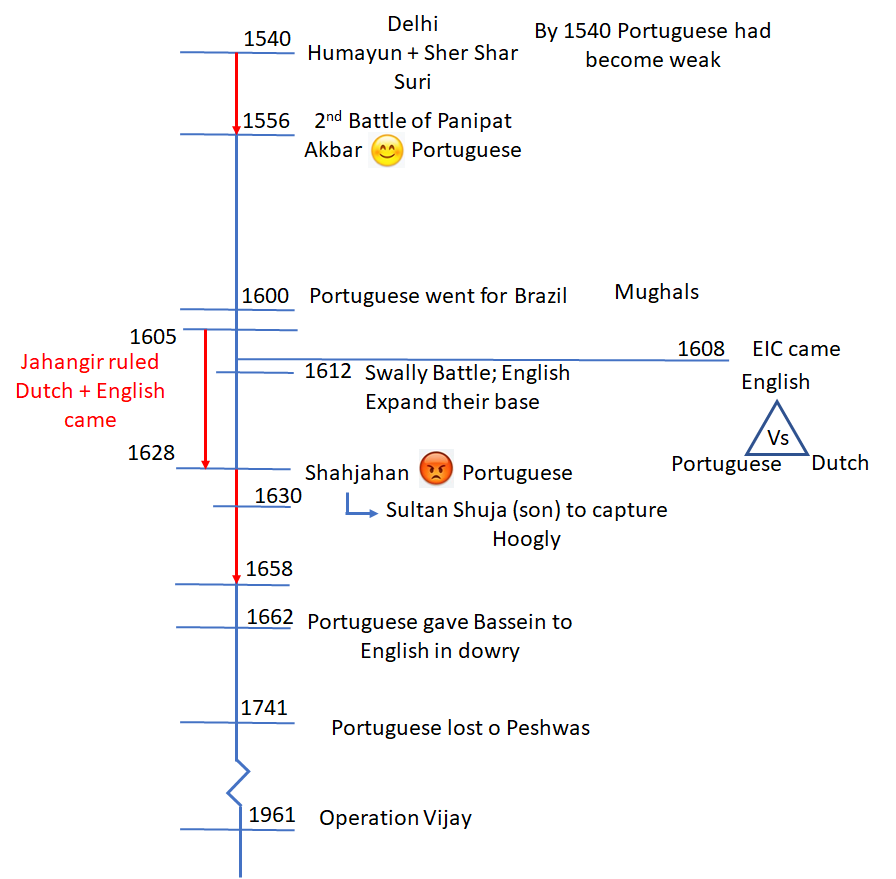
1540- Delhi–
Humayun & Sher Shah Suri
1556 –2nd Batle of Panipat
Akbar & Portuguse were in good terms
56- 1605- during Jahangir– Dutch + English came
Portuguese not only initiated what might be called the European era and naval power. The Portuguese ships carried cannon, and this was the first step in gaining monopoly over trade. An important military contribution made by the Portuguese onshore was the system of drilling groups of infantry, on the Spanish model, introduced in the 1630s as a counter to Dutch pressure.
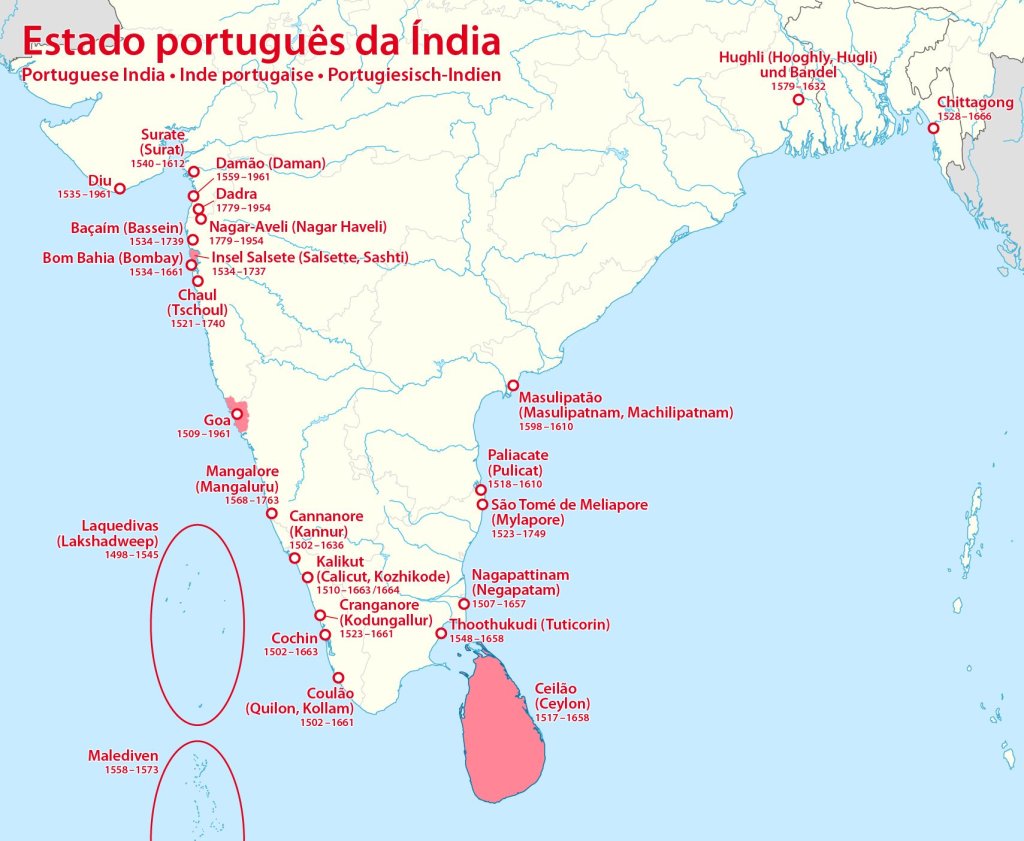
India had come under Portuguese power within 50 years of Vasco da Gama’s arrival. The Portuguese had occupied some 60 miles of coast around Goa. On the west coast from Mumbai to Daman and Diu to the approaches to Gujarat, they controlled a narrow tract with four important ports and hundreds of towns and villages. In the south, they had under them a chain of seaport fortresses and trading-posts like Mangalore, Cannanore, Cochin, and Calicut. And though their power in Malabar was not consolidated, it was enough to ensure influence or control over the local rulers who held the spice growing land. The Portuguese established further military posts and settlements on the east coast at San Thome (in Chennai) and Nagapatnam (in Andhra). Towards the end of the sixteenth century, a wealthy settlement had grown at Hooghly in West Bengal.
 MY BOX