Sovereign – no external influence
laws
Policy
reforms
Process
Regulation
External opinions – non binding (mere recommendations)
C.O.I – binding
J L Nehru
Extra Legal Arrangement
Commonwealth games (not to get alone)
•No obligation
•No liability
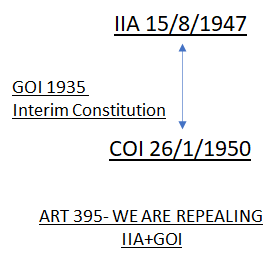
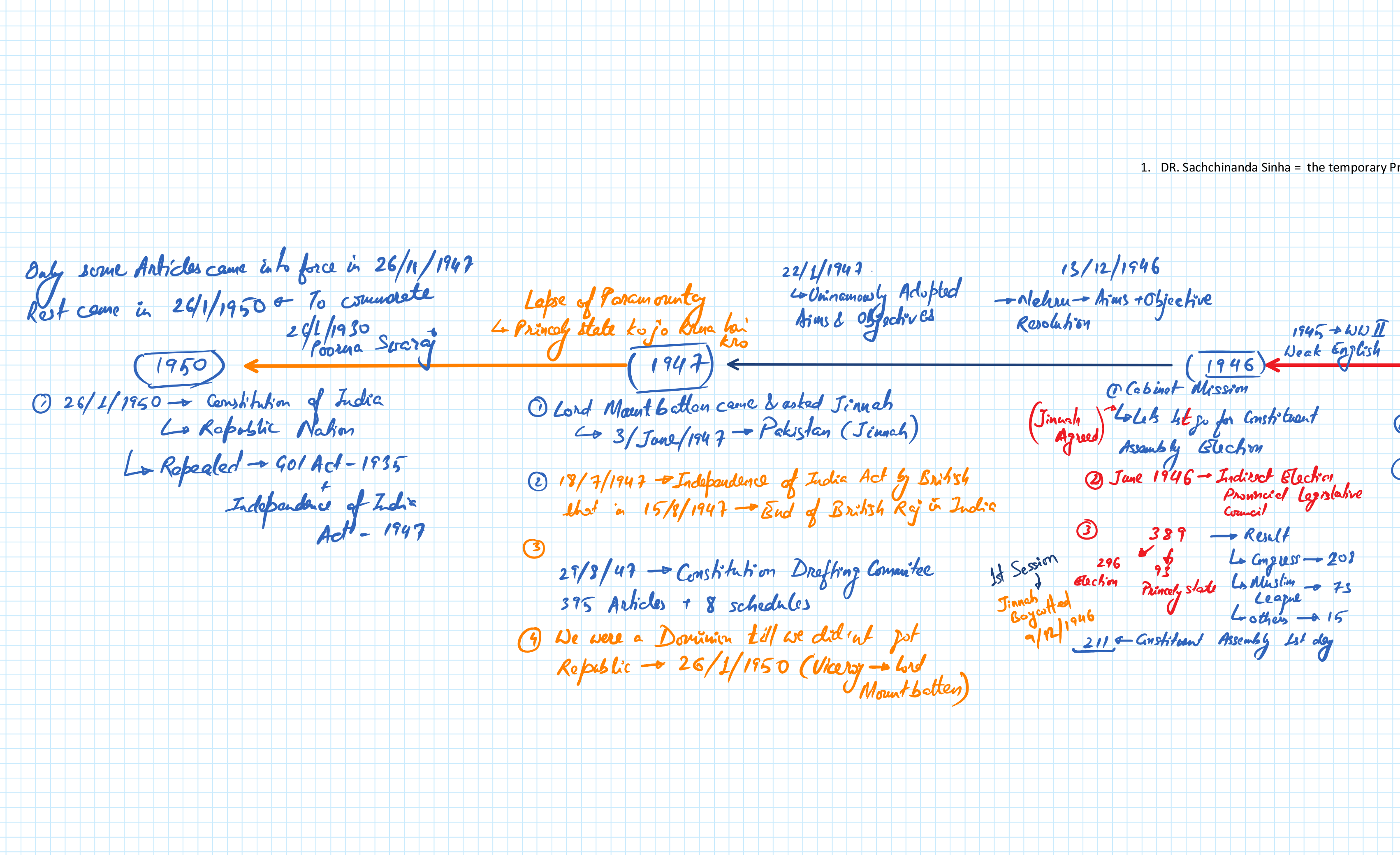
Art395 (1949)– Repeals The Indian Independence Act, 1947 , and the Government of India Act, 1935 , together with all enactment s amending or supplementing the latter Act, but not including the Abolition of Privy Council Jurisdiction Act, 1949 , are hereby repealed FIRST SCHEDULE Articles 1 and 4 I THE STATES Name Territories
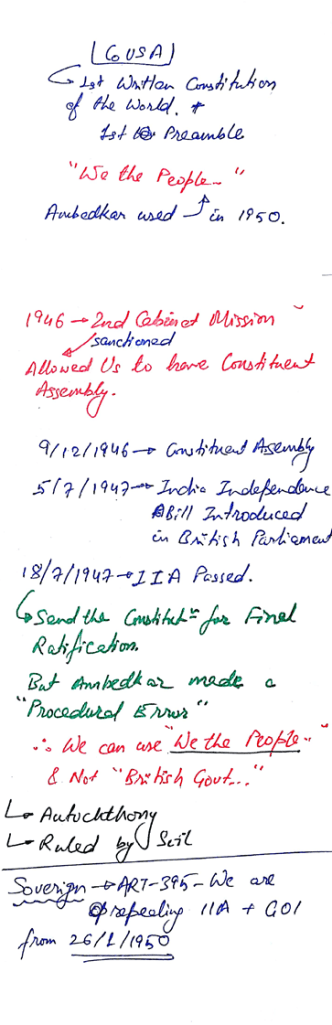
Autochthony
Ruled by the soil
Not a Dominion
But India was at that time
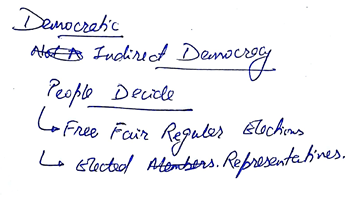
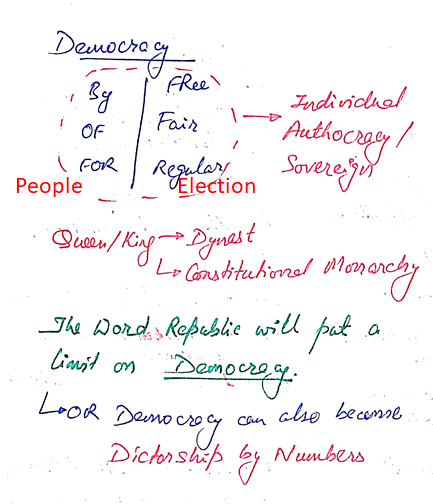
Democratic– BY OF FOR the people
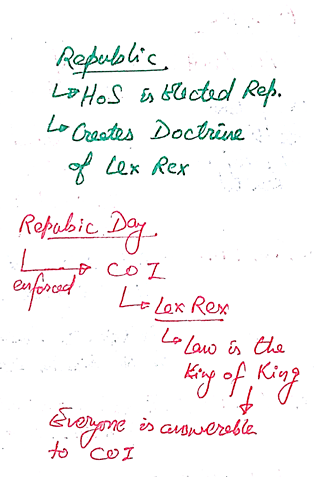
Republic Def: Head of the State is representative elected by the people. (source of power à people)
Republic
Technically without our Constitution (being Republic) a Democratic Govt will be the rule of majority and will have Unparallel, Unlimited power in nation.
Any concentrated power will be the source of corruption + chaos.
Hence Democracy can also become Dictatorship by numbers.
We want to be Republic As constitution is supreme in nation. LEX:REX.
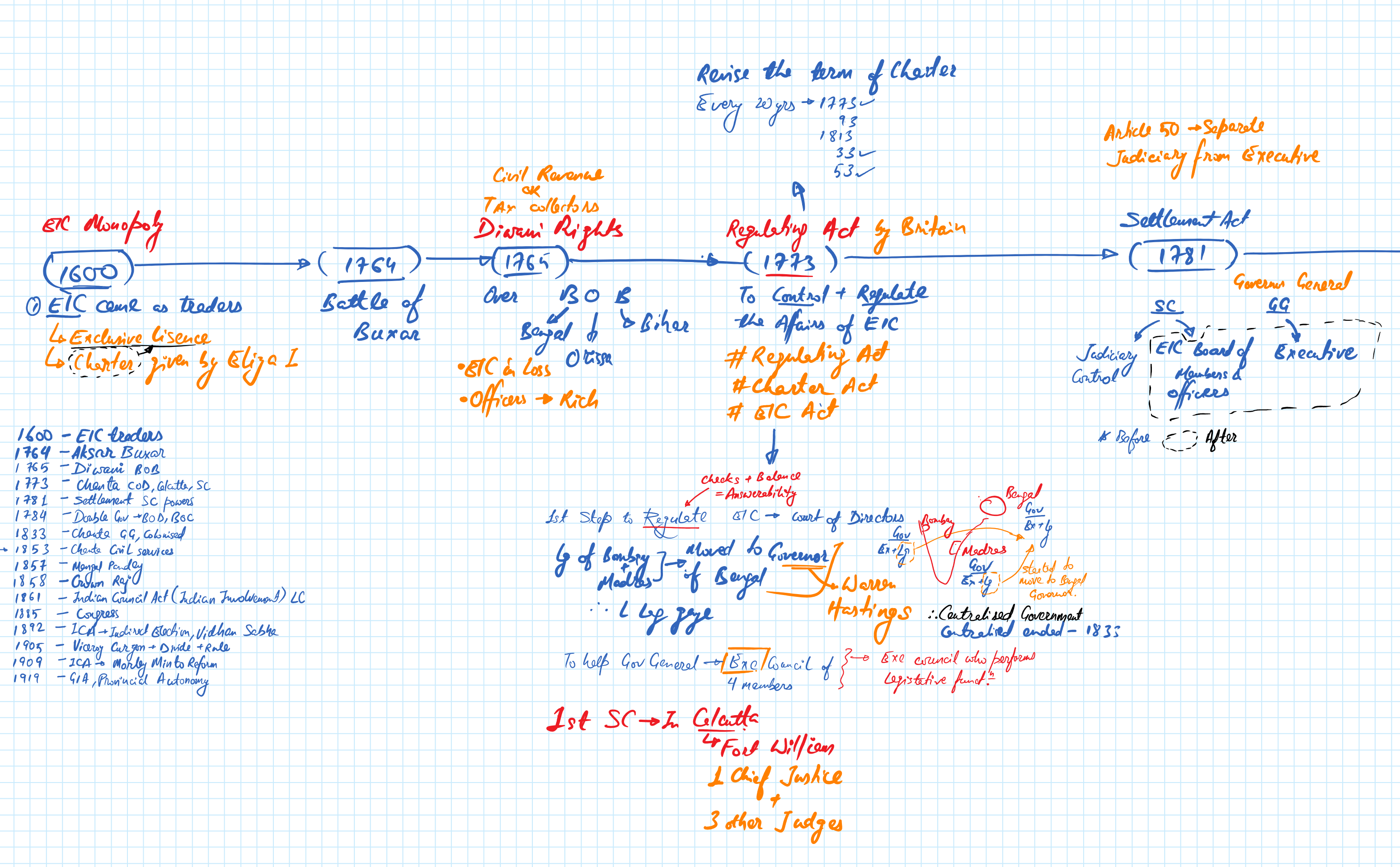
- 1600- EIC Traders
- 1764- Aksar Buxar
- 1765- Diwani BOB
- 1773- CHAnTA Act, COD, Centralis, SC Bengal
- 1781- Settling SC- separate Executive from Judiciary
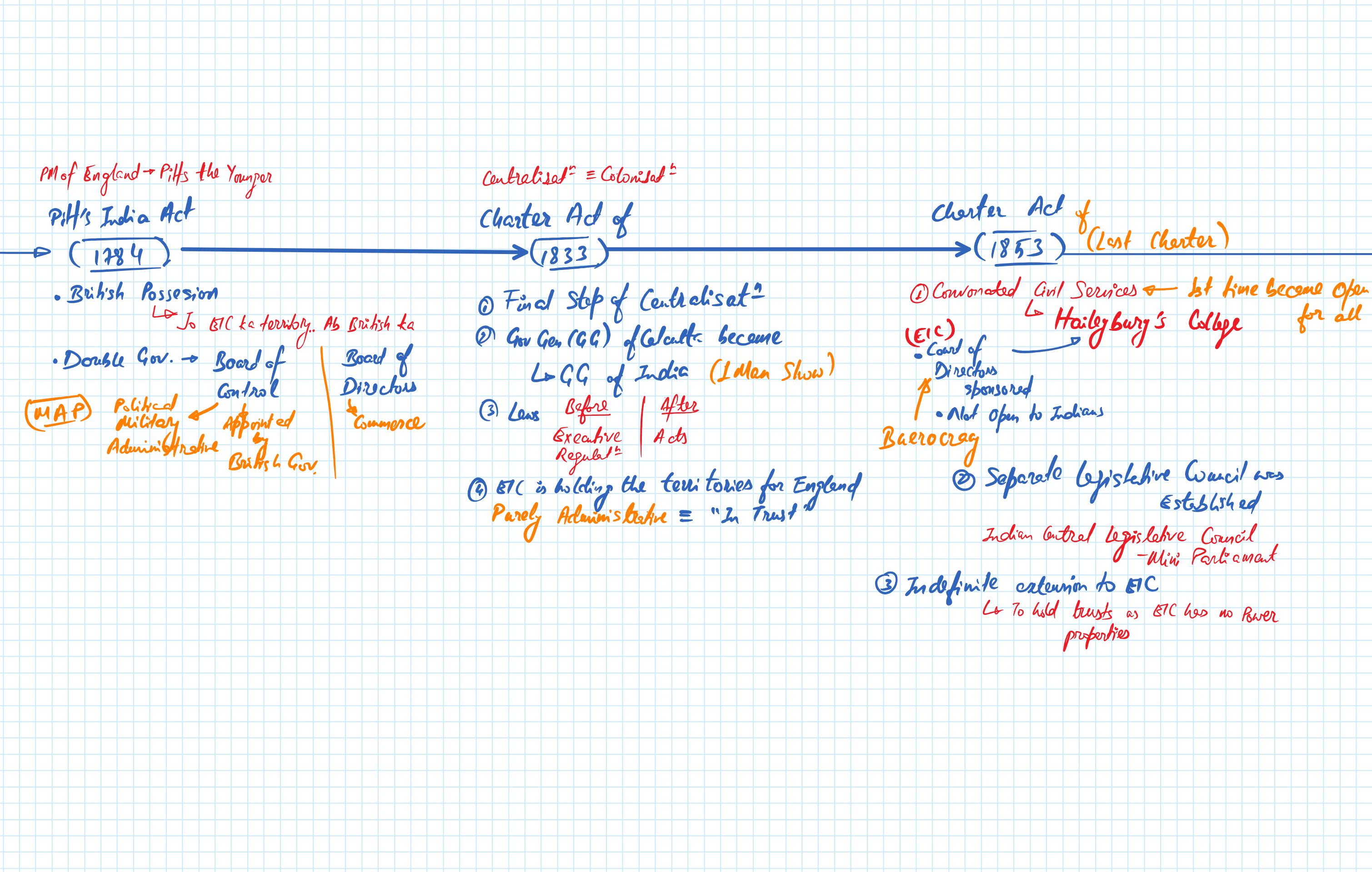
- 1784- Pitts- Double Gov, BOC (MAP), BOD
- 1833- Charter, Colony, GG of Cal = GG of INDIA
- 1853- Last Chanta, civil services open, mini parliament
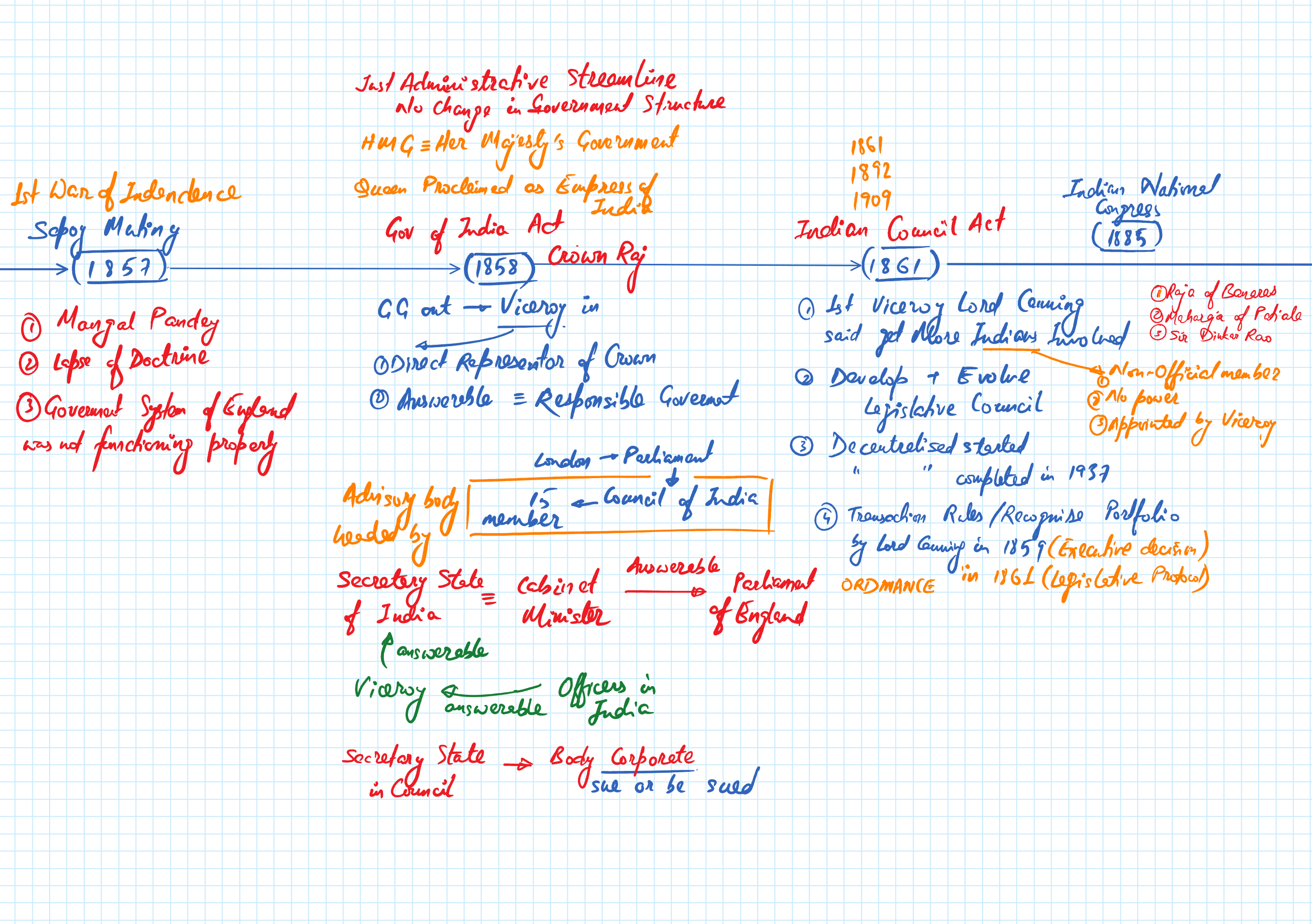
- 1857- Mangal Pandey
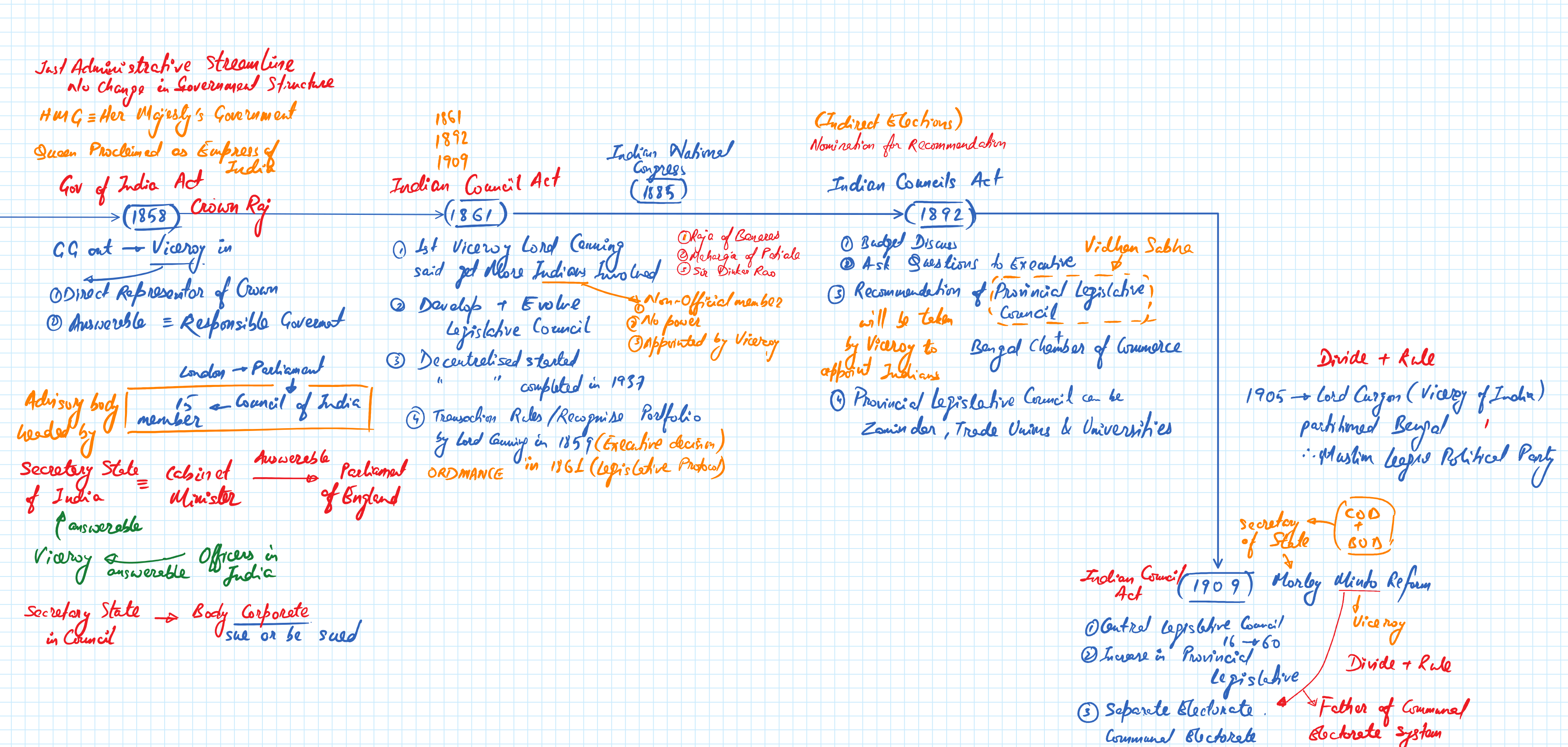
- 1858- Crown raj
- 1861- ICA 1, Involve Indians, D+E Legislative counc, Decentre
- 1885- INC
- 1892- Answerable Exe, Indirect election, Mini Vidhan Sabha
- 1905- Curzon-divide & rule
- 1909- ICA , MM reform, communal election
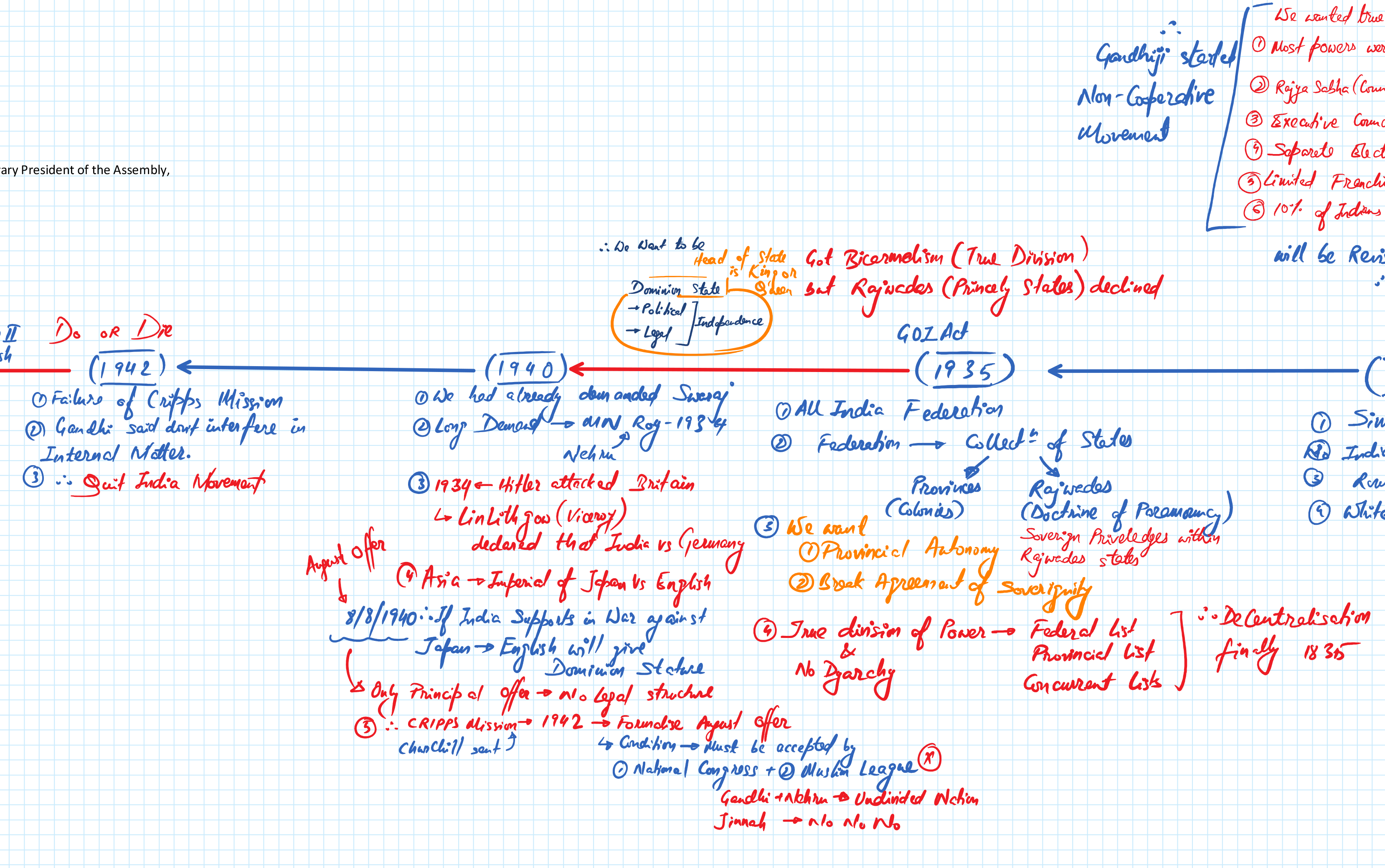
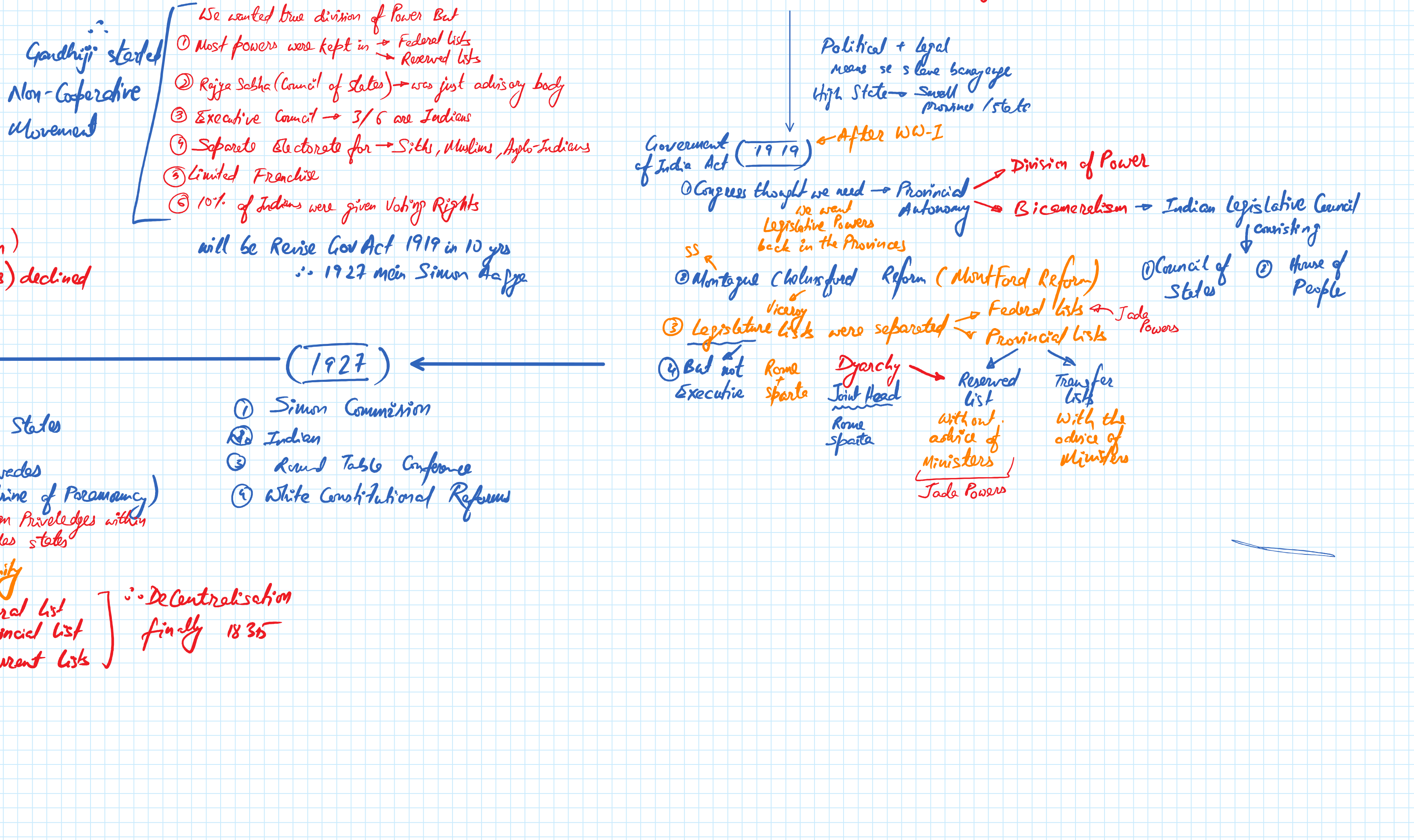
- 1919- GIA 1, false provincial autonomy
- 1927- Simon commision
- 1935- GOI 2, true bicarmelism, pricely state declined
- 1936- Dominion wanted
- 1940- Aug offer, Cripps Mission,
- 1942- QIM
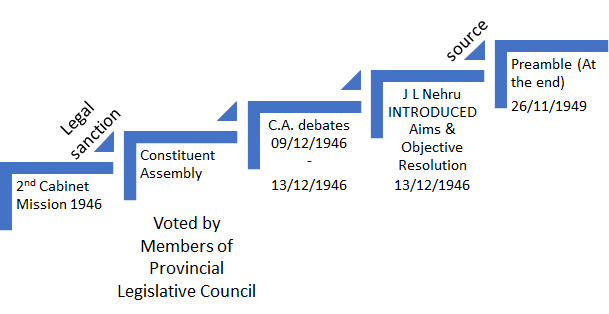
- 1946- cabinet mission, Constituent Assembly election
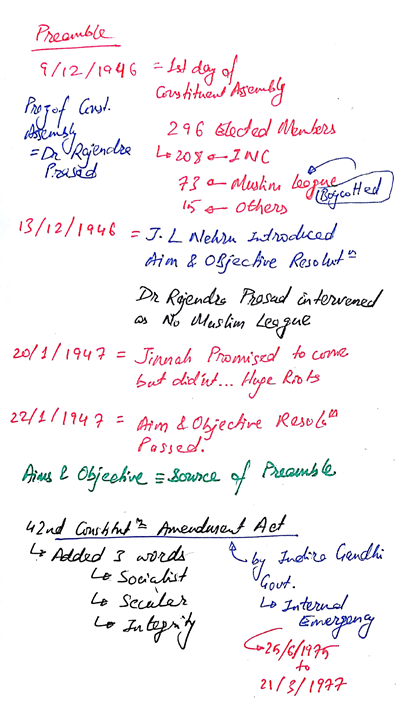
- 1947- IIA – Independence of India Act
- 1950- Constitution of India
UAF- Indian is completely sovereign otherwise bound by Law
Dr Ambedkar wanted to protect people from “PERCEPTION” of Socialism & Secularism.
Sovereign + Secular- by Indira Gandhi: political statement
Socialism Definition
Socialist –
1950 Marxist socialist (communism)- Centre will distribute resources equally
Gandhian Socialism – opportunity to earn resources.India has it sown brand of socialism – 90% GS + 10% MS
Dr Ambedkar- Equality of Status + Opportunity
SECULAR Definition-
Western Secular (French revol)– Divorce of State & Religion
Indian Secular- Watchful Ambivalence
Liberty of Belief Faith Worship (bfw)
after liberty of thought & Expression
Lengthiest written Constitution
Originally (1949), the Constitution contained a Preamble, 395 Articles (divided into 22 Parts) and 8 Schedules.
- Geographical factors- (vast country + diversity).
- 55% of Constitution = Government of India Act of 1935 -which was bulky.
- Single Constitution for both the Centre and the states except Jammu and Kashmir
- Dominance of legal luminaries in the Constituent Assembly. (lawyerbaji)
“..ransacking all the known Constitutions of the World”
Dr. B. R. Ambedkar
As per Dr. Ambedkar Article 32 (right to Constitutional Remedies) is the most important article of the Constitution – ‘an Article without which this constitution would be a nullity. It is the very soul of the Constitution and the very heart of it.’
Canada, Australia, Germany, USSR (now Russia), France, South Africa, Japan, and so on
The structural part, to a large extent, is derived from the Government of India Act,1935. The philosophical part (Fundamental Rights and the DPSP) derive their inspiration from the American and Irish constitutions. The political part – British Constitution.
A number of original features of the Constitution (as adopted in 1949) have undergone a substantial change, on account of several amendments, particularly 7th, 42nd, 44th, 73rd, 74th and 97th Amendments.
The 42nd Amendment Act (1976) is known as ‘Mini-Constitution’ due to the important and large number of changes made by it in various parts of the Constitution. However, in the Kesavananda Bharati case (1973), the Supreme Court ruled that the constituent power of Parliament under Article 368 does not enable it to alter the ‘basic structure’ of the Constitution.
British constitution is simple to amend and can be amended as passing laws.
American Constitution is toughest to amend. ( the amendments to the U.S. Constitution only become effective after being ratified by 3/4 of the states. Some amendments are quickly ratified. The 27th Amendment, on the other hand, was submitted in 1789 and did not achieve final ratification until 1992. )
Indian constitution is Flexi+Hard. Some can be amended under Article 368 with simple majority.
Some takes both Special majority and Absolute majority in Parliament + the ratification states. While some can be moderate.
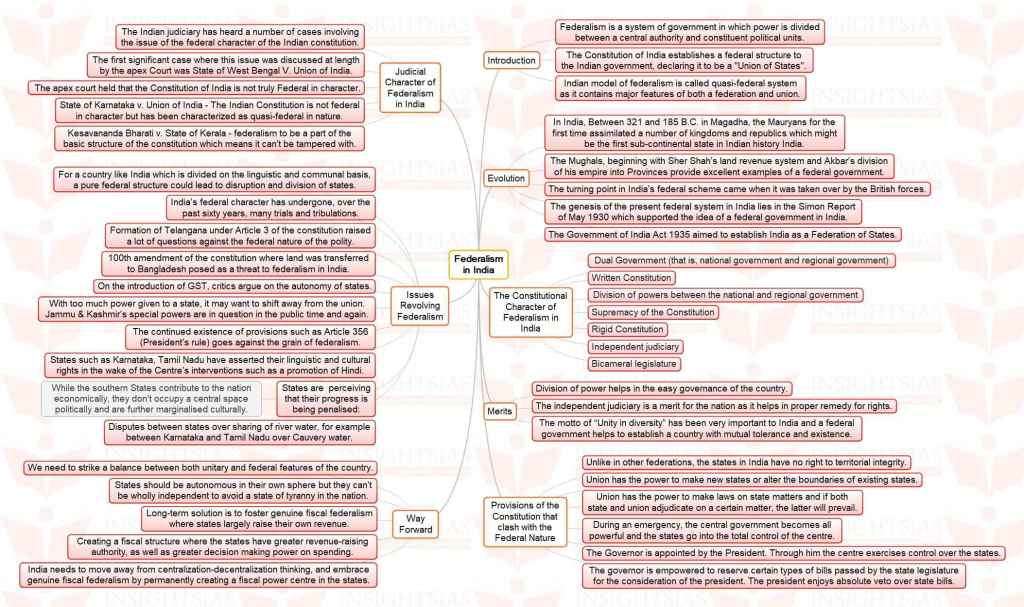
India is a Federal System with Unitary Bias. Quasi Federal in nature.
| 2 Levels government Bicameralism at Union Level Supremacy of written constitution Division of Power Independent Judiciary Rigid constitution | Strong Center Single Citizenship Single Constitution Governor appointed by Union at Head level of state (Article 153) All India Services |
 MY BOX