0 Rajdhani skirt Guwahati, cuts travel short
0 Rajdhani train via Bogibeel = India’s longest rail and road bridge across the Brahmaputra, which brought the two emotionally connected banks of eastern Assam closer by >7 hours has now brought those 2 banks closer to New Delhi by >100km
02505/ 02506 runs between New Delhi and Dibrugarh. The zero makes it a special train usually of the temporary variety.
EDUCATION
World Bank has approved the STARS= Strengthening Teaching-Learning and Results for States Programme–>
6 Indian states of Himachal Pradesh, Kerala, Madhya Pradesh, Maharashtra, Odisha and Rajasthan through the Samagra Shiksha.
- SDGs: It is in line with the Sustainable Development Goal for education (SDG 4) and will help produce better data on learning levels by improving the National Achievement Survey (NAS).
- PISA: STARS will assist India in participation in the Programme for International Student Assessment (PISA).
- PISA is a worldwide study by the Organisation for Economic Co-operation and Development (OECD) in member and non-member nations.
- It measures 15-year-olds’ ability to use their reading, mathematics and science knowledge and skills to meet real-life challenges.
ADB= Asian Development Bank will cover 5 states= Gujarat, Tamil Nadu, Uttarakhand, Jharkhand and Assam and every State will partner with one other State to share best practices.
Jagan vs. judges
Andhra Pradesh Chief Minister (CM) Y.S. Jagan Mohan Reddy’s letter to the Chief Justice of India complaining about the functioning of a few judges.
- Supreme Court Justice N.V. Ramana’s alleged influencing of posting of cases in the State High Court.
- Hostile attitude of some High Court judges towards the current state government of Andhra Pradesh and their deliberate and unsubstantiated striking down of the state government’s decisions and orders.
- This amounts to an accusation of misconduct, corruption and the political bias among the judges.
Important facts
- Unprecedented given that the current allegations have been made by a constitutional body, The Chief Minister of a state.
- This marks an open conflict between the judiciary and a Chief Minister.
- Article 121 article 211 of the COI expressly bar parliament and the state legislatures to discuss the conduct of any judge the constitution confers such immunity having regard to onerous responsibility of judges in discharge in constitution functions
Impeachment:
- The Constitution protects the independence of judges of the High Courts and the Supreme Court by making them removable only through a process of impeachment.
- Article 124 (4) of the Indian Constitution and the provisions of the Judges (Inquiry) Act, 1968 and corresponding rules deal with the impeachment process.
Procedure:
- For initiating the impeachment process, a motion has to be moved by either 100 Lok Sabha members or 50 Rajya Sabha MPs.
- If the motion is admitted, the Speaker of the Lok Sabha or Chairman of the Rajya Sabha will constitute an inquiry committee. This inquiry committee will comprise three members — a Supreme Court judge, a high court chief justice and an eminent jurist. The committee will frame charges and ask the judge to give a written response. The judge also has the right to examine witnesses.
- After the inquiry, the committee will determine whether the charges are valid or not and then submits its report. If the inquiry committee finds that the judge is not guilty, then there is no further action. If it finds him guilty, then the House of Parliament which initiated the motion, may consider continuing with the motion.
- The motion will be then debated and the judge (or his representative) will have the right to represent his case. After that, the motion will be voted upon. If there is two-thirds support of those present and voting, and majority support of the total strength of the House, it will be considered to have been passed. The process will then be repeated in the other House.
- After that, the Houses will send an address to the President asking that the judge be removed from office.
- As per Article 124(4) the above process must be completed in one session of the parliament.
- Given the procedure involved, it is not surprising that no judge has been impeached till date in independent India.
Editorial–>
Global warming effecting food security
UN Human Rights Council:
- The UNHRC is a United Nations body whose mission is to promote and protect human rights across the world.
- Apart from the UNHRC, the UN has also set up a number of treaty-based organisations to monitor compliance with human rights standards and international human rights treaties such as the Human Rights Committee and the Committee on Economic, Social and Cultural Rights
UN Human Rights Council:
- The UNHRC is a United Nations body whose mission is to promote and protect human rights across the world.
- Apart from the UNHRC, the UN has also set up a number of treaty-based organisations to monitor compliance with human rights standards and international human rights treaties such as the Human Rights Committee and the Committee on Economic, Social and Cultural Rights.
- The UNHRC was reconstituted from its predecessor organisation, the UN Commission on Human Rights to help overcome the “credibility deficit” of the previous organisation.
- The UNHRC is headquartered in Geneva, Switzerland.
- The council has representatives drawn from the General Assembly.
- The UNHRC has 47 members serving at any time with elections held to fill up seats every year, based on allocations to regions across the world to ensure geographical representation.
- Each elected member serves for a term of three years. Countries are disallowed from occupying a seat for more than two consecutive terms.
The UNHRC passes non-binding resolutions on human rights issues through a periodic review of all 193 UN member states called the Universal Periodic Review (UPR), besides overseeing expert investigation of violations in specific countries (Special Procedures).
A successful trial of the nuclear-capable Shaurya missile was conducted by India.
Shaurya Missile
- Shaurya is a land-based parallel of the submarine-launched K-15 missile.
- It is a land variant of short-range SLBM K-15 Sagarika, which has a range of at least 750 kilometres.
- These ballistic weapons belong to the K missile family — codenamed after late Dr APJ Abdul Kalam — which is launched from Arihant class of nuclear submarines.
- Because these missiles are to be launched from submarines, they are lighter, smaller and stealthier than their land-based counterparts; the Agni series.
HC–> Section 29 of POCSO Act applicable only after trial begins
POCSO ACT–> Sexual assault against minor.
Sec 29–> the Accused person under POCSO is preumed Gulity unless proven Innocent.
- Whether the presumption of guilt applies only at the stage of trial or does it also apply when a bail plea is being considered?
- It was clarified that if a bail plea is being considered before charges have been framed, Section 29 has no application, as trial commences when charges are framed against an accused and not before that.
SC against involuntary narco tests
SC–> t judgment of 2010 has held that involuntary administration of narco or lie detector tests is an intrusion into a person’s mental privacy.
“An individual’s decision to make a statement is the product of a private choice and there should be no scope for any other individual to interfere with such autonomy,” Supreme Court had held.
Such tests are an insult to human dignity and liberty and could have long-lasting effects.
Involuntary administration of Narco analysis test is also widely believed to be an intrusion of the right to privacy of an individual, a right that is guaranteed as a part of the right to life & personal liberty given under Article 21.
SC orders violated in Chardham project
900 km, ₹12,000 crore enterprise to connect the Char Dham pilgrimage centres in Uttarakhand, namely Gangotri, Yamunotri, Kedarnath and Badrinath.
700km is 10m wide. SC ruled that a width of 5.5m be enforced as it was in conformity with a 2018 recommendation of MoRTH for mountain roads.
Agriculture kand
- Agriculture falls within the legislative competence of State governments, through Entry 14 of the State List as mentioned in Schedule 7 of the Indian Constitution.
- Entry 33 of the Concurrent List, deals with ‘trade and commerce’ of some products listed in that Entry.
- Minimum Support Price (MSP) has no legislative backing.
- Article 301 Constitution of India assures freedom of trade, commerce and intercourse.
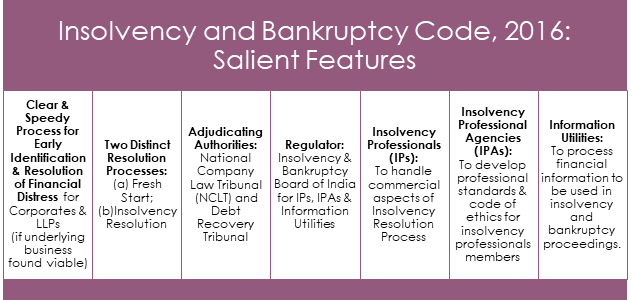
IBC 2016–> IBBI–> Regulatory + Statutory body + Structural reform has transformed insolvency resolution in India.
- IBC has focused on time-bound resolution, rather than liquidation
- successfully instilled confidence in the corporate resolution methodology.
- allowed credit to flow more freely to and within India while promoting investor and investee confidence.
IBC had improved Ease of Doing Business rankings.
India’s Resolving Insolvency Index under the Ease of Doing Business Index–> 52(2019) from 108(2018)
IBC had encouraged Domestic entrepreneurship+ FDI ($74.5 billion= 20% inc from 2018)
Overall time taken in recovery has improved nearly 3X. Less time–> less delay related low-value liquidation due to a high economic rate of depreciation.
MoCA–> the recovery rate has improved nearly 3X from 26.5% (2018)–> 71.6% (2019).
Government is working towards decriminalisation of minor offences.
The intent is to help differentiate between good faith mistakes and intentional bad faith actions, so as to penalise the former and criminalise the latter.
Helping MSMEs + Gong digital.
pelne ke liye:
- IBC is both flexible and dynamic, which makes it impactful, given how forward thinking the concept of an omnibus legislation of its nature actually is.
- Instil confidence in the corporate resolution methodology by streamlining the insolvency process in a sustainable, efficient, and value retaining manner.
- Insolvency and Bankruptcy Board of India (IBBI), it has established an unprecedented organisation that both regulates and develops insolvency policy, and assesses market realities.
- Commercial courts:
- The rolling out of the commercial courts, commercial divisions and the Commercial Appellate Divisions Act, 2015, to allow district court-level commercial courts, and the removing of over 1,500 obsolete and archaic laws will help improve the investment climate and also aid in enhancing enforceability of contracts in India.
- The enforceability of contracts has been a challenge in India. On average, it takes as many as 1,445 days for a contract to be enforced, and costs nearly 31% of the claim value.
HC Virus researchers get Nobel for medicine
Two Americans and a Briton have won the 2020 Nobel Prize for Medicine.
The three share the award for discovering and proving that a blood-borne virus could cause Hepatitis C
Hepatitis C:
- It is an infection that is caused by the Hepatitis C virus in the liver. It refers to an inflammatory condition of the liver.
- This can be transferred from needles that have been infected, at the time of birth (i.e. transmitted from infected mother to child), through body fluids of an infected person, it can also be transmitted through sexual contact specifically with HIV-infected persons.
- It does not spread through food or water.
- Presently there is no vaccine available for HCV. However, it can be treated with antiviral medication.
Flavivirus type–> Zika+ Dengue+ Yellow fever+ WNV+ Hepatitis C
Isak-Muivah faction of NSCN(IM)
wants the peace talks to be restarted at the level of the PM without any precondition and in a 3rd country.
NSCN(IM) = National Socialist Council of Nagaland
outfit which now prefers to be called the National Socialist Council of Nagalim, had set these conditions before declaring a ceasefire with the armed forces in mid-1997.
 MY BOX