Cyclone NIVAR named by Iran
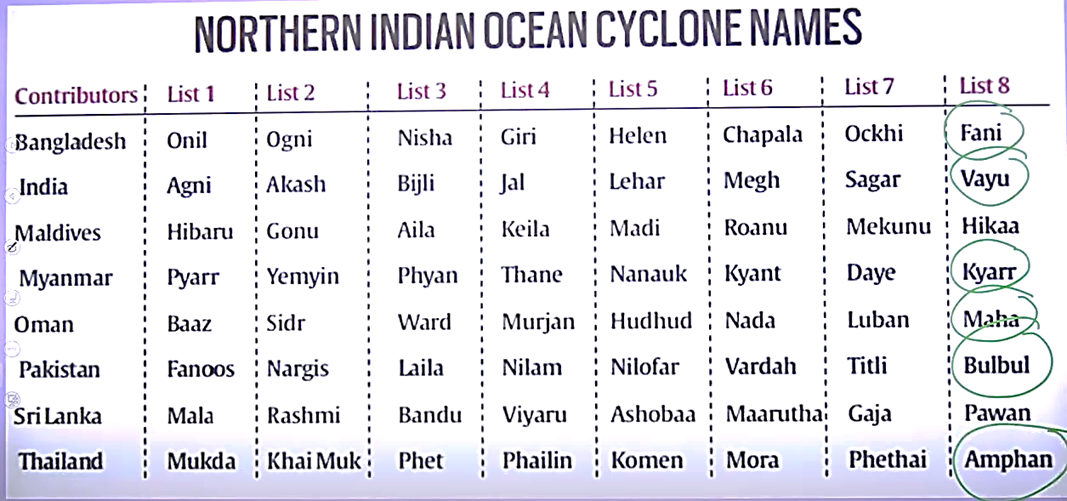
How are tropical cyclones named ?
- Cyclones that form in every ocean basin across the world are named by the regional specialised meteorological centres (RSMCs) and Tropical Cyclone Warning Centres (TCWCs).
- There are 6 RSMCs in the world, including the India Meteorological Department (IMD), and 5 TCWCs.
- As an RSMC, the IMD names the cyclones developing over the north Indian Ocean, including the Bay of Bengal and Arabian Sea, after following a standard procedure.
- The IMD is also mandated to issue advisories to 12 other countries in the region on the development of cyclones and storms.
When was the naming of cyclones started?
- In 2000, a group of nations called WMO/ESCAP (World Meteorological Organisation/United Nations Economic and Social Commission for Asia and the Pacific), which comprised Bangladesh, India, the Maldives, Myanmar, Oman, Pakistan, Sri Lanka and Thailand, decided to start naming cyclones in the region.
- After each country sent in suggestions, the WMO/ESCAP Panel on Tropical Cyclones (PTC) finalized the list.
The naming of cyclones over North Indian Ocean
- The names of cyclones in the Bay of Bengal, the Indian Ocean and the Arabian Sea are decided by eight countries.
- Each of them lists out 8 names which are approved by the weathermen of these countries. So each time the list has 64 names. The countries take turns to name the cyclones.
Kerala withdrew amendment
Kerala Govt has decided not to put into effect the ordinance revising the Kerala Police Act, 2011, seeking to empower the police to prosecute persons spreading defamatory content.
Shreya Singhal vs. Union of India (2015), –> SC struck down Section 66A of the IT Act.
- Offence was ‘overbroad’, that is, it was defined so widely that both innocent and offensive messaging could be brought under its ambit.
- The failure to define the offence narrowly fell short of the constitutional protection for free speech and expression.
- Same judgment, for the same reason, also struck down Section 118(d) of the Kerala Police Act.
The new ordinance was going to define offense as Cognisable, whereas criminal defamation under the IPC is non-cognisable.
- While upholding the validity of criminal defamation, the Court made it clear that no police officer can register an FIR for the offence.
- It can only be prosecuted as a private complaint, for Sec.199 Cr.P.C. says no court shall take cognisance of defamation unless the aggrieved party files a complaint.
It is in conflict with the central laws.
- By making defamatory statements cognisable and raising the prison term, the Kerala ordinance effectively amends the IPC and Cr.P.C., a move for which the Centre’s assent is mandatory.
132 countries attend global meet on criminal finances
The 4th Global Conference on Criminal Finances and Cryptocurrencies was organised by the Interpol, Europol and the Basel Institute on Governance.
Kerala withdraw the general consent accorded to the CBI
- Kerala became the 5th state to withdraw the General Consent. The other four states are Maharashtra, West Bengal, Rajasthan and Chhattisgarh.
- The general consent given to the CBI has been withdrawn through the notifications under Section 6 of the Delhi Special Police Establishment Act 1946.
- The state government stated that the Central agency would be entrusted with the investigation of cases in necessary situations, only with the special permission of the state government.
What happens after the withdrawal?
- The CBI would still have the power to investigate old cases registered when general consent existed.
- The cases registered anywhere else in the country, but involving people stationed in Kerala would allow CBI’s jurisdiction to extend to the state.
- It will only bar the CBI from registering a case within the jurisdiction of the state but the CBI could still file cases in Delhi and continue to probe people inside the two states.
- In October 2018 an order of the Delhi High Court makes it clear that the agency can probe anyone in a state that has withdrawn “general consent” if the case is not registered in that state.
What is General Consent?
- The CBI is governed by the Delhi Special Police Establishment Act and that makes consent of a state government mandatory for conducting an investigation in that state.
- “General consent” is normally given to help the CBI seamlessly conduct its investigation into cases of corruption against, in the concerned state.
- Section 6 of the Act says, “Nothing contained in Section 5 (which deals with the jurisdiction of CBI) shall be deemed to enable any member of the Delhi Special Police Establishment to exercise powers and jurisdiction in any area in a State, not being a Union Territory or Railway, area, without the consent of the Government of that State.”
- In exercise of the power conferred by Section 6 of the Delhi Special Police Establishment Act, 1946, the government can withdraw the general consent to exercise the powers and jurisdiction.
DEC 2019-– AAI recommends Centre to privatise 6 airports–> Lucknow, Ahmedabad, Jaipur, Mangaluru, Thiruvananthapuram, and Guwahati for operation, management and development through public-private partnership (PPP) model.
Everybody markets %ages
Pziifier + Biontech--> mRNA early results of the phase 3 study have indicated the candidate vaccine being “90% protective” in the nearly 40,000 volunteers involved in the trial.
Astra Zeneca— Oxford Vaccine is 70% effective.. Success rate is 90% if 1/2+1 doses are given
Efficacy rate is 62% is 1+1 doses are given
Sputnik V shows interim 91% efficacy with 18k volunteers– RDIF= Russian Direct Investment Fund–> 100mn=10Cr doses to be made.INdian generic company Hetero will amke this.
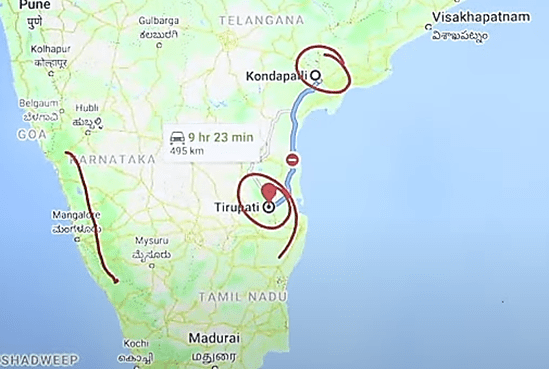
GAIL proposes natural gas pipe line from Kondapalli to Tirupati(450km)
India pledges projects worth $80 mill to Aghanistan
since 2002 India gave ~$2Bill~ 150 projects to Aghanistan
Poshan Abhiyaan needs a boost: NITI Aayog
Poshan Abhiyaan must be stepped up to meet the targets set by the Centre to reduce stunting, wasting and anaemia by 2022.
- POSHAN Abhiyaan is also known = National Nutrition Mission.
- The term ‘Poshan’ in the name of the programme stands for ‘Prime Minister’s Overarching Scheme for Holistic Nutrition’.
- It is the world’s largest nutrition programme for children and mothers.
- The mission is a multi-ministerial initiative and aims at removing malnutrition from the country by 2022.
Issues:
- >1/3 of the children under 5 face stunting + wasting and
- 40% aged between 1-4 are anaemic.
- >50% of pregnant and other women were found to be anaemic, said the National Family Health Survey 4 released in 2016.
- India’s targets are conservative as compared to the global targets defined by the World Health Assembly (WHA), which is a prevalence rate of 5% of stunting as opposed to India’s goal of reducing stunting levels to 13.3% by 2022.
- The target of reducing prevalence levels of anaemia among pregnant women from 50.3% in 2016 to 34.4% in 2022 and among adolescent girls from 52.9% in 2016 to 39.66%, is also considered conservative.
- Another component of the mission is the gradual scaling up of the interventions under the World Bank assisted Integrated Child Development Services (ICDS) Systems.
- The implementing agency is the Ministry of Women and Child Development, GOI.
- The NITI Aayog also plays a pivotal role in the mission.
he National Nutrition Mission aims at achieving the following:
- Reduce stunting by 2% annually.
- Reduce under-nutrition by 2% annually.
- Reduce anaemia by 3% annually.
- Reduce low birth weight by 2% annually.
Poshan abhiyan has 7 pillars.
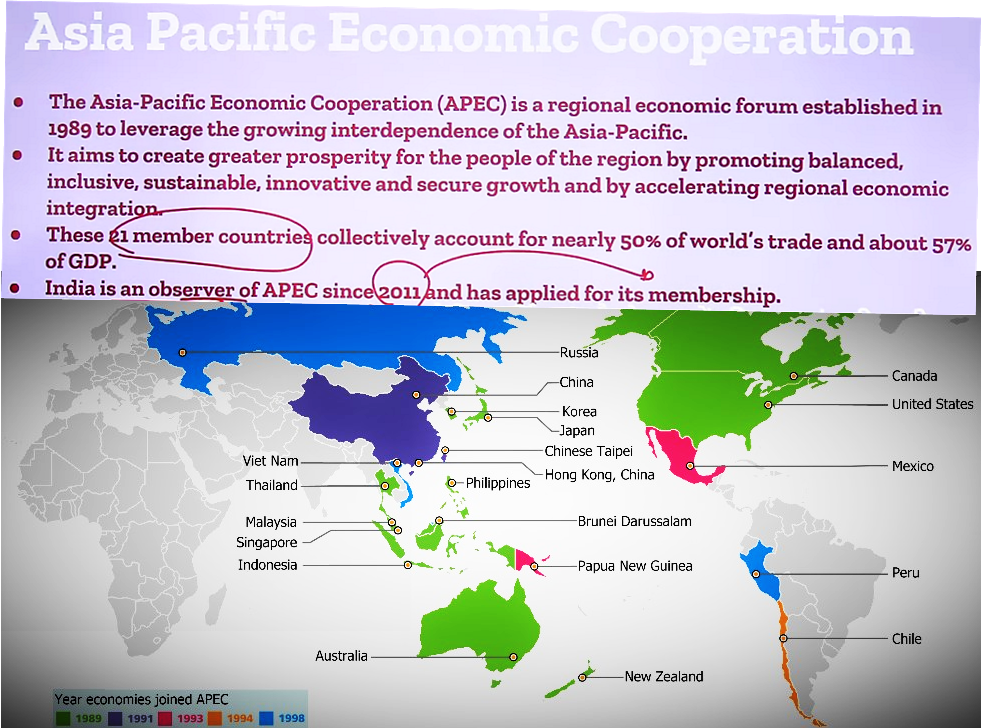
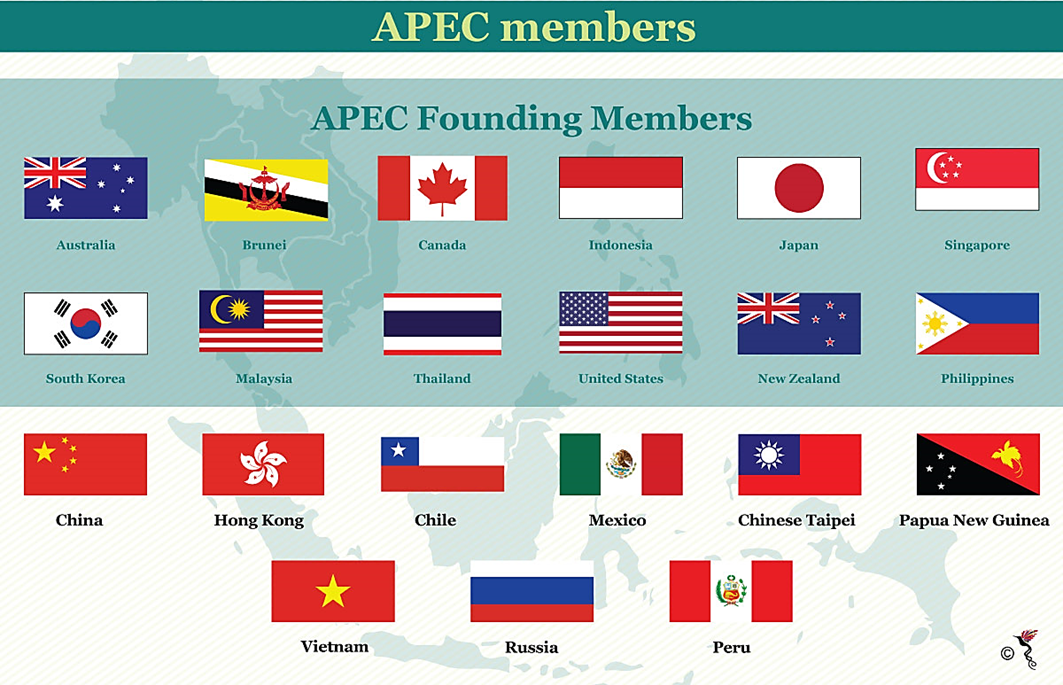
APEC
Martyrdom of GUru Tegh Bahadur
Guru Tegh Bahadur– born- 1 April 1621 – 24 November 1675)[7][8] was the 9 of 10 Gurus of the Sikh religion. He was born at Amritsar in 1621 and was the youngest son of Guru Hargobind.
Sikh tradition states that the guru stood up for the rights of Kashmiri Pandits who approached him to intercede on their behalf with the emperor and ask him to revoke a recently imposed jizya (tax)[9] and was publicly killed in 1675 on the orders of Mughal emperorAurangzeb in Delhi for himself refusing Mughal rulers and defying them.[3][10][11]Gurudwara Sis Ganj Sahib and Gurdwara Rakab Ganj Sahib in Delhi mark the places of execution and cremation of his body.[12] His martyrdom is remembered as the Shaheedi Divas of Guru Tegh Bahadur every year on 24 November, according to the Nanakshahi calendar
Banking health and the ‘K Curve’ dynamics
‘Price to Book Value’ ratio (P/BV)
- Financial ratio used to compare the market value of a stock to its book value.
- It gives an idea about key attributes the market values most:
- Adequacy of current capital and
- Runway available to the entity for profitable growth.
How is P/B ratio calculated?
- P/B Ratio = market price per share / book value per share
What does P/B ratio indicate?
The P/B ratio measures the market’s valuation of a company relative to its book value.
- A P/B> 1 indicates that the market believes that the company can grow and generate Return on Equity (RoE) above the hurdle rate that investors expect.
- The faster it can grow or the greater the spread of the ROE above the hurdle rate, the greater the P/B multiple (above 1).
- P/B <1–> indicates that the market either does not believe the bank has recognised all its bad loans or has the business model to deliver returns above the hurdle rate.
- A lower P/B ratio could thus mean the stock is undervalued.
- However, it could also mean something is fundamentally wrong with the company.
- This may be because the bank does not have a good deposit franchise, has bad cost discipline or a broken lending model.
- A lower P/B ratio could thus mean the stock is undervalued.
K Curve
- It depicts the inequality existing between different financial entities in terms of their attributes that determine their future growth and profitability.
- Widening of the arms of the ‘K’ would imply that the inequality is increasing, while narrowing of the span of the ‘K’ would mean the opposite.
India set to launch deep ocean mission
Envisages the exploration of minerals, energy and marine diversity of the underwater world.
Mission is expected to cost over ₹4,000 crore and will give a boost to efforts to explore India’s vast Exclusive Economic Zone and Continental Shelf.
Piloted by MoES + Dept of Biotechnology+ DRDO+ ISRO+ CSIR
A conspiracy against inter-faith love
“The right to marry a person of one’s choice is integral to Article 21 (right to life and liberty) of the Constitution”.
Allahabad High Court has said the right to live with a person of one’s choice is intrinsic to the right to life and personal liberty irrespective of religion.
Supreme Court (SC) in Lata Singh v. State of U.P. (2006) ordered “stern action” against all those threatening or carrying out threats against couples.
- The Supreme Court reiterated the fact that inter-caste marriages are not banned as per Hindu Marriage Act and are in the national interest. It is illegal to stop them in any way.
Move to allow corporates to set up banks attracts flak
Former RBI governor Raghuram Rajan and ex-deputy governor Viral Acharya’s comments on the recent recommendations by RBI working group to allow corporate houses to set up banks.
- Internal commitee of RBI had proposed an overhaul of the licensing policy for private banks.
- It suggested allowing large corporate and industrial houses to float banks in India after suitable amendments to the Banking Regulation Act, which should be aimed at preventing the concentration of risks and unabated lending among group companies.
To allow corporate houses to set up banks is a bombshell at this juncture and that it is more important to stick to the tried and tested limits on the involvement of business houses in the banking sector.
Rajan and Acharya have raised questions over how the banks by corporate houses could make good loans when it is owned by the borrowers themselves.
China prepares probe to bring back lunar rocks
‘Abhayam’ app for women passengers in A.P.
Single window approval for FDI by Mar.
A new, unified single-window clearance system for foreign direct investment (FDI) proposals would be in place by March 31, 2021.
- Access to regulators, policymakers and facilitators are all available at one point, digitally.
- This would not only make approvals transparent but expeditious.
- The single window clearance system being developed will be ‘very effective’ and enable the potential investor to interact with all the ministries whose approvals are required, at the Centre as well as in the States
- Centre’s industrial information system for potential investors includes details of land availability in as many as 14 states.
15th G20 Leaders’ Summit
PM attended 15th G20 Summit convened by Saudi Arabia, on 21-22 November, 2020.
Theme “Realizing Opportunities of 21st Century for All” which has assumed greater importance in the wake of the ongoing COVID-19 pandemic
- PM termed the COVID-19 pandemic as an important turning point in history of humanity and the biggest challenge the world is facing since the World War II. He called for decisive action by G20, not limited to economic recovery, jobs and trade, but to focus on preserving Planet Earth noting that all of us are trustees of humanity’s future.
- PM called for a new Global Index for the Post-Corona World that comprises 4 key elements based on which, the G20 can lay the foundation of a new world–
- creation of a vast Talent Pool;
- ensuring that Technology reaches all segments of the society;
- Transparency in systems of governance;
- Dealing with Mother Earth with a spirit of Trusteeship.
- ‘Work from Anywhere’ is a new normal in the post-COVID world, PM also suggested creation of a G20 Virtual Secretariat as a follow up and documentation repository.
Integrated approach to combat climate change
M Modi called for integrated approach to combat climate change during side event — ‘Safeguarding the Planet: The Circular Carbon Economy Approach’ at G20 Summit.
PM mentioned initiatives:
- India has made LED lights popular and saved 38 million tonnes of carbon dioxide emission per year.
- Smoke free kitchens have been provided to over 80 million households through our Ujjwala Scheme.
- India is making efforts to eliminate single-use plastics.
- India aims to restore 26 million hectares of degraded land by 2030 and is encouraging a circular economy.
- The International Solar Alliance (ISA) is among the fastest growing international organisations, with 88 signatories.
Chinese dam projects on Brahmaputra are a threat to lives and livelihoods downstream
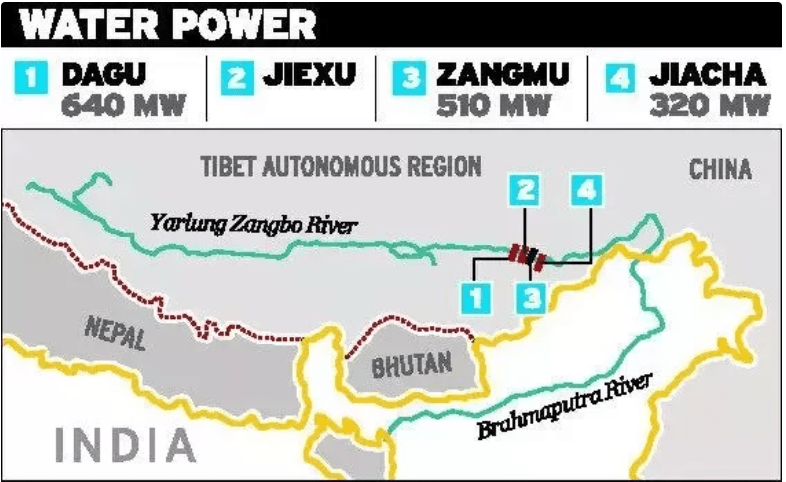
2,880 km-long Brahmaputra= Yarlung Tsangpo= perennial river which originates in Tibet.
swings around to make a spectacular U-turn at the Shuomatan Point or Great Bend before it enters India’s easternmost state, Arunachal Pradesh. Here it is known as the Siang River.
Issues faced by inhabitants along the river
- People living near the Brahmaputra region have to deal with two floods annually:
- One caused by the melting of the Himalayan snow in summer.
- The other due to the monsoon flows.
- Climate change has further intensified the frequency of floods in this region which has posed a major threat to lower riparian countries like India and Bangladesh, which is impacting their food security.
- The river is in itself dynamic as frequent landslides and geological activity force it to change course very often.
China,–> 20% of the world’s population, has only 7% of water resources.
- Rapid industrialization has polluted the surface and the groundwater.
- China’s northern part is water-stressed and its southern part is water-rich. The southern region is a major food producer and has a significant industrial capacity as a consequence of more people living there.
- Ambitious plan to link its south and north through canals, aqueducts and linking of major rivers to ensure water security. In pursuit of these goals, China, being an upper riparian state in Asia, has been blocking rivers like the Mekong and its tributaries.
- It is affecting Southeast Asian countries like Thailand, Vietnam, Laos and Cambodia. Dam construction has resulted in widely fluctuating river flow, threatening fish productivity, which is key to the region’s people and economy.
- It has caused immense damage to the environment.
India has 17% of the world’s population and 4% of water.
A majority of India’s population reside in the Gangetic plains, the southern and western regions experience harsh and dry summer and the rainfall is scarce and erratic in the eastern coast.
As in China, an equally ambitious north-south river-linking project has been proposed in India, though it has come under criticism for potentially disturbing fragile ecosystems.
Concerns
- First, they will eventually lead to degradation of the entire basin: Massive amounts of silt carried by the river would get blocked by dams leading to a fall in the quality of soil and eventual reduction in agricultural productivity.
- Second, the location of the dams in the Himalayas poses a risk. Seismologists consider the Himalayas as most vulnerable to earthquakes and seismic activity.
- Landslides resulting from earthquakes pose a significant threat — the 2015 Nepal earthquake and the resultant landslides wiped out several dams and other facilities.
- The sheer size of the infrastructure projects undertaken by China, and increasingly by India, poses a significant threat to the populations living downstream.
- Close to a million people live in the Brahmaputra basin in India and tens of millions further downstream in Bangladesh. The projects in the Himalayas threaten the existence of hundreds of thousands of people.
- Third, for the Chinese, water is a key weapon in their expansionist designs. China believes dam building on the Brahmaputra helps it assert a claim over Arunachal Pradesh.
- Fourth, dams, canals, irrigation systems can turn water into a political weapon to be wielded in war, or during peace to signal annoyance with a co-riparian state.
- Many feel low lying areas in India will be completely inundated if China suddenly releases all this stored up water.
| Mekong River |
| It is a trans-boundary river in Southeast Asia.Originating from the Tibetan Plateau the Mekong river flows from China to Myanmar, Laos, Thailand, Cambodia and Vietnam. The extreme seasonal variations in flow and the presence of rapids and waterfalls in the Mekong make navigation difficult. |
| Lower Mekong Initiative:It is a partnership between the United States, Cambodia, Laos, Myanmar, Thailand, and Vietnam to advance sustainable economic growth in the region. The initiative supports collaboration among member countries through programs that address shared challenges in the region. |
| Mekong-Ganga Cooperation (MGC)The Mekong-Ganga Cooperation (MGC) is an initiative by six countries – India and five ASEAN countries, namely, Cambodia, Lao PDR, Myanmar, Thailand and Vietnam.It has been created for cooperation in tourism, culture, education, as well as transport and communications. |
Disputed vilage= Pangda built by China in Bhutan’s disputed region
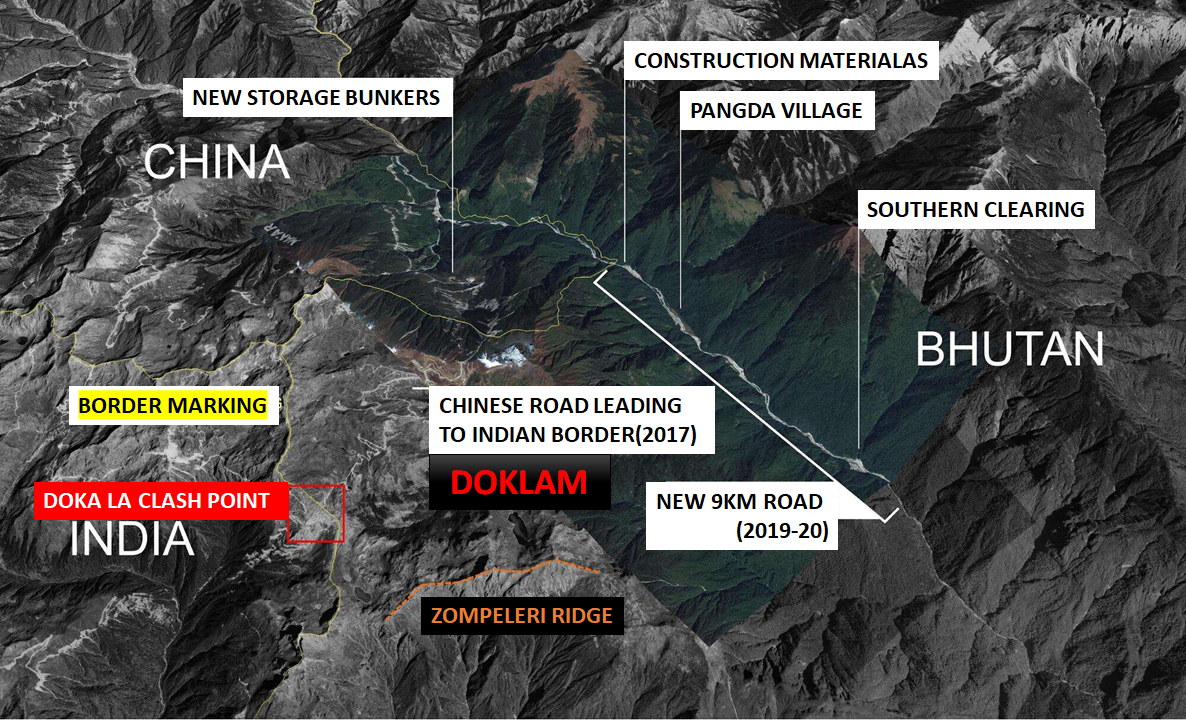
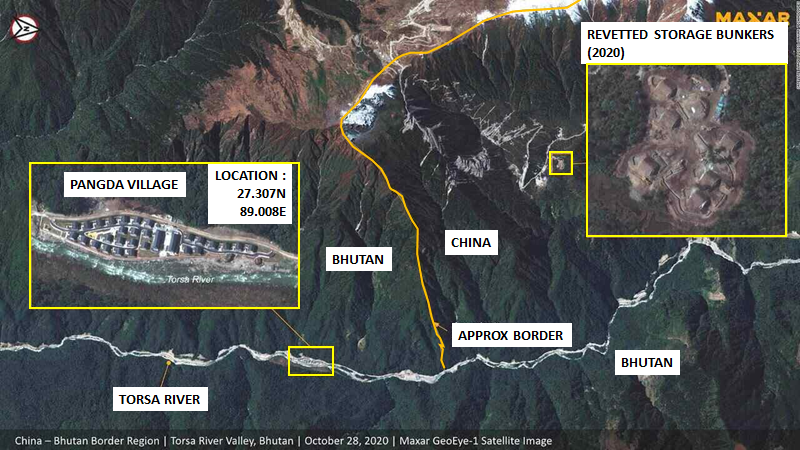
BHUTAN denies any such village in their territory.
Arunachal Pradesh CM pushes for highway along Tibet border
Arunachal Pradesh CM has opined that developing the Frontier Highway is the key in a conflict situation.
- Since the stand-off between the Indian and Chinese armies in Ladakh, Arunachal Pradesh has been pushing for the ambitious Frontier Highway project along the “India-Tibet border” for facilitating faster movement of troops if a war-like situation arises.
- The project has gained momentum after having brought all armed forces, BRO=Border Roads Organisation and other stakeholder agencies on the same page for a coordinated approach to build the highway at Himalayan heights along the 1,100 km LAC=Line of Actual Control.
- However, the state is unable to get cheaper foreign funding because of Beijing’s interference.
NGT directs States, UTs to set up nodal agencies to protect, restore waterbodies
Hurricanes to reach further inland
- A recent study on the North Atlantic hurricanes of the last 50 years notes that these hurricanes weakened slowly compared with those that occurred 50 years ago. This indicates the increasing tendency of these hurricanes to reach further inland.
- The study indicates the possible influence of global warming on this observed trend and notes that in future, as the world warms, the hazard posed by hurricanes would only increase given their ability to reach further inland and be more powerful.
- Atmospheric scientists have found that the warmer ocean waters are indeed a key factor in creating more devastating hurricanes. The rising temperatures are directly linked to the upswing in hurricane intensity and frequency seen in the past few decades.
- New research notes that more than 100 million years earlier, a climate change cataclysm in the form of an abrupt global warming incident may have pushed some dinosaur species into extinction.
- series of volcanic eruptions over several million years released huge amounts of CO2 and methane in the atmosphere, warming the planet intensely.
- This observation is based on the recent discovery of a previously unknown dinosaur, named Bagualia alba. This is in the family of massive, long-necked sauropods, the largest animals to walk the Earth
India to 2x oil refining capacity
Current level= 250mill tonnes
Target level= 400- 500mill tonnes by next 5 yrs– 2025-26
Kala-azar was eliminated from a highly endemic district in Bihar
- Kala-azar or visceral leishmaniasis (VL) is a tropical disease characterised by irregular fever, weight loss, anaemia and swelling of the spleen and liver. It is caused by a protozoan Leishmania parasite and is transmitted to humans by the bite of infected female sandflies.
- According to the World Health Organisation (WHO) India accounts for about two-thirds of the total 7 to 10 lakh new global cases annually,
An initiative was launched by WHO to eliminate VL as a public health problem from the South East Asia region by 2020, which has since been extended to 2023.
- A disease is eliminated when the annual incidence is reduced to less than 1 case per 10,000 people at the sub-district or block level. Eradication would mean there are zero cases.
Mohsen Fakhrizadeh= Iran’s leading nuclear scientist assassinated
Mohsen Fakhrizadeh=leading Iranian nuclear scientist and a brigadier general in the Islamic Revolutionary Guard has been assassinated in Tehran.
there was an expectancy in a shift in policy towards Iran by the USA due to change in the leadership, moving from “maximum pressure” policy of outgoing President Donald Trump.
P5+1 nuclear deal
- The nuclear deal was signed in 2015 under the efforts of the previous US administration led by Barack Obama to curb the stockpiling of low enriched uranium.
- The unilateral pullout by Donald Trump administration from the nuclear deal in may 2018 led to Iran violating the terms of the agreement and expand its nuclear arsenal.
West Asian Triangle
- The 3 key regional players of West Asia are Iran, Israel, Saudi Arabia. Saudi Arabia and Israel are wary of Iran’s nuclear programme from being revived and Iran’s bargain would be to seek lifting of sanctions which could make it stronger.
- The US is involved in talks with Israel and Saudi Arabia to maintain the balance of power and subsequently establish peace in the region.
- Pressure mounting on Iran
- US sanctions have crippled Iran’s economy with high persistent inflation and skyrocketing unemployment rate along with Israel’s covert and overt operations have raised questions over the defence and security arrangements.
- Iran’s allies Syria and Russia have turned a ‘blind-eye’ towards persistent attack from Israeli jets on Iranian assets and militia across the border in Syria.
- Dilemma
- Full-blown retaliation would only escalate the tensions in the region, which could, in turn, present an opportunity to the US and its allies to impose severe sanctions, it could also hurt the global image of Iran and maybe seen as a ‘mischief monger’ of West Asia.
- Showing restraint would appear as a ‘backward step’ and this would further erode the diminishing image of the Iranian leadership in both within and outside the border.
Impact On India
- West Asia being part of India’s extended neighbourhood, instability in the region can have economic, security implications on India.
- Further US sanctions on Iran might put India in a tough spot, especially when India is seeing Chabahar port as the gateway to Central Asia and Iran is one of the key crude oil suppliers to India and also not to forget India enjoys civilizational ties with Iran.
- Escalation of ties will also cause fluctuation in crude oil supplies not only from Iran but from West Asia, which could increase the crude oil prices and it can further have a domino effect on various sectors of Indian economy which is already reeling under COVID stress.
RT-LAMP: a new technology for detecting COVID-19
Currently deployed RT-PCR= Real-time reverse transcription-polymerase chain reaction test and the COVID-19 serology tests have highlighted the need to have a diagnostic tool that is accurate, scalable and quick.
Drawbacks for RT-PCR
- Cost
- Human Resource training
- Specificity & sensitivity
- Time
The RT-LAMP= Reverse Transcriptase loop-mediated isothermal amplification
Technology will be perfect for Covid-19.
RT-LAMP (Reverse Transcriptase loop-mediated isothermal amplification) technology.
- Loop-mediated isothermal amplification, or LAMP, is an assay that can be used for viral RNA detection. Reverse-transcription LAMP (RT-LAMP) allows for quicker analysis of genetic material than traditional PCR and has been successfully used in the detection of the COVID-19 virus
- This is a one-step nucleic acid amplification method to multiply specific sequences of RNA of the coronavirus.
- Here, the RNA is first made into cDNA (copy DNA) by the usual reverse transcription (the process in cells by which an enzyme makes a copy of DNA from RNA. The enzyme that makes the DNA copy is called reverse transcriptase and is found in retroviruses), then the DNA is amplified by the LAMP technique.
Q2 manufacturing rebound puzzles economists
- India’s manufacturing sector has rebounded from a contraction of 39.3% in GVA in the April-June quarter to 0.6% growth in the July-September.
- It’s seen as an anomaly especially when the GDP estimates for the same quarter contracted by 7.5%.
- The positive manufacturing growth has puzzled many economists and the divergence in the Index of Industrial Production and the GVA has also led to confusion
- Many economists have cautioned reading too much in the numbers saying that the incremental growth in GVA is owed to aggressive cost-cutting measures, soft raw materials cost and a trimmed wage bill.
- SBI research has revealed that small firms have undertaken 10%-12% cuts in employee costs. This could have an effect on household consumption expenditure.
- Low Base-effect is also seen to be the reason for such a recovery seen in the manufacturing sector.
- The National Statistics Office stressed that its GDP estimates were affected by lockdown and relying on miscellaneous data such as GST collections, interaction with professional bodies were also not complete in its depiction.
 MY BOX