CONSTITUTIONAL DESIGN
South Africa
South African constitution is one of the finest constitutions the world.
Nelson Mandela was tried for treason by the white South African government. He and 7 other leaders were sentenced to life imprisonment in 1964 for daring to oppose the apartheid regime in his country. He spent the next 28 years in South Africa’s most dreaded prison, Robben Island.

1950- African National Congress (ANC) was the umbrella under which protests and strikes were made. Also included workers’ unions and the Communist Party.
As protests and struggles against apartheid had increased, the government realised that they could no longer keep the blacks under their rule through repression.
Nelson Mandela was freed after 28 years of imprisonment.
At midnight of 26 April 1994 new flag of Republic of South Africa was made.
Why we need a constitution ?
The oppressor and the oppressed in this new democracy were planning to live together as equals. It was not going to be easy for them to trust each other.
Nobody should be excluded, no one should be treated as a demon.
WHAt does a Constitution do?
- It generates a degree of trust and coordination that is necessary for different kind of people to live together
- It specifies how the government will be constituted, who will have power to take which decisions
- It lays down limits on the powers of the government and tells us what the rights of the citizens are
- It expresses the aspirations of the people about creating a good society.
The blacks agreed that majority rule would not be absolute. They agreed that the majority would not take away the property of the white minority. This compromise was not easy.The other was one person one vote.
The only way to build and maintain trust in such a situation is to write down some rules of the game that everyone would abide by. It decides rights of the citizen.
It provides its citizens the most extensive rights available in any country.
All over the world people have differences of opinion and interests. Cooperative society or a political party- they need a constitution.

South Africa vs Gandhi in new era
India
The makers of the constitution had anxieties about the present and the future of the country.
It was also a struggle to rejuvenate our country and to transform our society and politics.
1928, Motilal Nehru and eight other Congress leaders drafted a constitution for India. In 1931, the resolution at the Karachi session of the Indian National Congress dwelt on how independent India’s constitution should look like. universal adult franchise, right to freedom and equality and to protecting the rights of minorities in the constitution of independent India.
- British had introduced very weak legislatures.
- The experience gained by Indians in the working of the legislative institutions proved to be very useful for the country.
- Ideals of French Revolution,
- The practice of parliamentary democracy in Britain
- The Bill of Rights in the US
- Socialist revolution in Russia had inspired many Indians to think of shaping a system based on social and economic equality.
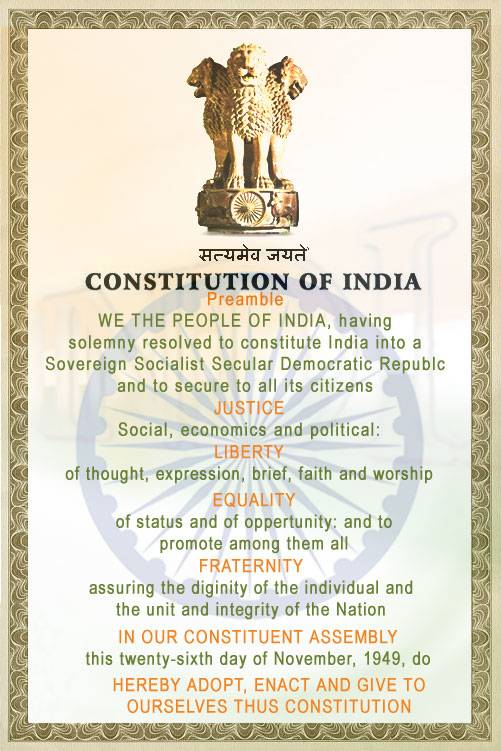
Major portion of the constitution is from Government of India Act 1935 because it was made for governance in India by the Britishers.
Drafting committee of Constitution comprised of elected representatives called the Constituent Assembly. The members deliberated for 114 days spread over three years.
- Elections to the Constituent Assembly were held in July 1946
- 1st meeting was held in December 1946.
- Indian constitution had 299 members.
- last meeting of constituent assembly was at 24 Jan 1950.
- elected mainly by the members of the existing Provincial Legislatures
- In social terms too, the Assembly represented members from different language groups, castes, classes, religions and occupations
Over the last half a century, several groups have questioned some provisions of the Constitution
But no large social group or political party has ever questioned the legitimacy of the Constitution itself.
Every document presented and every word spoken in the Constituent Assembly has been recorded and preserved. These are called ‘Constituent Assembly Debates’. When printed, these debates are 12 bulky volumes
 MY BOX