Vakatakas
Wikipedia
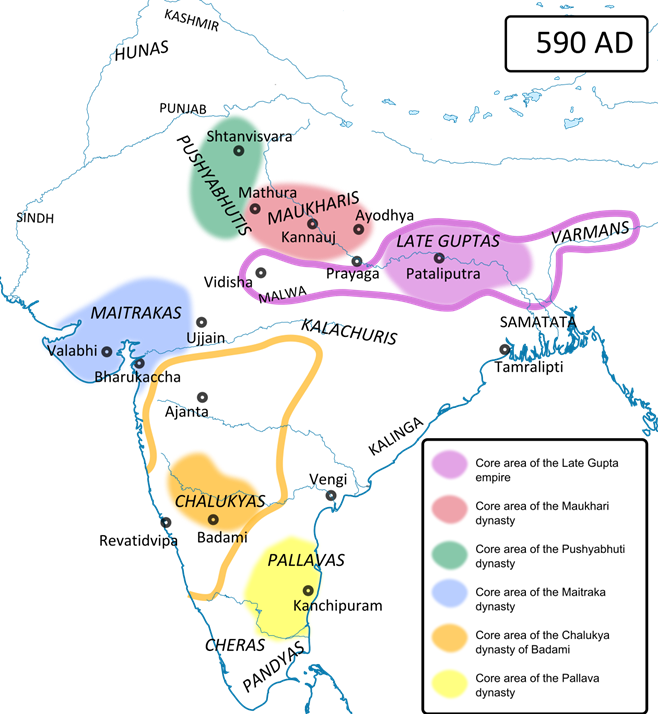
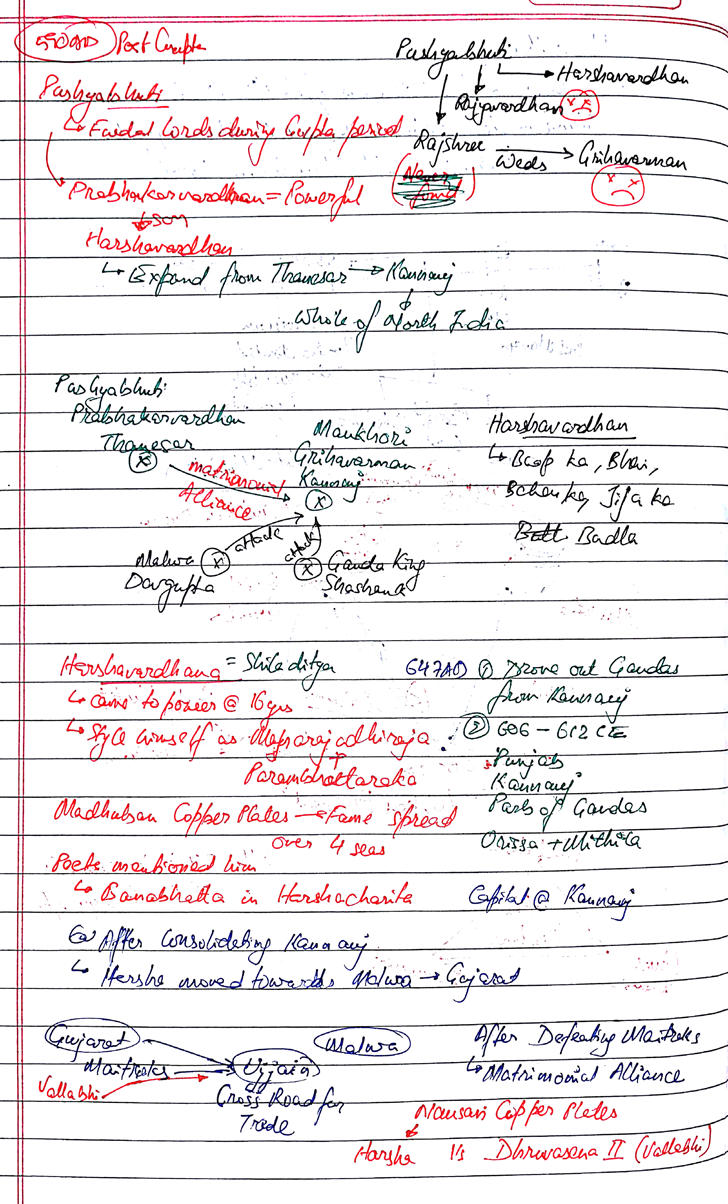
Harsha (c. 590–647 CE)–> member of the Vardhana dynasty; and was the son of Prabhakaravardhana who defeated the Alchon Huna invaders,[6] and the younger brother of Rajyavardhana, a king of Thanesar, present-day Haryana.
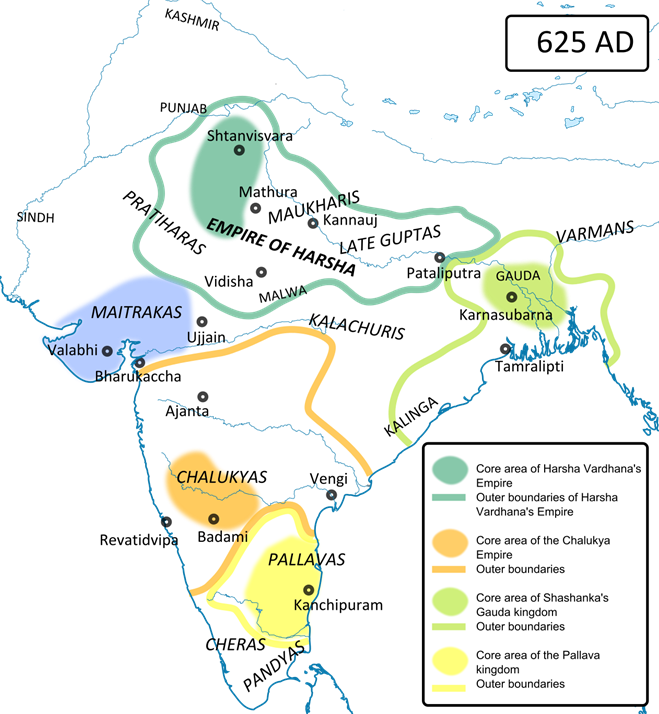
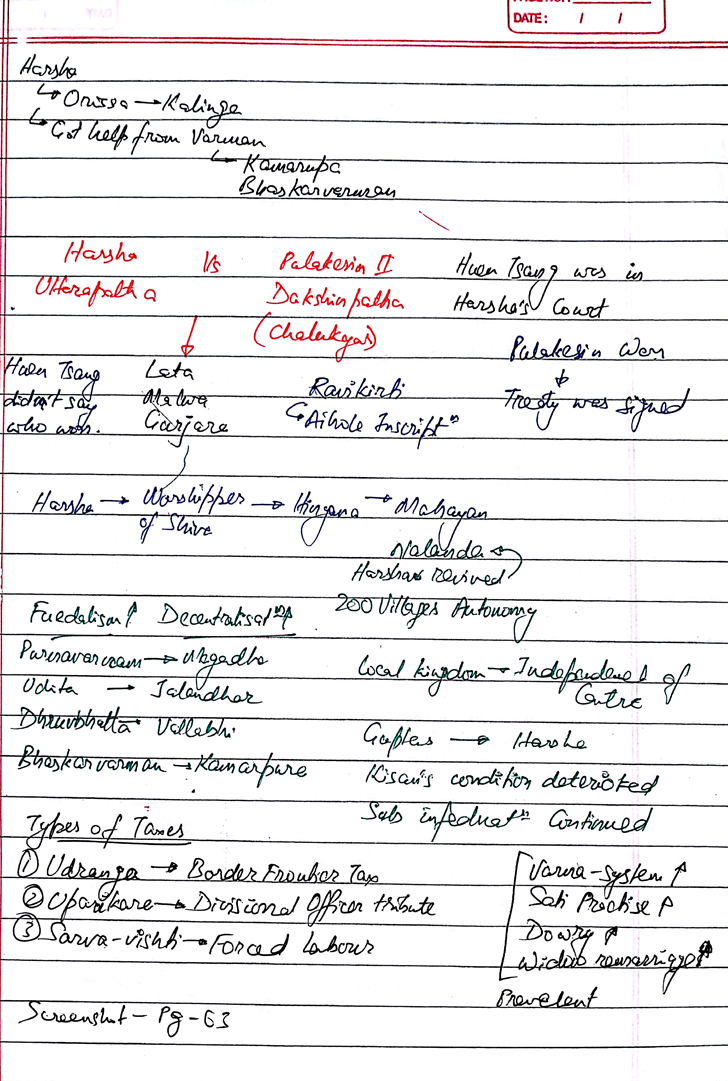
His Empire covered much of North and Northwestern India and South until Narmada River; and eventually made Kannauj (in the present Uttar Pradesh state) his capital, and ruled till 647 CE.[7] Harsha was defeated by the south Indian Emperor Pulakeshin II of the Chalukya dynasty in the Battle of Narmada when Harsha tried to expand his Empire into the southern peninsula of India.
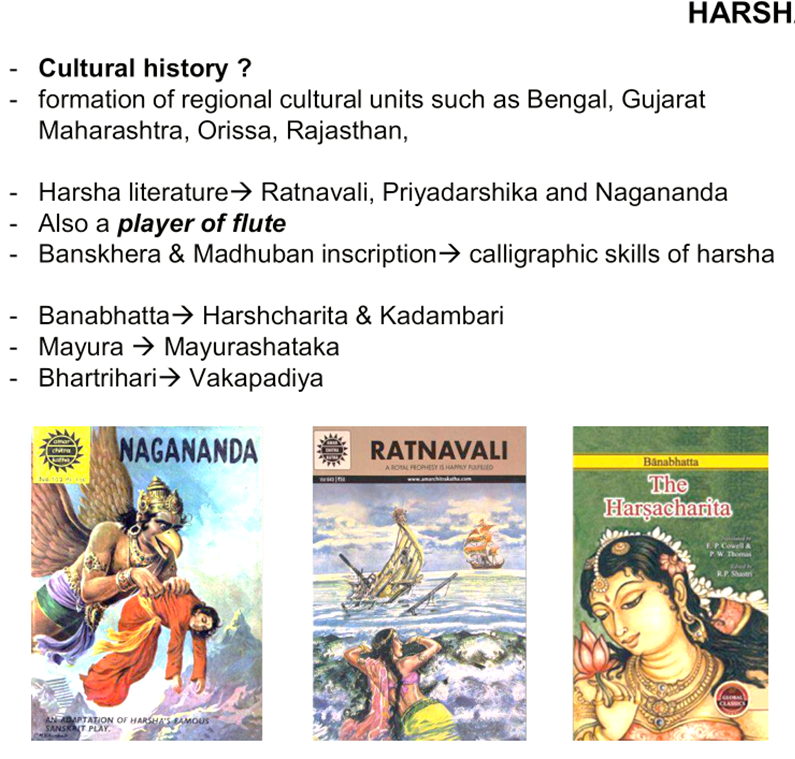
The Chinese traveller Xuanzang visited the court of Harsha and wrote a very favourable account of him, praising his justice and generosity.[7] His biography Harshacharita (“Deeds of Harsha”) written by Sanskrit poet Banabhatta, describes his association with Thanesar, besides mentioning the defence wall, a moat and the palace with a two-storied Dhavalagriha (white mansion).[9]
At the time of Hwen Tshang‘s visit, Kanoj was the capital of Raja Harshvardhan, the most powerful sovereign in Northern India. According to Xuanxang, Emperor Harsha was of the Vaishya caste [Fei-she].
Pulakeshin II repelled an invasion led by Harsha on the banks of Narmada in the winter of 618–619. Pulakeshin then entered into a treaty with Harsha, with the Narmada River designated as the border between the Chalukya Empire and that of Harshavardhana.
Like many other ancient Indian rulers, Harsha was eclectic in his religious views and practices. His seals describe his ancestors as sun-worshippers, his elder brother as a Buddhist, and himself as a Shaivite. His land grant inscriptions describe him as Parama-maheshvara (supreme [parama] great lord [mahā-īśvara]), and his play Nāgaāanda tells the story of the Bodhisattva Jīmūtavāhavana, and the invocatory verse at the beginning is dedicated to the Buddha, described in the act of vanquishing Māra (so much so that the two verses, together with a third, are also preserved separately in Tibetan translation as the *Mārajit-stotra.[24] His court poet Bana describes him as a Shaivite.[25]
Passing through → Tashkand, Samarkand and
Balkh,
- finally reached Gandhara in 630 CE
- Stayed at Nalanda→ → 5 years
- Stayed in the court of Harsha for few years
- Visited Assam (Kamrupa) → king Bhaskarvarman
- Harsha→ Religious assembly at Kannauj to honour him
- Mentions about the Prayag assembly of Harsha
- Left India by 644 CE
3/4 th income used for religious purpose
Benevolent administration
- Not much taxation→ 1/6 th land revenue
- Income divided into 4 parts
Huge army→ 100000 infantry, 60000 elephants, 50000 chariots
 MY BOX