PP = Prevent Proliferation
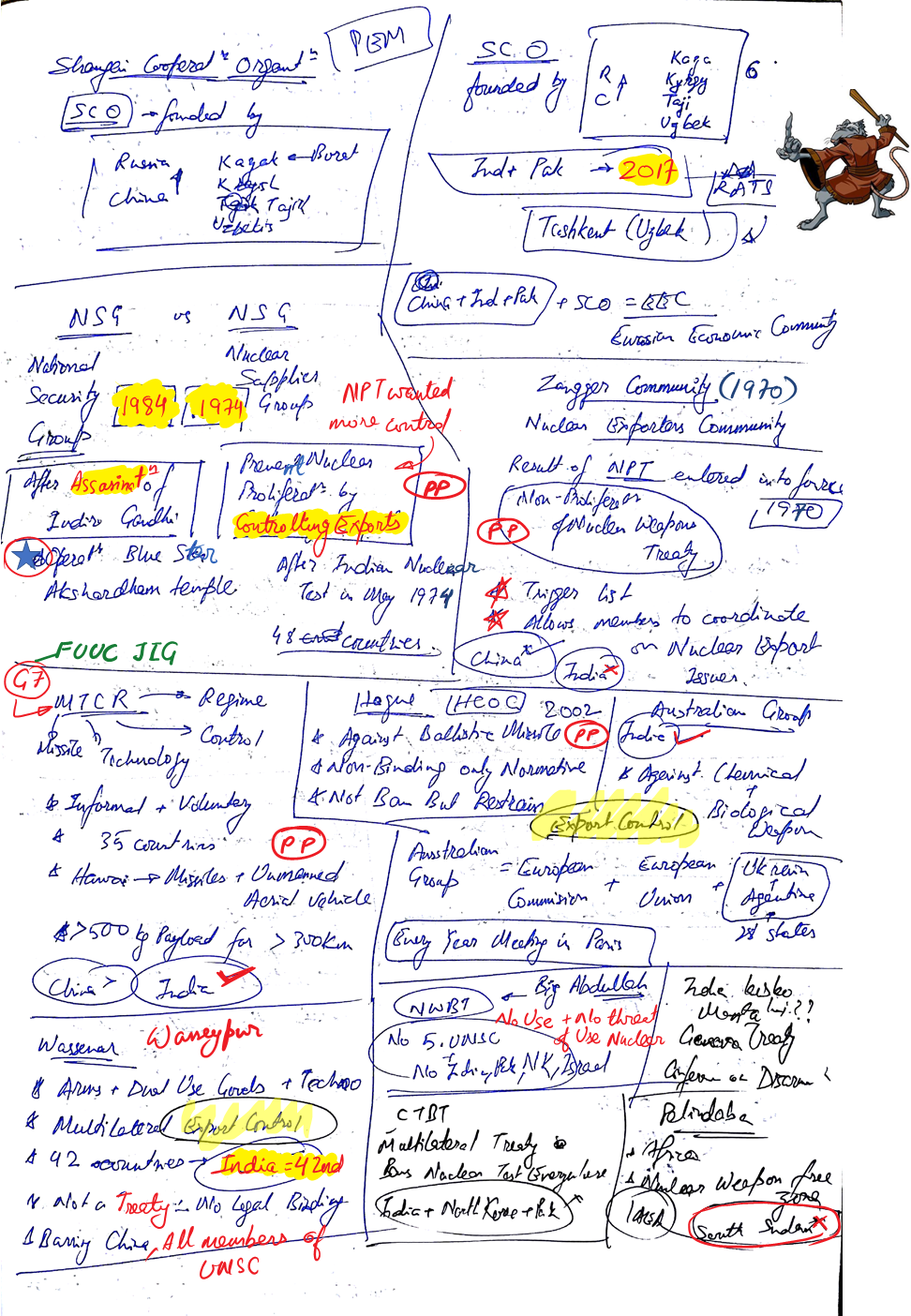
RATS– Regional Anti Terrorist Structure
HCOC– Hague Code of Conduct = International Code of Conduct of Anti Ballistic Missile Proliferation
- NPT– Non Proliferation Treaty= Treaty on the Non-Proliferation of Nuclear Weapons – 1968; 1970
- Zangger Community= Nuclear Exporters Committee- 1970
- NSG= Nuclear Supplier Group- 1974
- Australian Group = Multilateral export control regime (MECR)- 1985…. 2018- India joined
- MTCR– Missile Technology Control Regime- 1987
- CTBT= Comprehensive Nuclear-Test-Ban Treaty – 1996
- Wassenar Arrangements- 1996…. 2017- India
- Pelindaba = African Nuclear-Weapon-Free Zone Treaty- 1996; 2009
- SCO– Shanghai cooperation Org- 2001; 2002
- HCOC = Hague Code of Conduct= ICOC= International Code of Conduct against Ballistic Missile Proliferation -2002
- NWBT= Nuclear Weapon Ban Treaty = Treaty on the Prohibition of Nuclear Weapons- 2017
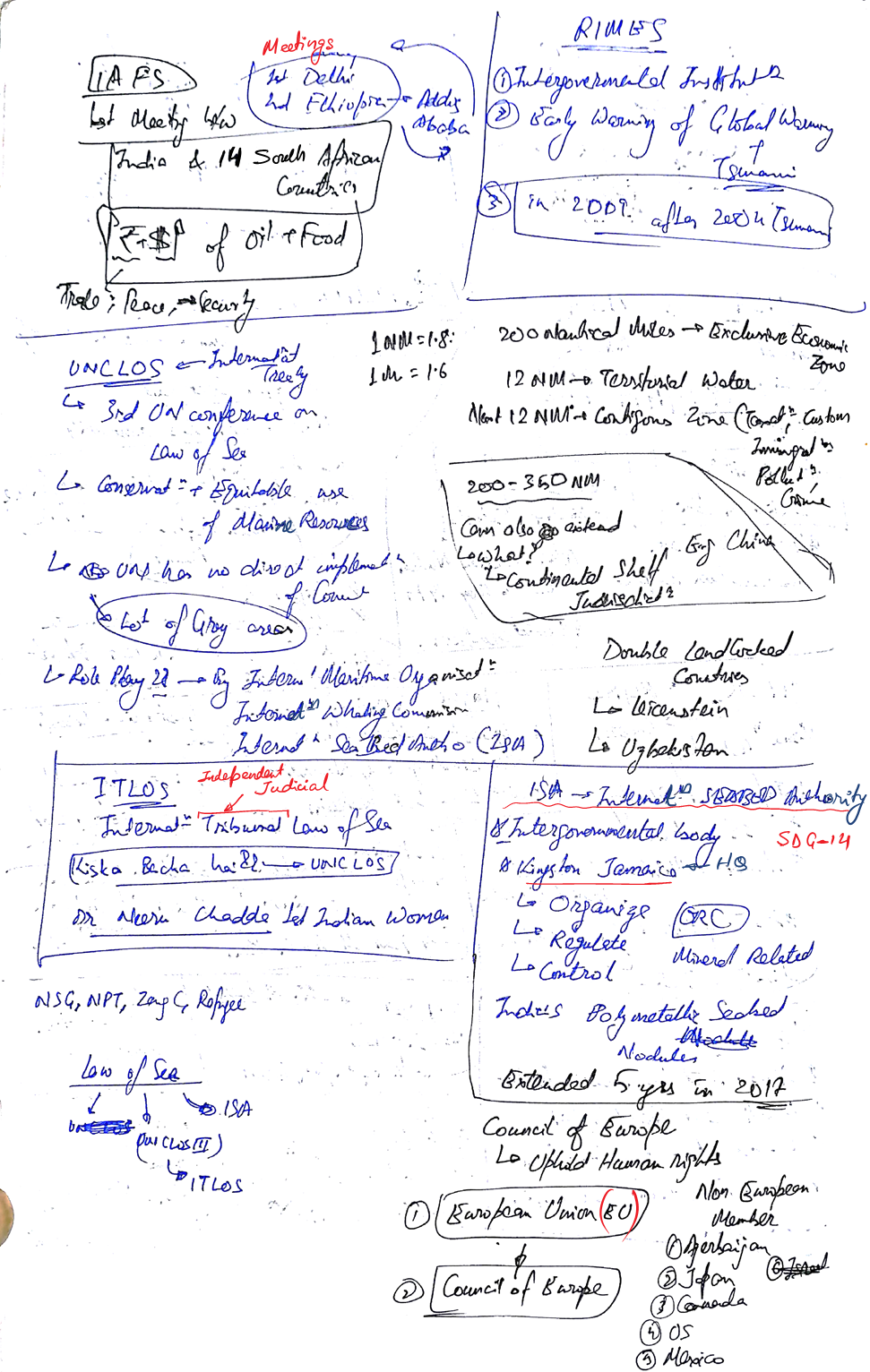
IAFS = India- South Africa Forum Summit
RIMES = Regional Integrated Multi-hazard Early Warning System
SDG 14 =Life Below Water – Conserve and sustainably use the oceans, seas and marine resources for sustainable development
Antarctica— 1. Dakshin Ganga 2. Maitri
3. Bharti
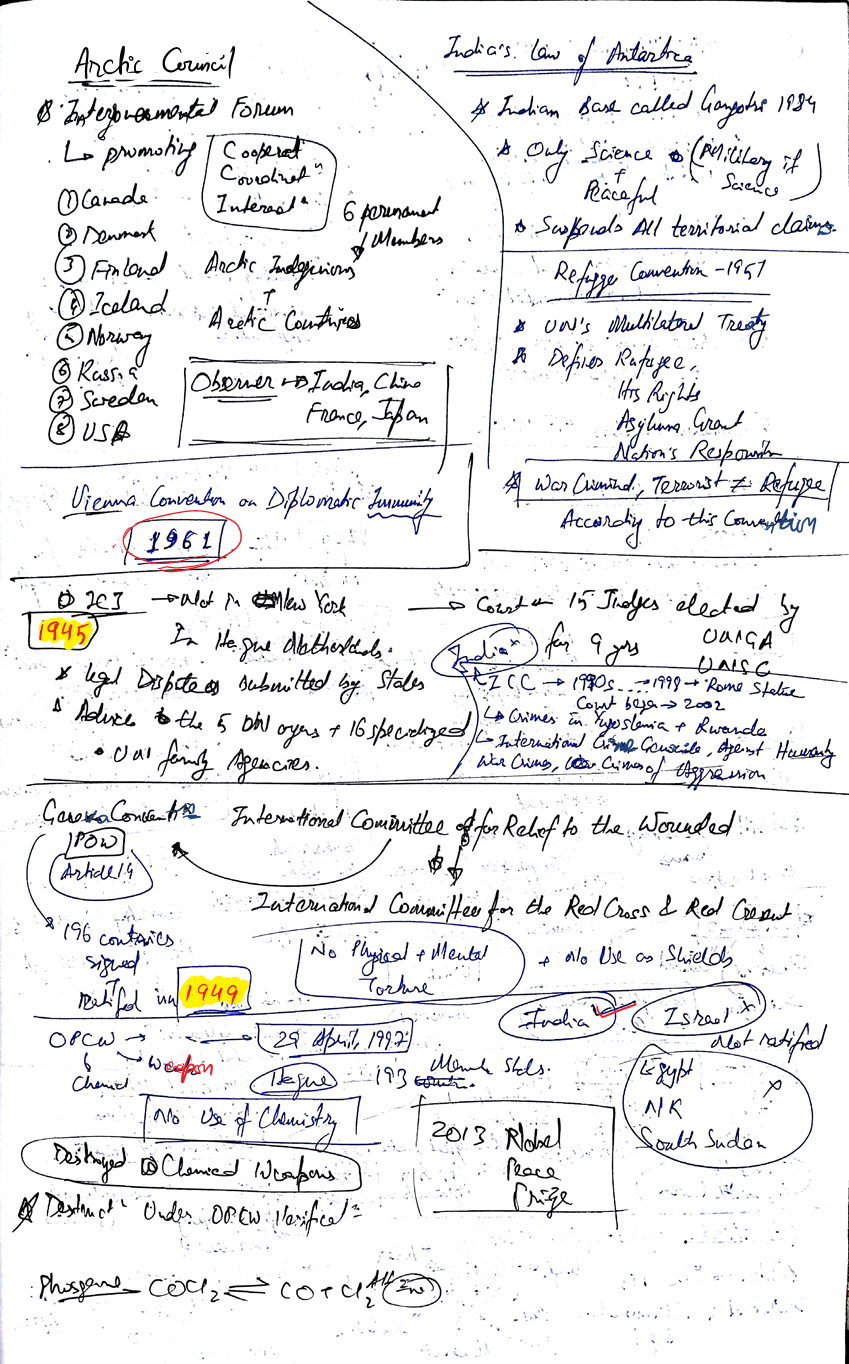
OPCW— DesPerate MoFo
- Destroying all existing chemical weapons under international verification by the OPCW.
- Providing assistance and protection to States Parties against chemical threats.
- Monitoring chemical industry to prevent chemical weapons from re-emerging.
- Fostering international cooperation to strengthen implementation of the Convention and promote the peaceful use of chemistry.
Geneva conv–
POW= Prisoners of war
ICC= International Criminal Court..123 members
Ad hoc tribunals set up in the 1990s–>2002 = Court
intended to complement existing national judicial systems and it may therefore exercise its jurisdiction only when certain conditions are met.
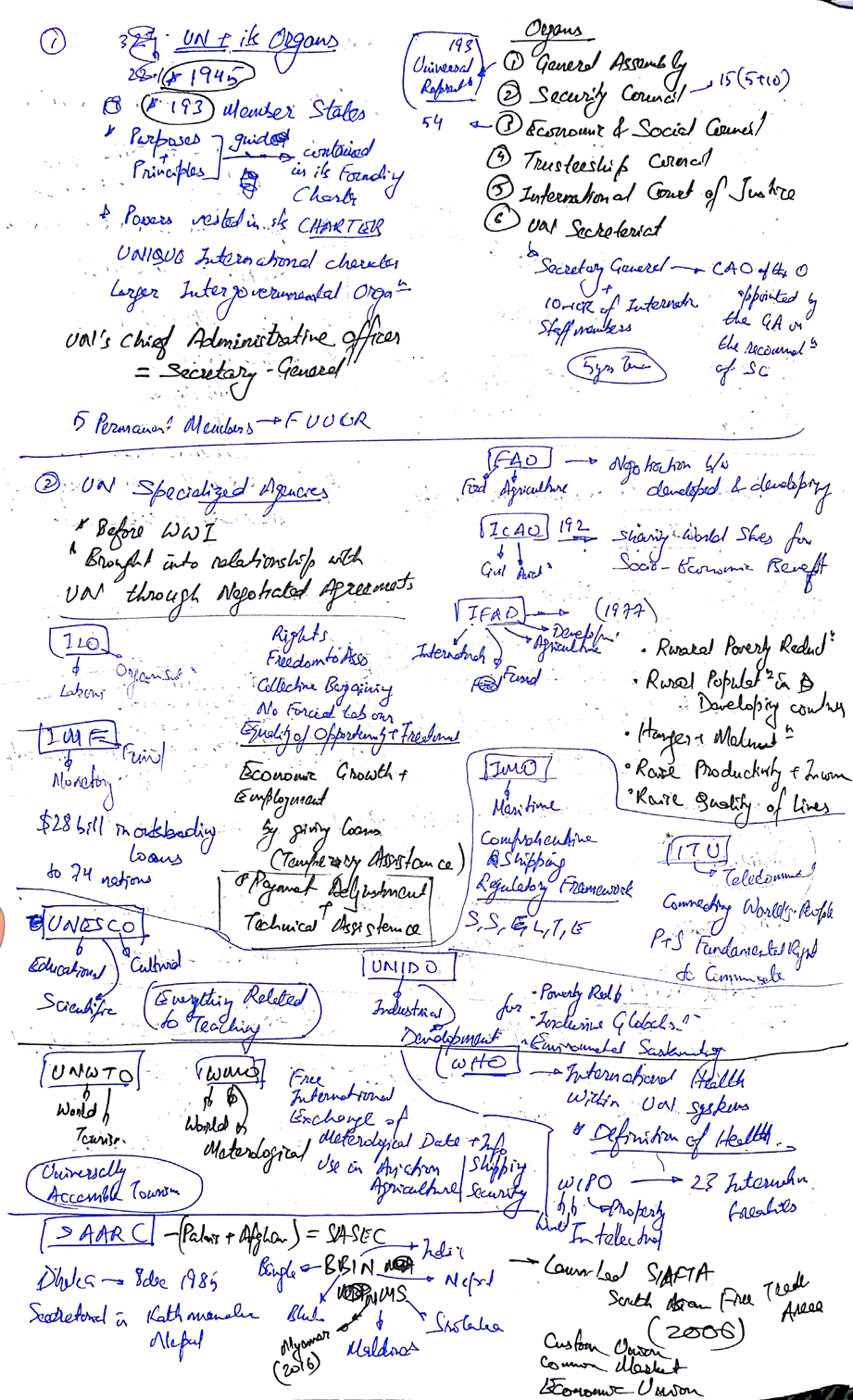
WHO— Health is a state of complete physical, mental and social well-being and not merely the absence of disease or infirmity. (PMS)
Peace and security (PS), climate change (CC), sustainable development (SDG), human rights, disarmament, terrorism, humanitarian and health emergencies (HH), gender equality, governance (GG), food production, and more.
UN– Due to the powers vested in its Charter and its unique international character, the United Nations can take action on the issues confronting humanity.
ILO— FACE
- Formulating international standards on the freedom to associate
- Abolition of forced labor
- Collective bargaining
- Equality of opportunity and treatment
By enabling dialogue between its members, and by hosting negotiations
UNSC–
Under the Charter, all Member States are obligated to Comply with Council decisions.
Presidency rotates and changes every month.
EcoSoc–
Principal body for coordination, policy review, policy dialogue and recommendations on economic, social and environmental issues, as well as implementation of internationally agreed development goals.
54 Members, elected by the General Assembly for overlapping three-year terms.
Trusteeship Council suspended operation on 1 November 1994.
ICJ–
Principal judicial organ of the United Nations. Its seat is at the Peace Palace in the Hague (Netherlands).
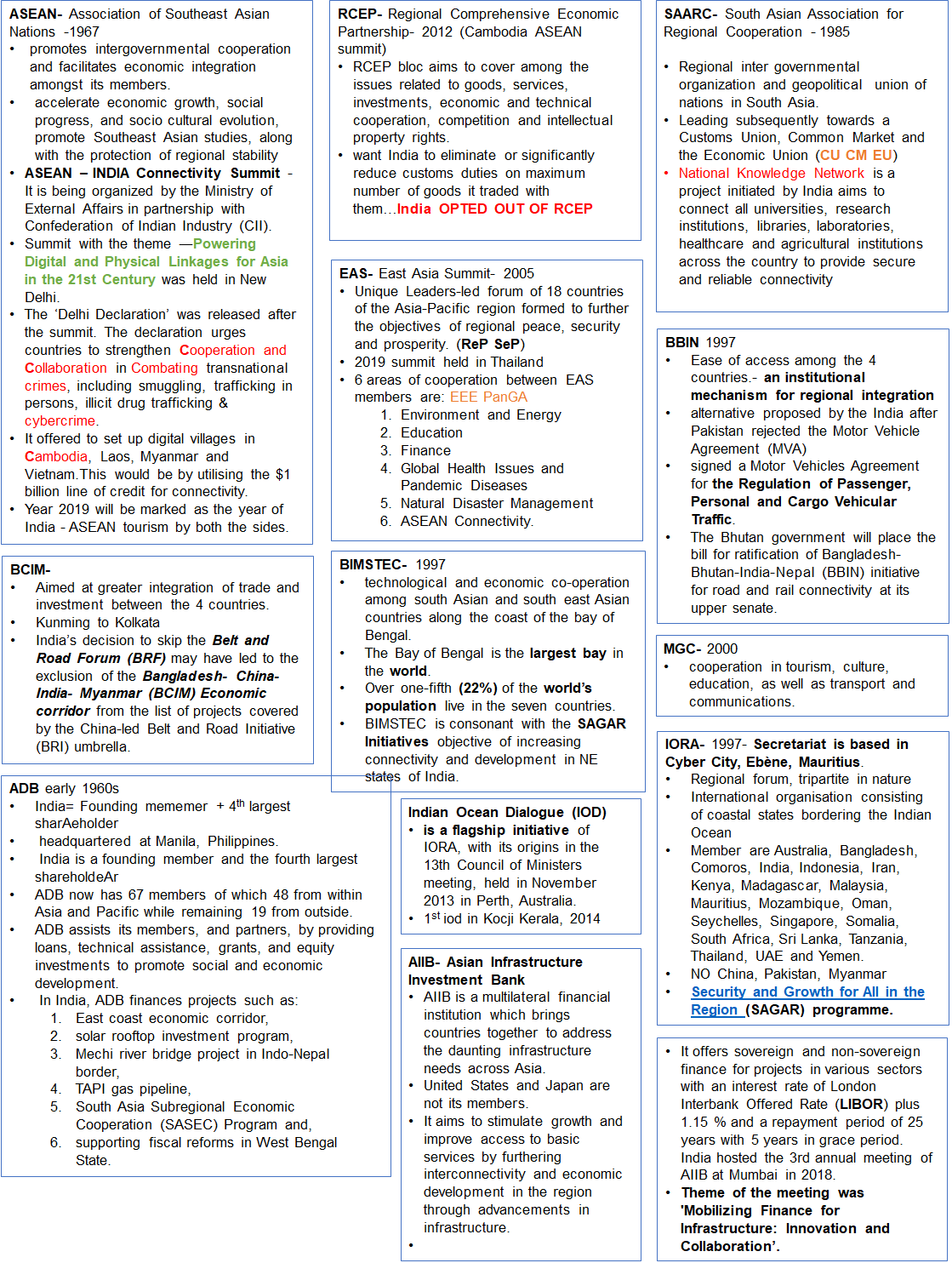
ADB now has 67 members of which 48 from within Asia and Pacific while remaining 19 from outside.
April 2019- ADB published Asian Development Outlook 2019.
- ADB has cut India’s growth forecast to 7.2% for 2019-20 because of a slower-than-expected pickup in investment demand.
- The growth rate in Financial Year 2020-21 is likely to be 7.3%.
- Earlier other projections IMF— 7.5%.. RBI–7.4%
India will remain the fastest growing major economy, as China is projected to grow at 6.3% in 2019
The inflation is expected to average around 4% in the first half of FY2019, and therefore RBI would have some room for lowering policy rates further increasing credit.
Oct2019– GoI has signed a 190 million USD loan with ADB to upgrade road transport in the state of Rajasthan.
OPEC– march– the world’s largest oil production nations of OPEC cuts oil production by 1.5 million barrel a day from April 2020= holding back 3.6% of global oil supplies
Quatar left 1 jan 2019; Ecuador left 1 jan 2020.
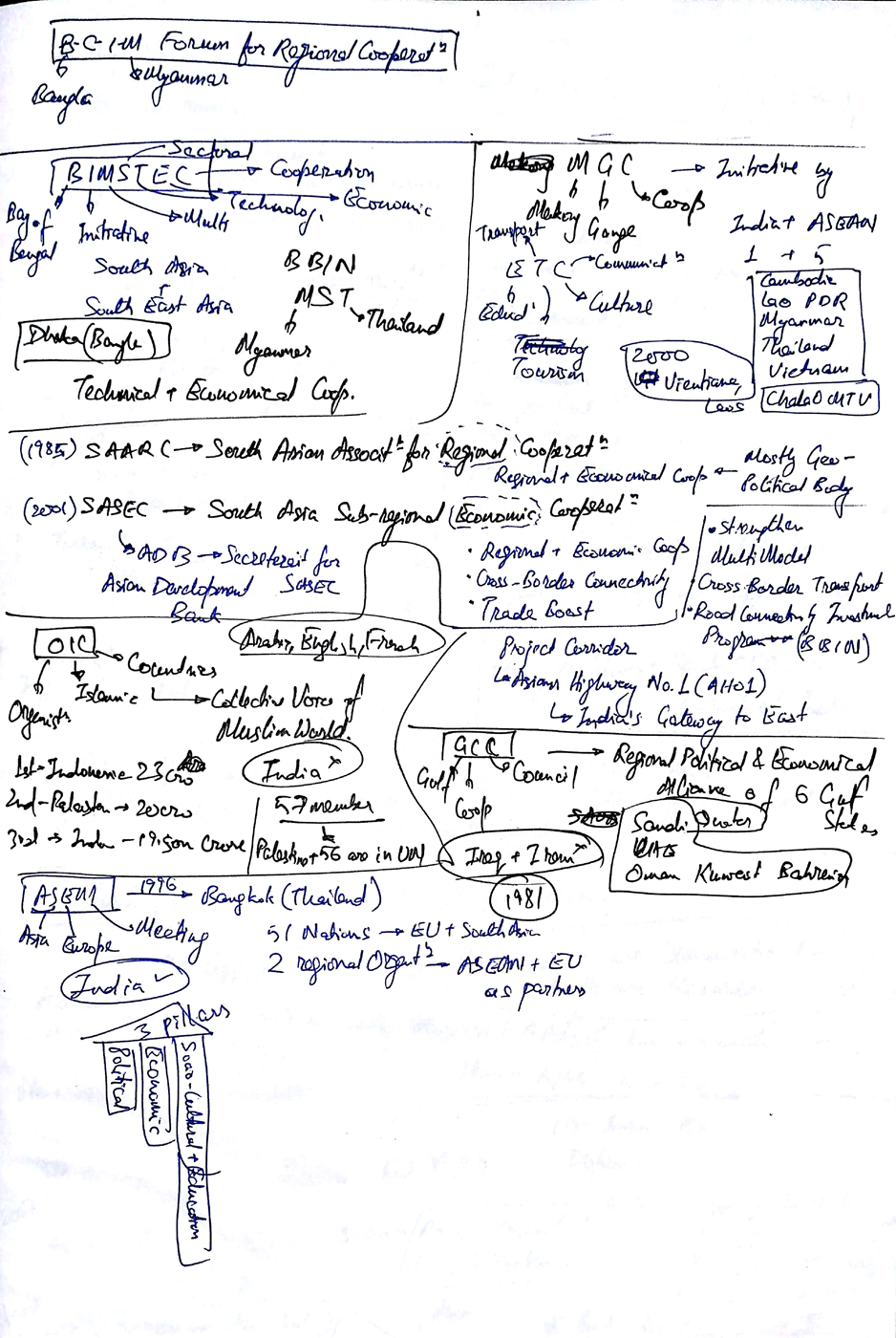
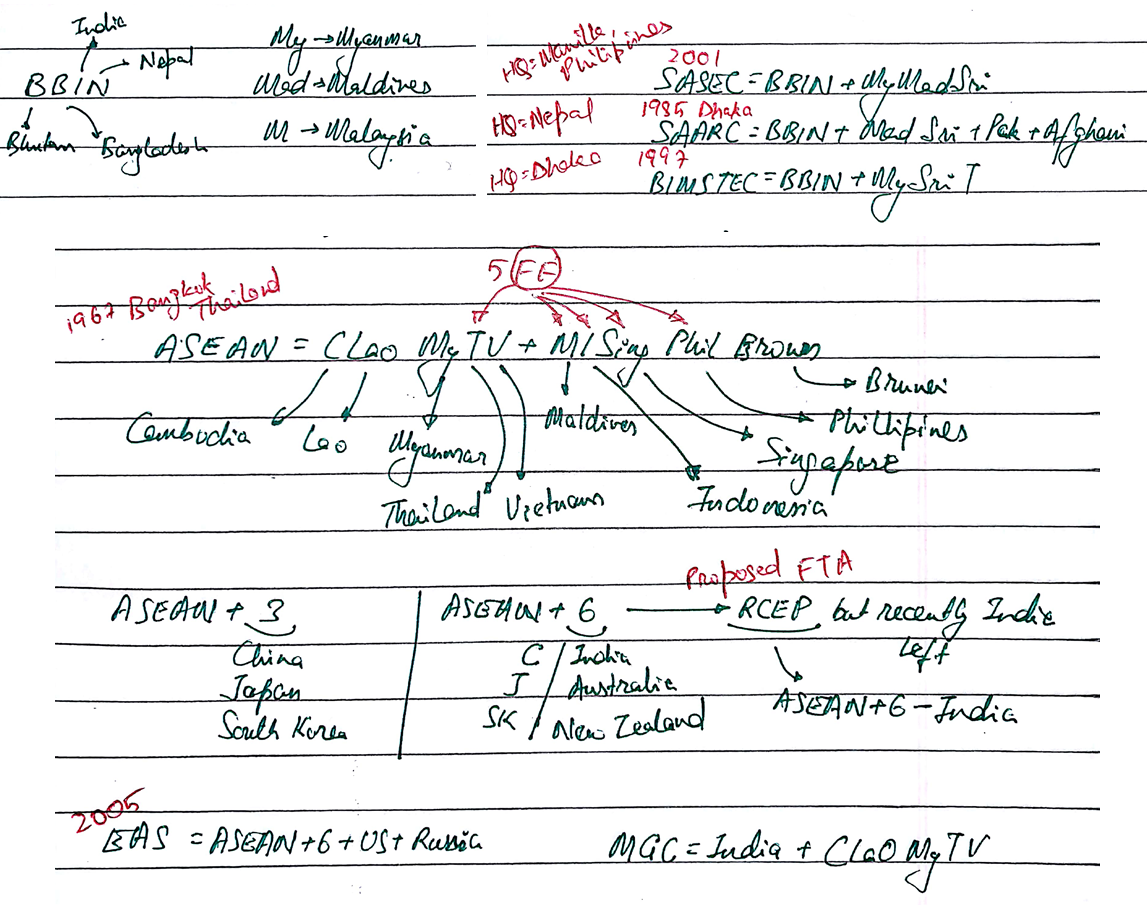
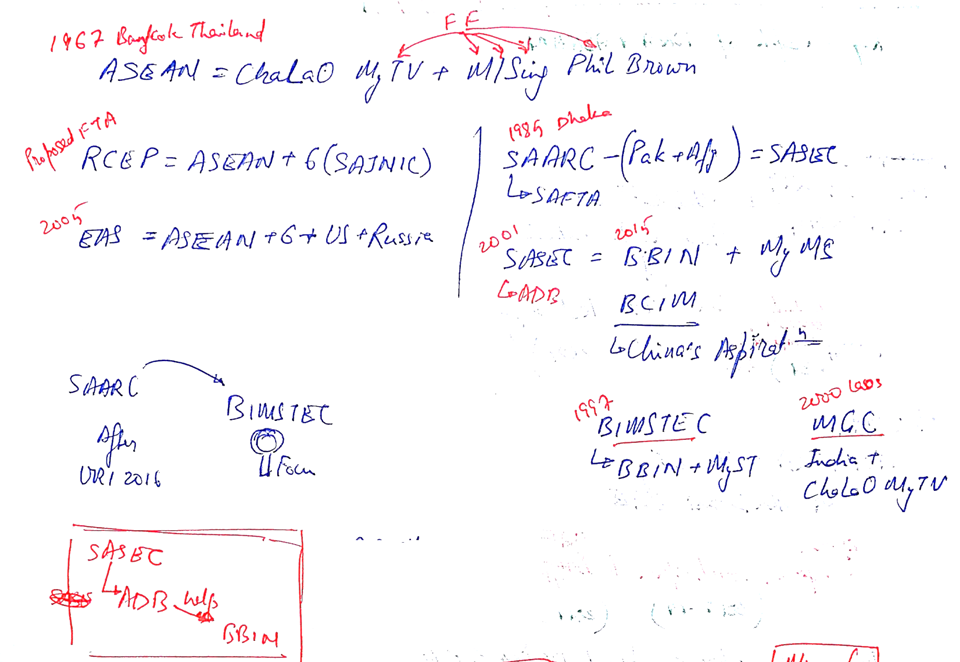
MGC
⁍ 10th MGC Ministerial Meeting (10th MGC MM) was held in Bangkok, Thailand- 2019.
⁍ 2019 has been identified as the “India-ASEAN Tourism Year”.
⁍ 20th Anniversary of MGC in 2020.
AIIB Asian Infrastructure Investment Bank
⁍ AIIB which is headquartered at Beijing expects an investment of 100 million USD in India in a year. The foreign investment is to enter India through Wind + Solar Projects.
⁍ loan of 500 million USD in 3 suburban rail infrastructure projects.
⁍executed under MUTP-Mumbai Urban Transport Project
⁍1st mid-section trespasses in India to curb deaths by Trespass.
⁍ AIIB has so far invested 2.9 billion USD. It amounts to 30% of the total investment
⁍ India is the largest borrower of AIIB.
400 million USD invested in the rural water supply system of Karnataka
~1 billion USD is being spent on power distribution and transmission in Assam.
IORA + IOD (Indian Ocean Dialogue is a flagship initiative of IORA, -origins= 13th Council of Ministers meeting, held in Nov2013 in Perth, Australia. )
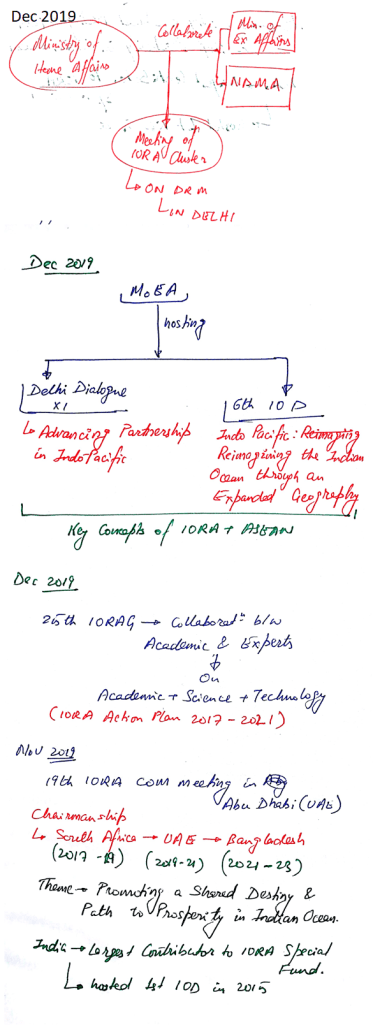
IORA-NOv-2019 India’s Role
- India continues to promote its official policy of “coordination, cooperation and partnership” in the regional maritime domain.
- As coordinator to the priority area on disaster risk management, India has published guidelines for IORA. It has also urged partners to join the Coalition for Disaster Resilient Infrastructure launched at the UN in September 2019.
- India has been trying to emerge as the net provider of information in the IOR and in that direction it created the Information Fusion Centre located in Gurugram to assist member countries of IOR with real-time crisis information. Bangladesh, Mauritius, Maldives, Sri Lanka and Seychelles have been part of the information support structure of India.
- Indian policy takes into consideration that IOR is not an India-run maritime domain and that is reflected in the government’s Security and Growth for All in the Region (SAGAR) programme, which aims to turn the region more inclusive.
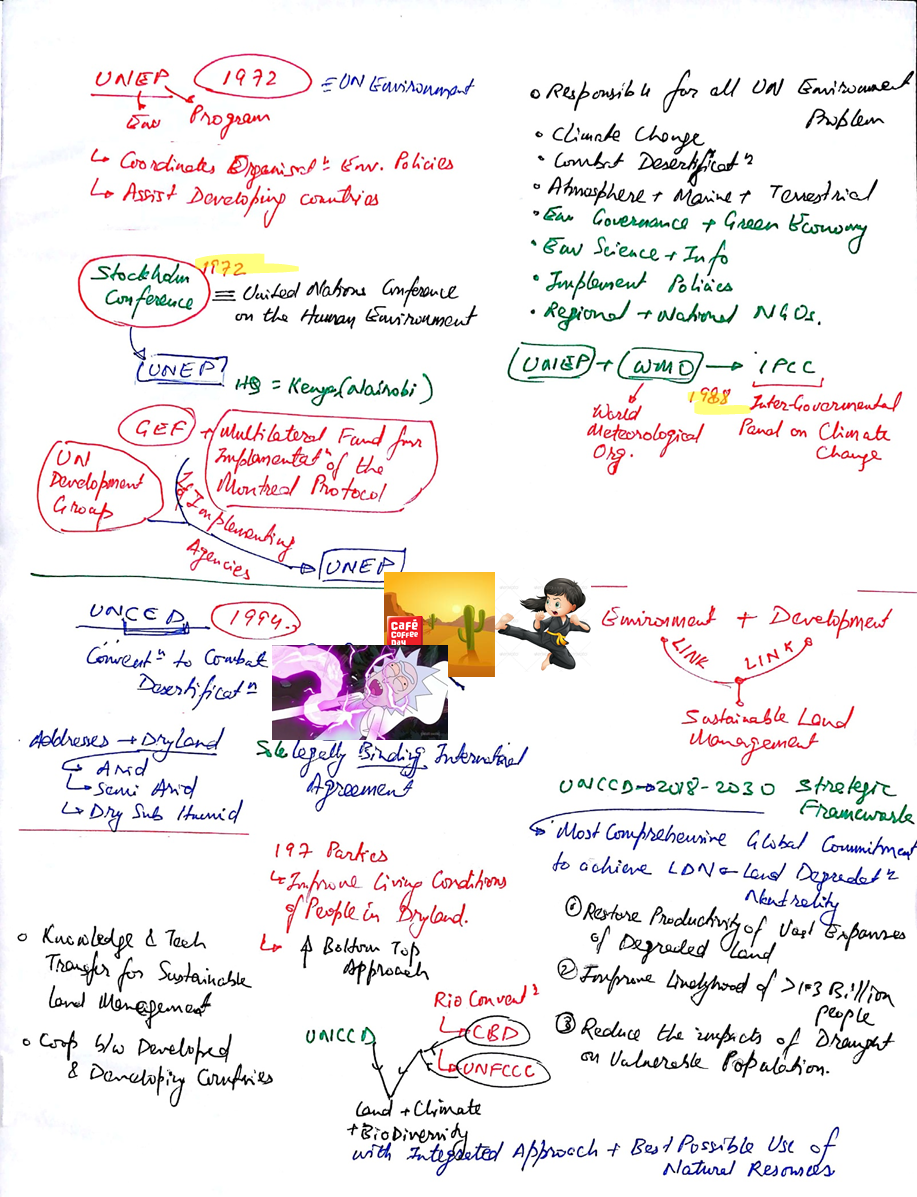
The World Day to Combat Desertification and Drought is observed every year on 17th June. India for the 1st time will host the 14th session of the Conference of Parties (COP-14)
India took over the Presidency of the COP from China for 2 years.
The Theme of 2019 is “Let’s Grow the Future Together”
UNCCD Estimate of Desertification
Land & Drought: By 2025, 1.8 billion people will experience absolute water scarcity, and 2/3 of the world will be living under water-stressed conditions.
A complex and slowly encroaching natural hazard with significant and pervasive socio-economic and environmental impacts to cause more deaths and displace more people than any other natural disaster.
Land & Human Security: By 2045 some 135 million people may be displaced as a result of desertification.
Achieving land degradation neutrality -by rehabilitating already degraded land, scaling up sustainable land management and accelerating restoration initiatives- is a pathway to greater resilience and security for all.
Land & Climate: Restoring the soils of degraded ecosystems has the potential to store up to 3 billion tons of carbon annually.
The land use sector represents almost 25% of total global emissions. Its rehabilitation and sustainable management are critical to combating climate change.
The Conference of the Parties (COP)
- The COP was established by the Convention as the supreme decision-making body. It comprises ratifying governments and regional economic integration organizations, such as the European Union.
- Functions of COP: One of the main functions of the COP is to review reports submitted by the Parties detailing how they are carrying out their commitments.
- The COP makes recommendations on the basis of these reports.
- It also has the power to make amendments to the Convention or to adopt new annexes, such as additional regional implementation annexes.
- The COP can guide the Convention as global circumstances and national needs change.
The Conference of Parties (COP14) to United Nations Convention to Combat Desertification (UNCCD) was held in Delhi in 2019
unprecedented global campaign to save productive land, country parties have agreed to make the Sustainable Development Goal target of achieving land degradation neutrality by 2030 a national target for action.
Delhi Declaration was adopted at the Conference
prepared a roadmap for the future on how to prevent land from becoming barren and how to restore it to a cultivable state
- NPT– Non Proliferation Treaty= Treaty on the Non-Proliferation of Nuclear Weapons – 1968; 1970
- Zangger Community= Nuclear Exporters Committee- 1970
- NSG= Nuclear Supplier Group- 1974
- Australian Group = Multilateral export control regime (MECR)- 1985…. 2018- India joined
- MTCR– Missile Technology Control Regime- 1987
- CTBT= Comprehensive Nuclear-Test-Ban Treaty – 1996
- Wassenar Arrangements- 1996…. 2017- India
- Pelindaba = African Nuclear-Weapon-Free Zone Treaty- 1996; 2009
- SCO– Shanghai cooperation Org- 2001; 2002
- HCOC = Hague Code of Conduct= ICOC= International Code of Conduct against Ballistic Missile Proliferation -2002
- NWBT= Nuclear Weapon Ban Treaty = Treaty on the Prohibition of Nuclear Weapons- 2017
 MY BOX