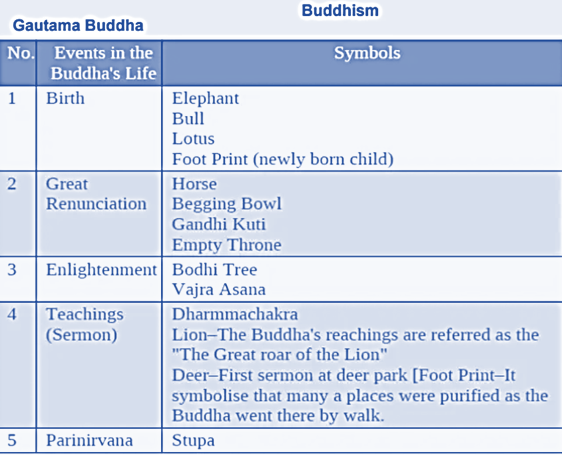
Great Renunciation – Mahabhiniskarma
4 sights-
- Old man
- Sick mAn
- Dead man
- Ascetic
Left the the home + throne at 29 yrs— achieved enlightenment at 35.
Met teachers– ALRA KALAM + UDDAKKA/ RAMAPUTTA
took bath in NIrjana river and sat below Bodhi= Peepal tree
3 teachings of Buddha
- Buddha
- Dhamma
- Sangha
Nirvana= extinction, disappearance…
quenching of desire.. Nirvana is the state of being without suffering. It is a state of supreme happiness and bliss
Laid stress on
- Maitri (love) –
- Karuna (passion) –
- Mudita (Joy at others success) –
- Equity (Equanimity) –
- No anger, jealousy –
- Not speak lie, drunk, illicit relationship –
- Liberal & Democratic approach –
- Welcomed by lower classes –
- Righteousness, chastity, holy ideals –
- Prince–> monk
- Knowledge– >self realization + self emancipation –
- Preach = Practise – Organisation of sangha
Initial 5 Disciples –
- Assaji
- Sariputta
- Mogalanna
- Ananda (Lousin)
- Kassapa (Most Learned)
- Upali (Barber)
- Vasa (Youth)
- Channa (Chairoteer)
- Kanthaka (Horse)
- Sojata (Gave Ricemill @ Gaya)
Buddah– 567BC/ 563 BC in Lumbibni in Nepal near Kapilavastu in today’s Piprahwa in Basti district and is close to the foothills of Nepal.
Believed in rebirth and attaining moksha by ending this cycle
bUt believed that Soul does not exist
5 dimension–> Khanda/ Vikhanda
- Roop- matter
- Vedana- sensation
- Sanna- perceptoin
- Samkhara- disposition/\will
- Vinnana- consciousness
Roop
ved
sam
san
win
4 noble truths or Arya Satya-
- dukkha
- dukkha samudaya
- dukkha nirodha
- dukkha nirodha gamini patipada
to get rid of the suffering one has to conquer the desire for which Gautama Buddha preached an Ashtangika Marga i.e. eightfold path for the elimination of human misery.
source of Dukkha= sorrow is Trishna= desire.
Ashtangika Marga
ODSA LEAC
4 parts of existence-
- Prithvi
- Apa
- Tej
- Vayu
The body dies but the desire is everliving
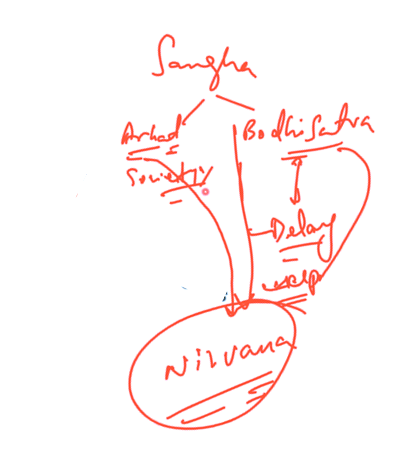
Buddha formed a “Sangha” an association of his followers and laid down a code of conduct
- Do not commit violence
- Do not covet the property of others
- Do not use intoxicants
- Do not tell a lie
- Do not indulge in sexual misconduct and adultery
V
I
P
L
S
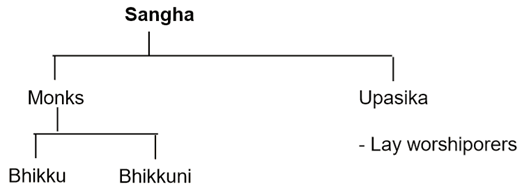
Sangha–
Monks – living within boundary –
Fornight assembly – every 15 days
role? –
Proper structure – election of president – sangathera – by Democratically
Speakers – dhamma– knowlege, vinaya – rules
Formal moving of resolutions (jnanpati)
– Seats according to seniority
– Ballot voting by wooden sticks (Salaka) –
Quorom – 10 members –
Formualtion of subcomimttees –
Code of conduct – Punishment, privileges
– Novice / Women – Initally not, allowed vote
– Initially women not allowed to join but ananda persuaded buddha
– Sangha played most important role in spreading of buddhism
- Sangha became the basis of spread of Buddhism in India and outside India
rapid progress in North India
Magadha, Kosala, Kausambi→ Accepted Buddhism
Asoka embraced Buddhism
Send missionaries→ Dhammamahamantas
Kanishka & Harshavardhan also accepted
Effort Asoka spread Buddhism into West Asia and Ceylon– Sanghmitra+ MAhindra–> in Sri LAnka
Buddhism Councils
483BCE— 1st Council – held @ Rajgir – Capital of Magadh under Ajatsatru of Hariyanka Dynasty
Presided by MahaKasapa –
Vinaya Pitaka(rules) <–Upali
Sutta Pitaka (teachings)<–Ananda
– Texts written on palm leaves & Kept in Baskets
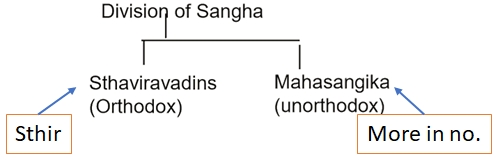
383BCE–2nd Council @ Vaisali under Kaalashoka of Sishunaag dynasty (which came after Hariyanka’s end)
President By Sabkami
conflict–> Vinaypitaka — regarding rules
250BCE— 3rd Council @ patali putra– under Ashoka (converted to buddhism in 261BCE)– slaughtered Jain king of Kalinga of Kharavela dynasty
Presided by Mogali Putta Tissa (Upagupta)
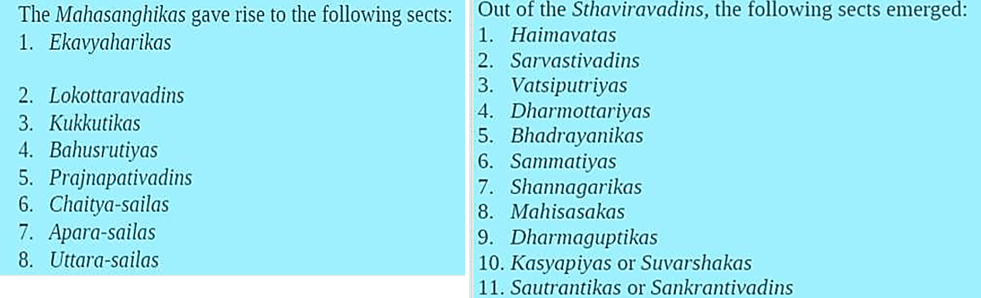
Establishment of Sthavivaradins – Considered as true followers – State patronage
Expulsion of others –
Tripitaka Compiled – Addition of Abhidhamma Pitaka
Sending of Missionaries
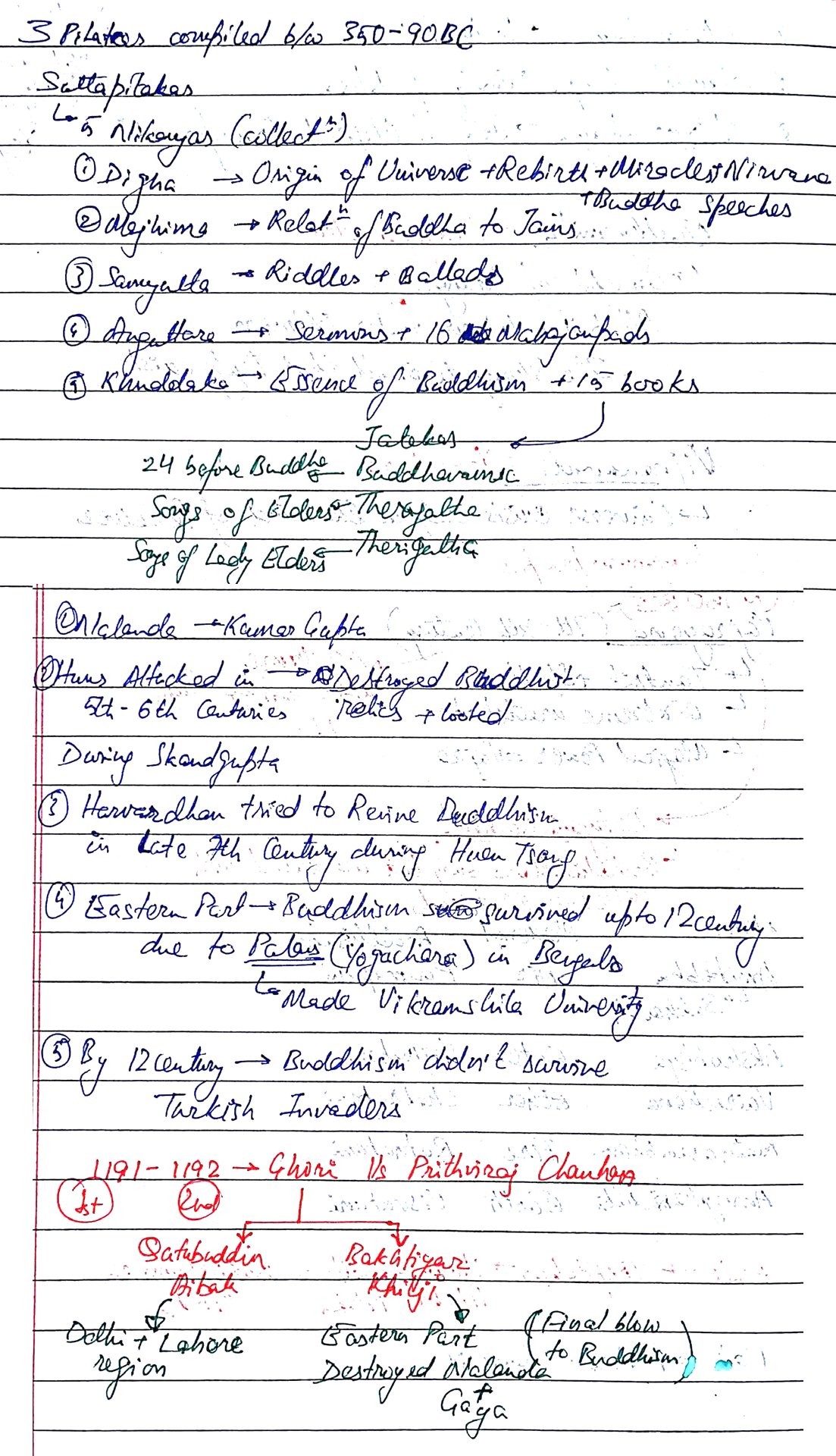
Sutapitaka was not copmpleted at once –480BC- 90BC– divided in 5 nikays
- Digh nikaya– Origin of universe, rebirth, death, funeral
- Majhima nikaya– Relation of Buddha to Jains, ascetism, punishment to offences
- Samyutta nikaya– last saying of Buddha, riddles, ballads
- Anguttara nikaya– collection of sermons, 16 Mahajanpads
- Kudakka nikaya– 15 books – essence of Buddhism
- Theragatha
- Therigatha
- Jatak stories
- Buddhavamsa- 24 buddhas before Gautam
- Udan- 5 blind person touching elephant
Adhidhamma – philosophical, midtraining, psychology– 7 books
- Dhammasangini
- Kathavatthu <–Mogaliputta= UPagupta
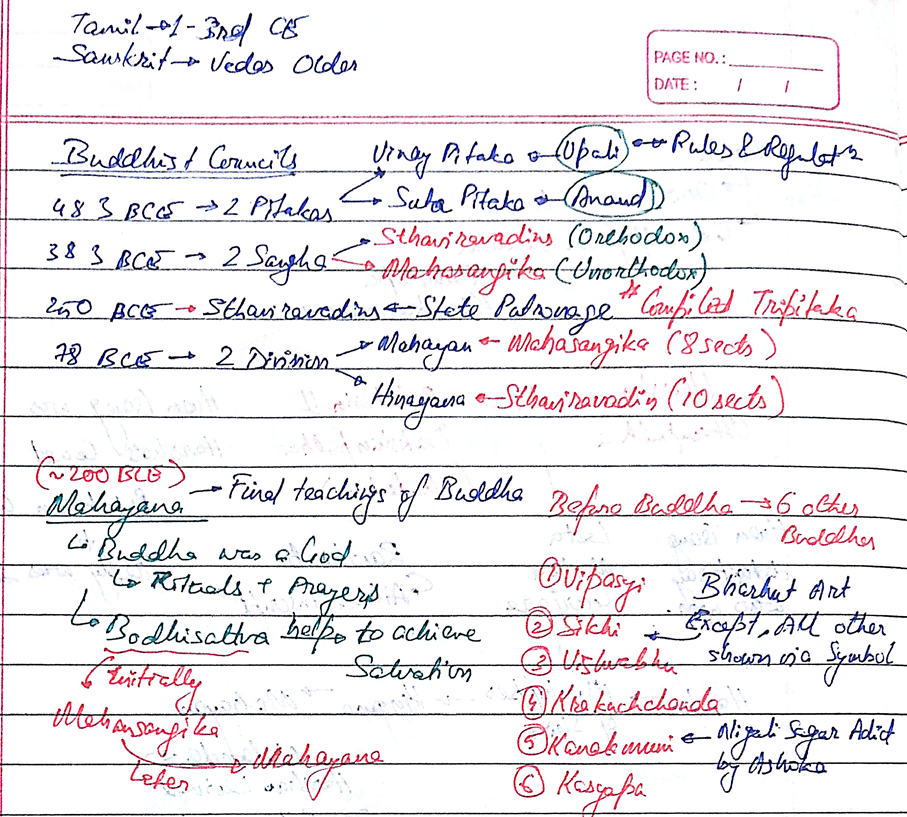
78BCE— 4th Council @ Kashmir by Kanishka of Kushana Dynasty
Presided by Vasumitra helped by Asvagosha— (wrote Buddha Charitra)
Why?–> By 1st century, 18 sects emerged in buddhism
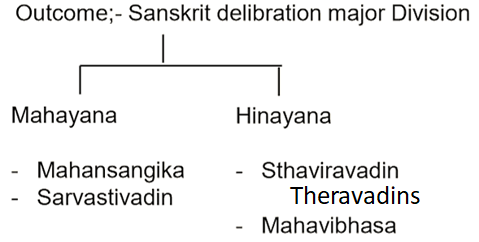
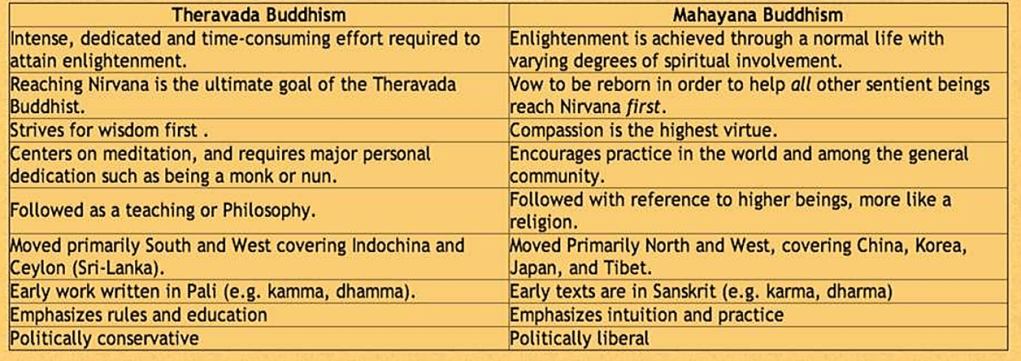
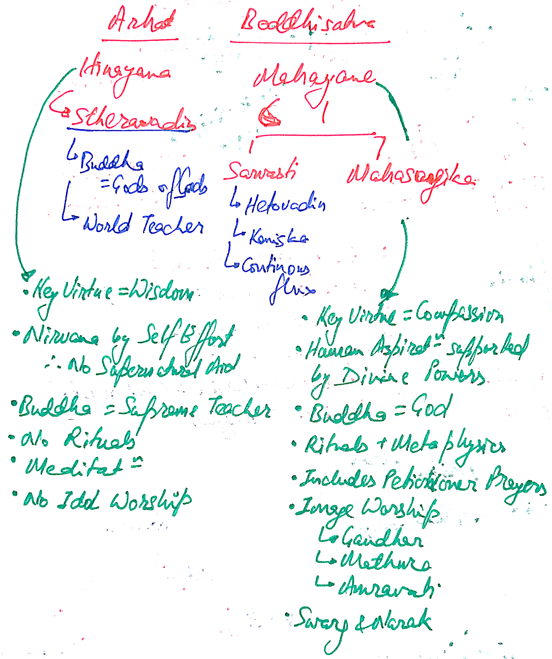
Mahayana
• claimed to offer salvation for all
• the Greater Vehicle (to Salvation),
• represent the final doctrines of the Buddha
• Believes into Swarga-Nark
• revealed only to his spiritually most advanced followers
• Foucs on heavenly Buddhas and Bodhisattvas and its idealistic metaphysics
• held that Gautama Buddha was preceded by 6 Buddhas, viz.
- Vipasyi,
- Sikhi,
- Visvabhu,
- Krakuchchhanda,
- Kanakamuni, and
- Kasyapa
Imporatant→ Nigali Sagar Edict of Asoka which refers to the enlargement of a stupa erected in honour of Kanakamuni art of Bharhut→ Except sikkhi all are shown via symbol
Mahayana
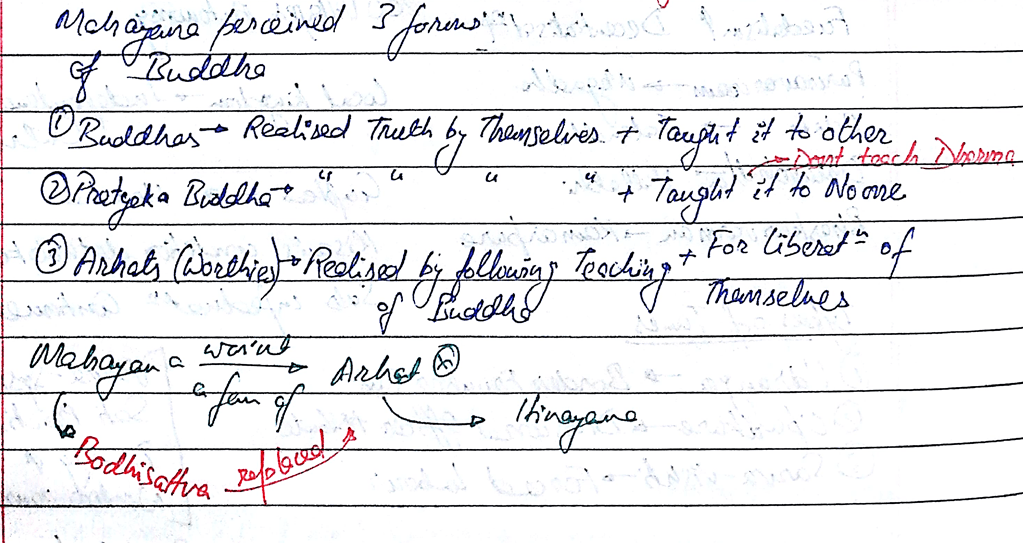
• 3 types of Buddha
- ‘Buddhas’, who perceived the truth for themselves and taught it to others;
- ‘Pratyeka Buddhas’ (Private Buddhas), who perceived it, but kept it to themselves and did not teach it; and
- ‘Arhats’ or ‘Arhats’ (Worthies), who learned it from others, but fully realised it for themselves.
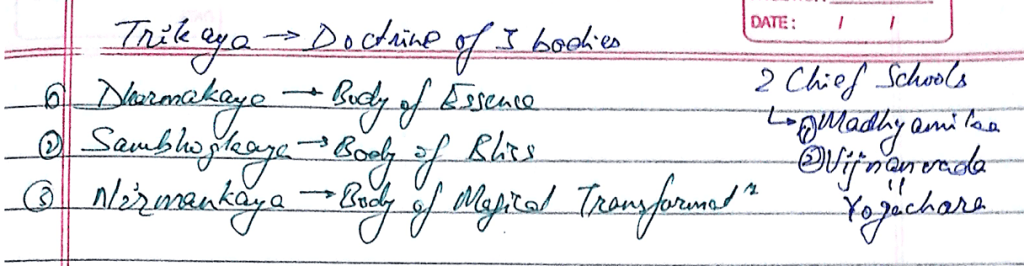
Doctrine of the ‘Three Bodies’ (trikaya).
Buddha has 3 bodies—
• the Body of Essence (dharmakaya),
• the Body of Bliss (sambhogakaya) → Body of Bliss, encompasses the whole universe
• the Body of Magic Transformation (nirmanakaya)→ only lived in earth ,emanation of the sambhogakaya, which dwells forever in the heavens as a sort of supreme god
two chief schools of Mahayana philosophy were the
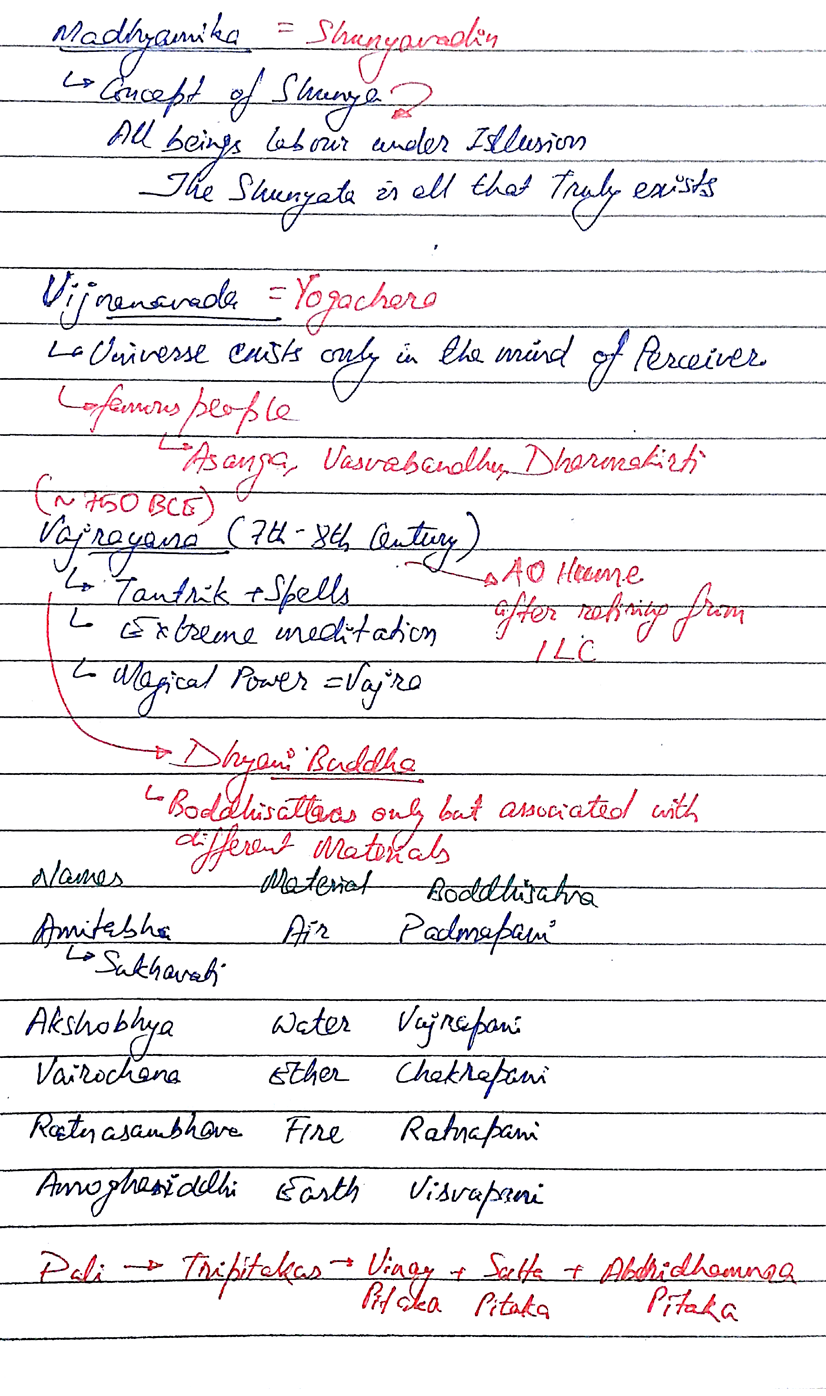
Madhyamika (Doctrine of the Middle Position) = Shunyavadin<– Madhaymika Karika <–Nagarjuna and
the Vijnanavada (Doctrine of Consciousness) or Yogachara (The Way of Yoga or Union).
7- 8th CE — Vajrayana — evolved with tantra mantra+ ritres
Boddhisatvas
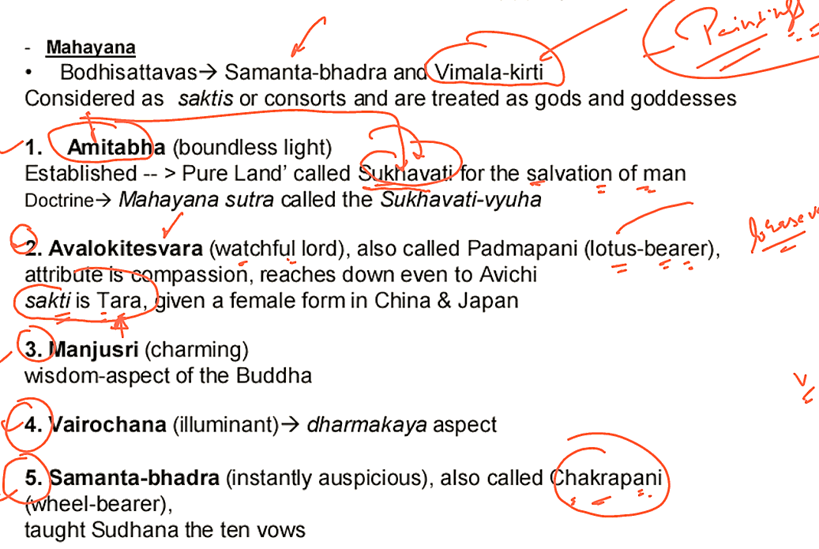
- Samant-bhadra — Chakrapani- taught Sudhana 10 vows (mentioned in Jataka stories)
- Vimala-kirti
- Amitabha– boundless light- Sukhavati– peaceful land
- Avalokiteswara– watchful lord)= Padmapani– lotus bearer = Goddess Tara
- Askobhya= Vajrapani–
- Manjusri – Charming Buddha- wisdom aspect
- Vairochana– dharmakaya aspect
- Maitreya-benevolent- waiting in Tushita heaven <– followed by Vajrayana+ Mahayana
Decline of Buddhism
185BCE– 200CE + during Post Mauryans–
Post mauryans- Anti Buddhism
- Sungha– anti Buddhists
- Kanva–Vedic follower
Foreigners– Pro Buddshims
- Indo Greeks– Ce
- Sakas/ sethians– Central Asia
- Parthians
- Kushanas– Western China– ~78CE
After 78 CE
 MY BOX