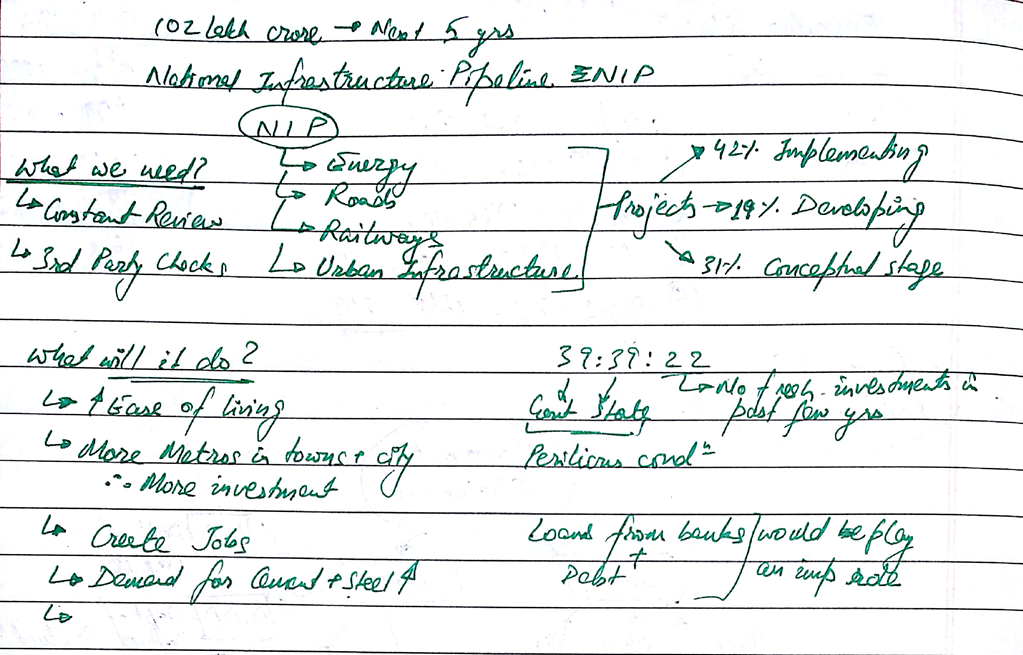
- Jan_20 -invest more than ₹102 lakh crore in infrastructure projects by 2024-25 in 39:39:22 formula
- Another ₹3 lakh crore worth of projects are likely to be added soon
- Train travel is set to cost you more in the new year, with the Railways increasing fares for passenger trains by up to 4 paise per kilometer
- GST gross revenue crossed the 1 lakh crore-mark for the 2nd successive month, with a collection of ₹1.03 lakh crore in December 2019. This is almost 9% higher than the December 2018 GST collection.
- While the December 2019 collection of is slightly lower than the November 2019 collection, it does signal a trend of recovery after gross GST revenue dipped below the 1 lakh crore mark for the previous 3 months. The amount still falls short of the ambitious ₹1.1 lakh crore monthly target the Centre set last month for the remainder of the fiscal year.
- For the 1st time, the Finance Ministry released a state-wise break-up of GST collection from domestic transactions, which shows a 16% growth from the same period a year ago.
er : d
- On February 1, Finance Minister will rise in the Lok Sabha to present the Union Budget for the next financial year (2020-21).
- The Nominal Gross Domestic Product (GDP) is the most fundamental building block of a Budget.
- The nominal GDP is nothing but the value of all goods and services produced in the country at current market prices.
- That’s because without knowing the absolute amount of nominal GDP for the current year, there is no way one can make the Budget for the next year.
- Targets for the fiscal deficit are set in terms of “percentage of nominal GDP”.
- In other words, if the nominal GDP is higher, the government can borrow more money (in absolute terms) from the market to fund its expenditure.
- It is true that real GDP is the variable that is used for comparing the economic growth of countriesmost of the time.
- The real GDP growth is derived by subtracting the inflation rate (that is the rate at which prices are increasing in an economy) from the nominal GDP growth rate.
- By doing this, real GDP growth provides a better picture of economic growth between countries that may have differing levels of inflation.
- But contrary to public perception, no one targets the real GDP growth rate.
- The real GDP is a derived number.
- The government, through its fiscal policy, targets nominal GDP and the RBI, through its monetary policy, targets inflation rate.
- The interplay of these two variables provides real GDP growth.
- Annual Financial Statement is a document presented to the Parliament every year under Article 112 of the Constitution.
- It shows estimated receipts and expenditures of the Government of India for the coming year in relation to revised estimates for the previous year as also the actual amounts for the year prior to it.
 MY BOX