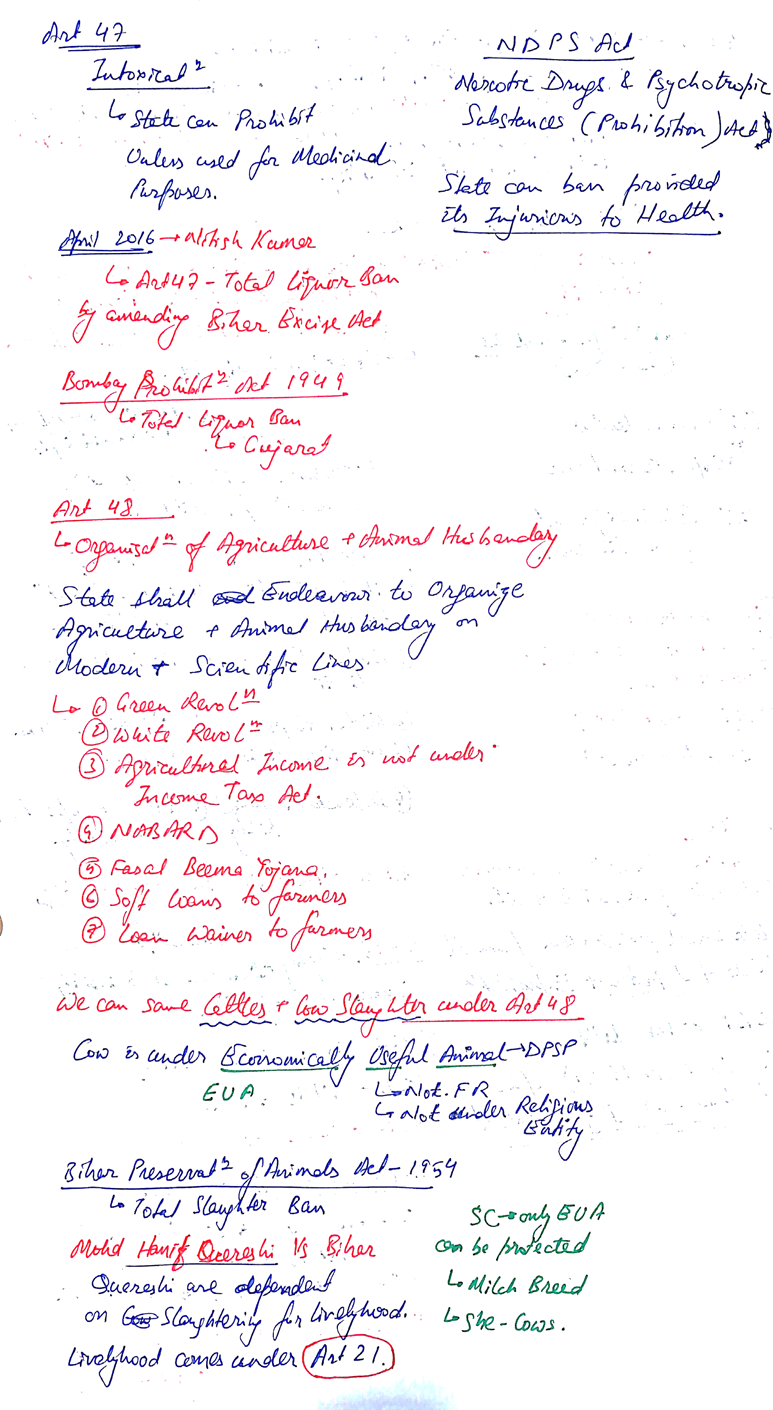
Art 36+ 37+ 38+ 39
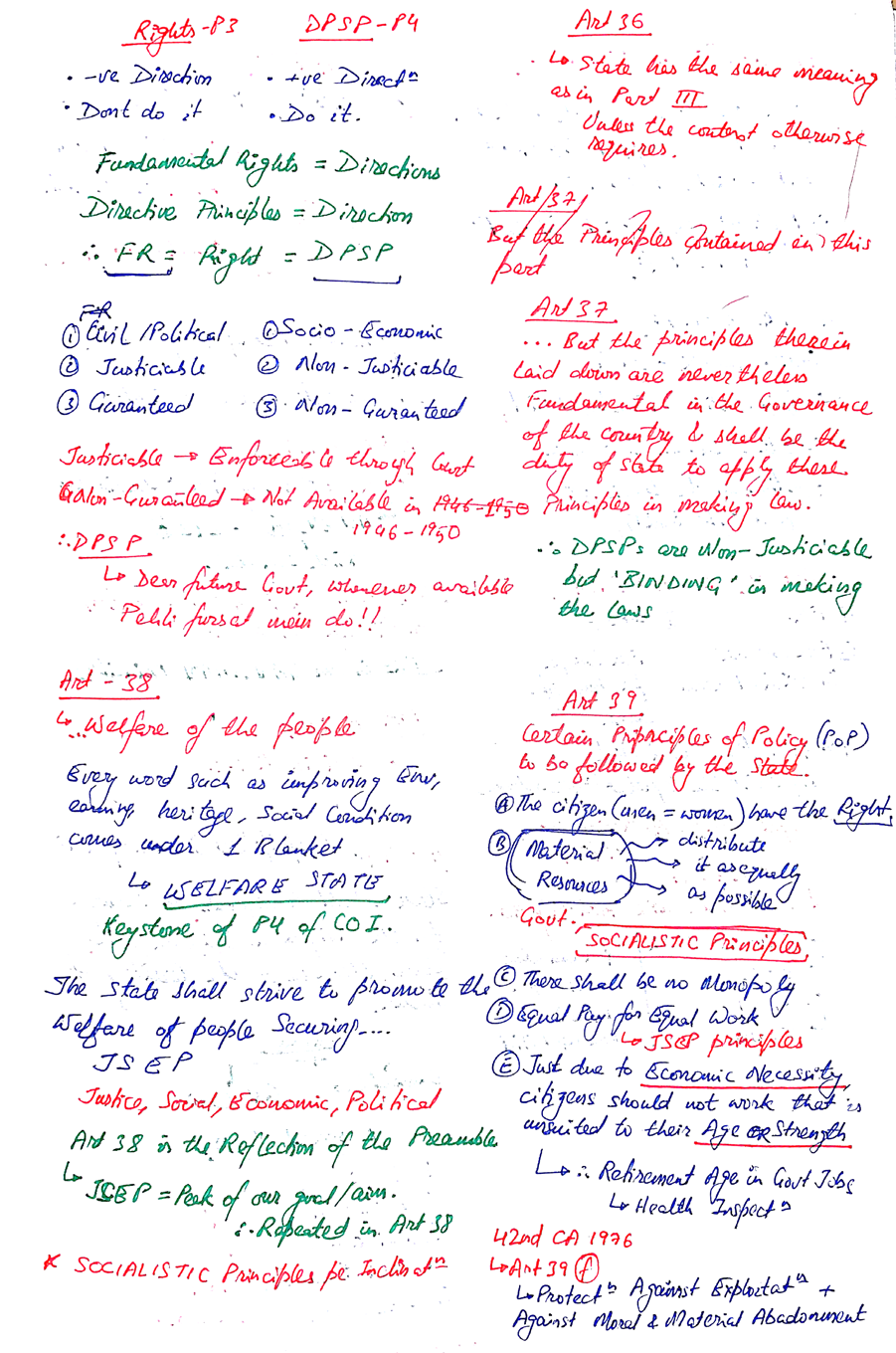
Art 29 vs 39….. + 40 + 44
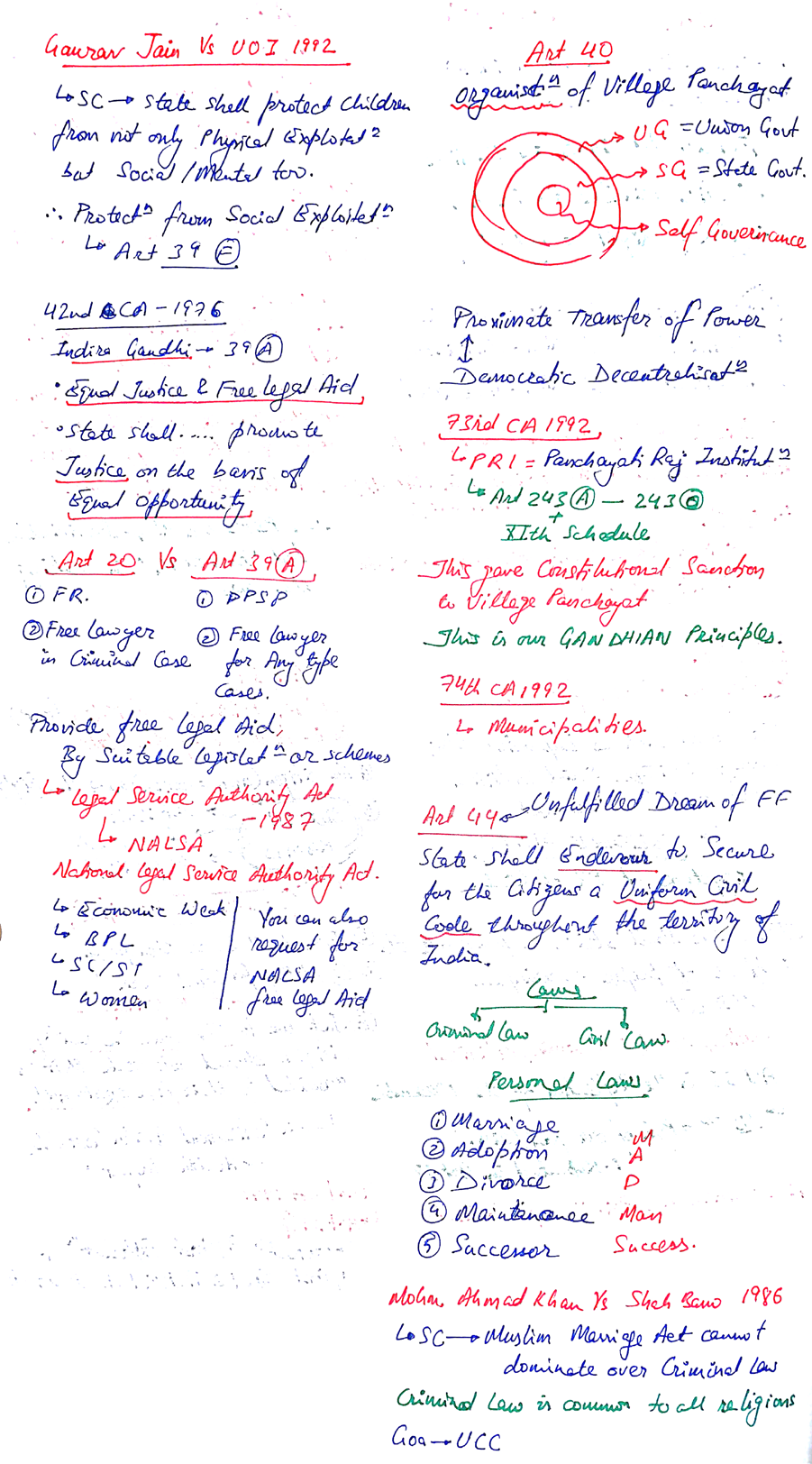
Art 41 + 42+ 43+ 45 + 46
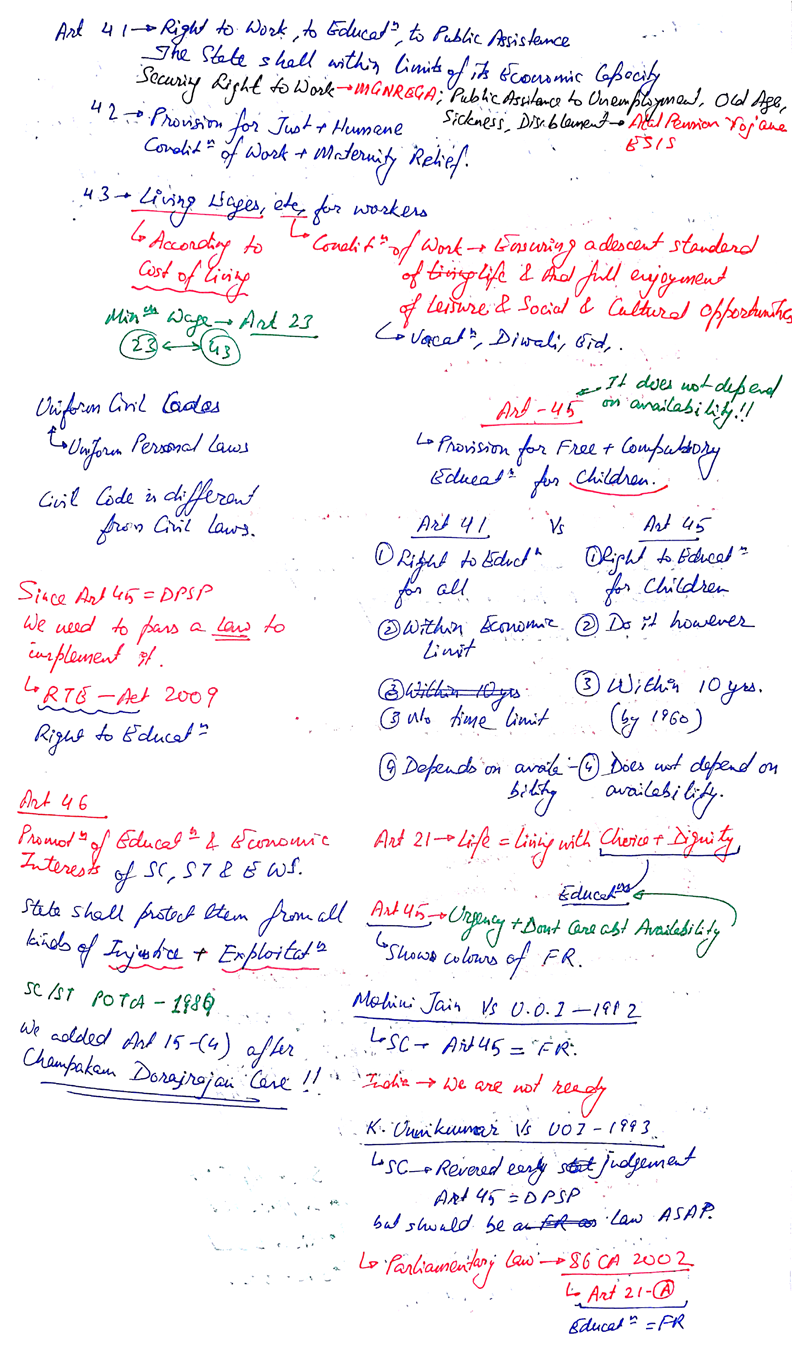
Art 47+ 48 + 49
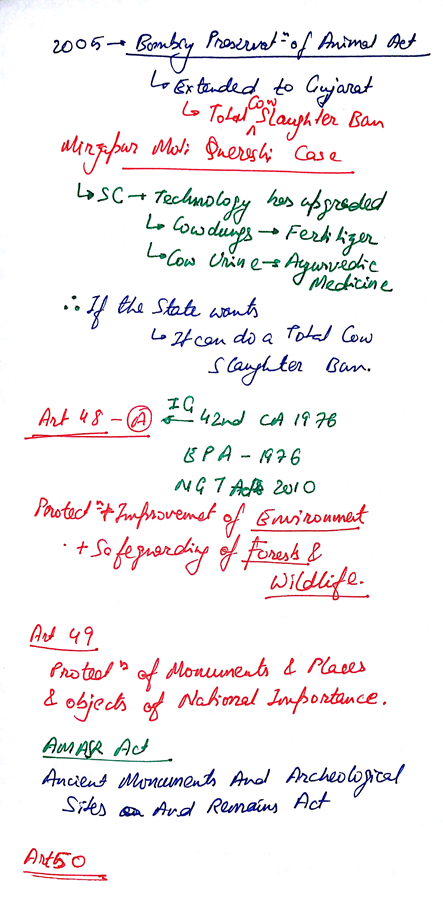
Art 50
Separation of Judiciary from Executive.
The state shall takes step to separate Judiciary from the Executive in the Public services of the state.
Before 1973— IAS was both Executive Magistrate + Judicial Magistrate
Criminal procedure codes– CRPC-1973… took away the judicial power of IAS.
Follows the Principle of Natural Justice
Art 51
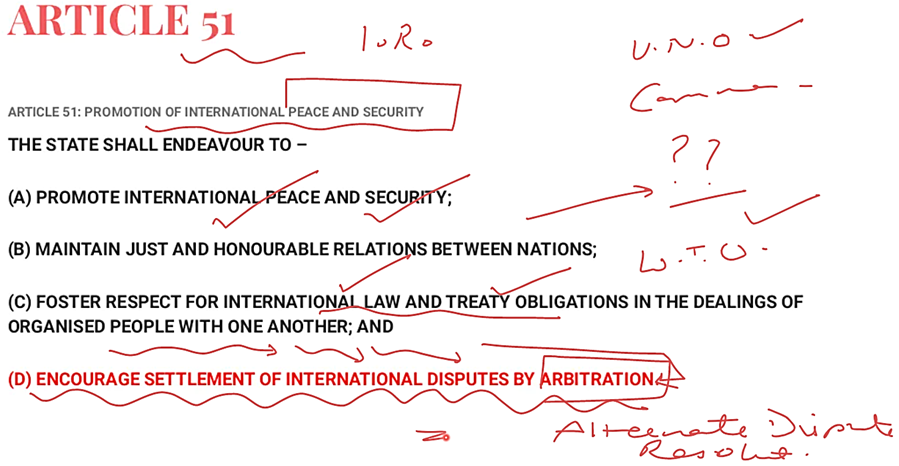
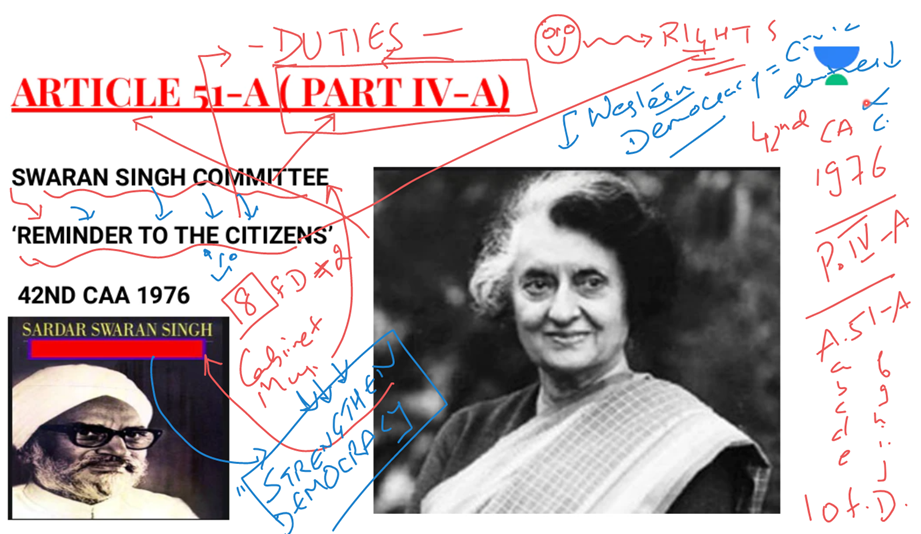
Art 51A-
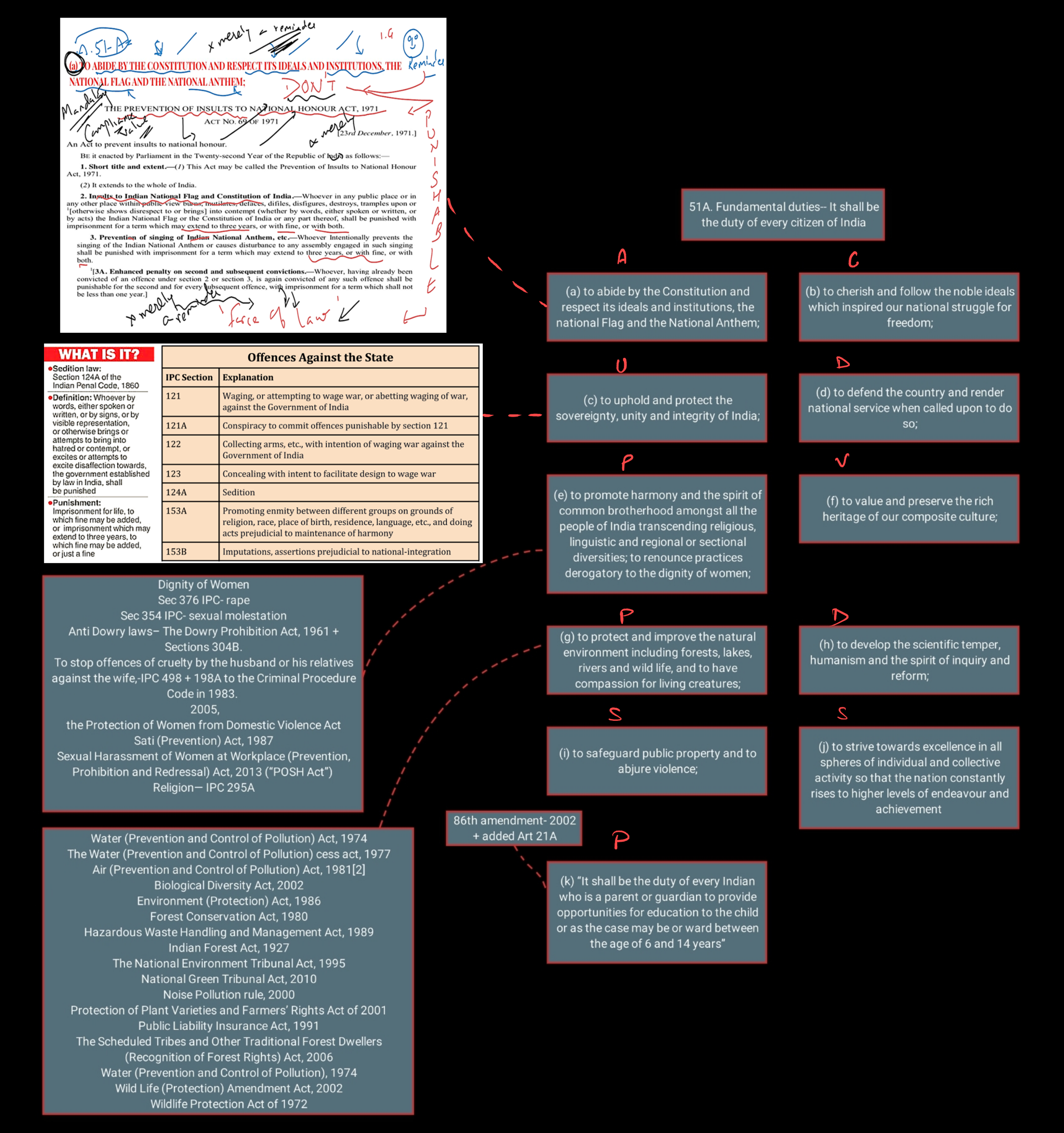
Fundamental Duties-1/3/5/7/9 = there are force of law behind them
Emergency
25/6/1975— 21/3/1977
Security of India is threatened by Internal disturbances.
Fundamental Rights were suspended..
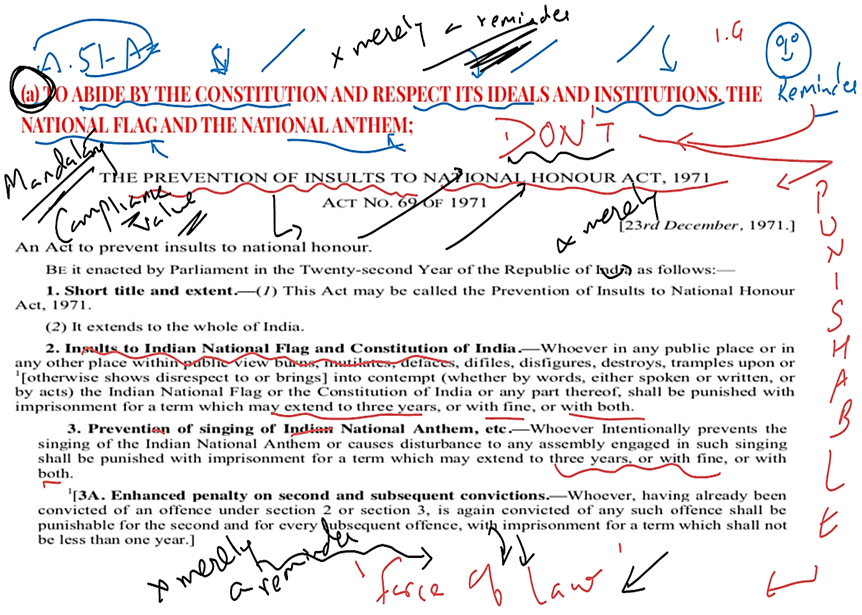
(b) To cherish and follow the noble ideals which inspired our national struggle from freedom.
(c) To uphold the SUI of India.. —- Sovereignty, Unity, Integrity
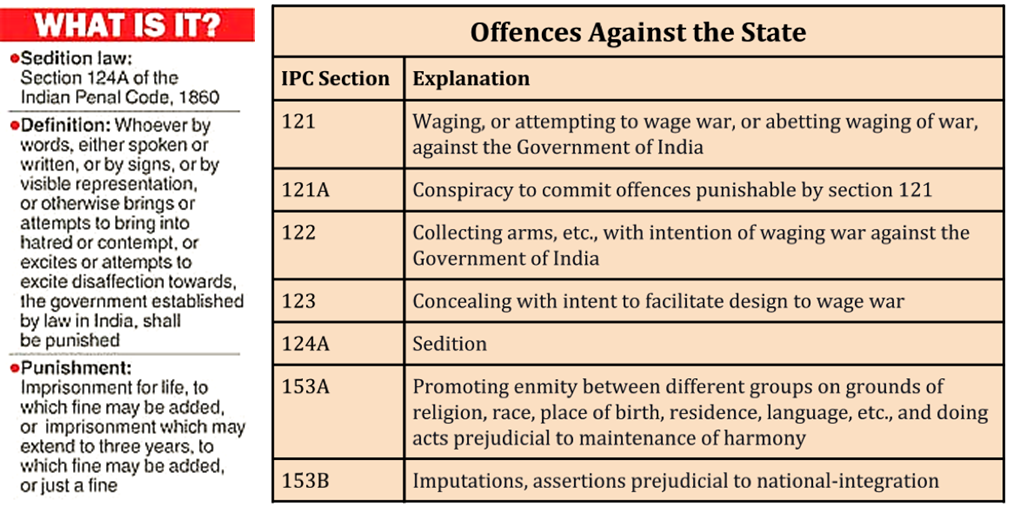
(d) To defend the Country and render National Service when called upon to do.
(e) to promote harmony and the spirit of common brotherhood amongst all the people of India transcending religious, linguistic and regional or sectional diversities; to renounce practices derogatory to the dignity of women
Dignity of Women
Sec 376 IPC- rape
Sec 354 IPC- sexual molestation
Anti Dowry laws– The Dowry Prohibition Act, 1961 + Sections 304B.
To stop offences of cruelty by the husband or his relatives against the wife,-IPC 498 + 198A to the Criminal Procedure Code in 1983.
2005,
the Protection of Women from Domestic Violence Act
Sati (Prevention) Act, 1987
Sexual Harassment of Women at Workplace (Prevention, Prohibition and Redressal) Act, 2013 (“POSH Act”)
Religion— IPC 295A
(f) to value and preserve the rich heritage of our composite culture;
(g) to protect and improve the natural environment including forests, lakes, rivers and wild life, and to have compassion for living creatures;
- Water (Prevention and Control of Pollution) Act, 1974
- The Water (Prevention and Control of Pollution) cess act, 1977
- Air (Prevention and Control of Pollution) Act, 1981[2]
- Biological Diversity Act, 2002
- Environment (Protection) Act, 1986
- Forest Conservation Act, 1980
- Hazardous Waste Handling and Management Act, 1989
- Indian Forest Act, 1927
- The National Environment Tribunal Act, 1995
- National Green Tribunal Act, 2010
- Noise Pollution rule, 2000
- Protection of Plant Varieties and Farmers’ Rights Act of 2001
- Public Liability Insurance Act, 1991
- The Scheduled Tribes and Other Traditional Forest Dwellers (Recognition of Forest Rights) Act, 2006
- Water (Prevention and Control of Pollution), 1974
- Wild Life (Protection) Amendment Act, 2002
- Wildlife Protection Act of 1972
(h) to develop the scientific temper, humanism and the spirit of inquiry and reform—> CHandrayaan + Innovation
(i) to safeguard public property and to abjure violence;
IPC 146-148
Rioting
IPC 302, 307, 324
(j) to strive towards excellence in all spheres of individual and collective activity so that the nation constantly rises to higher levels of endeavour and achievement PART V THE UNION CHAPTER I THE EXECUTIVE The President and Vice President
51A. Fundamental duties It shall be the duty of every citizen of India
(a) to abide by the Constitution and respect its ideals and institutions, the national Flag and the National Anthem;
(b) to cherish and follow the noble ideals which inspired our national struggle for freedom;
(c) to uphold and protect the sovereignty, unity and integrity of India;
(d) to defend the country and render national service when called upon to do so;
(e) to promote harmony and the spirit of common brotherhood amongst all the people of India transcending religious, linguistic and regional or sectional diversities; to renounce practices derogatory to the dignity of women;
(f) to value and preserve the rich heritage of our composite culture;
(g) to protect and improve the natural environment including forests, lakes, rivers and wild life, and to have compassion for living creatures;
(h) to develop the scientific temper, humanism and the spirit of inquiry and reform;
(i) to safeguard public property and to abjure violence;
(j) to strive towards excellence in all spheres of individual and collective activity so that the nation constantly rises to higher levels of endeavour and achievement PART V THE UNION CHAPTER I THE EXECUTIVE The President and Vice President
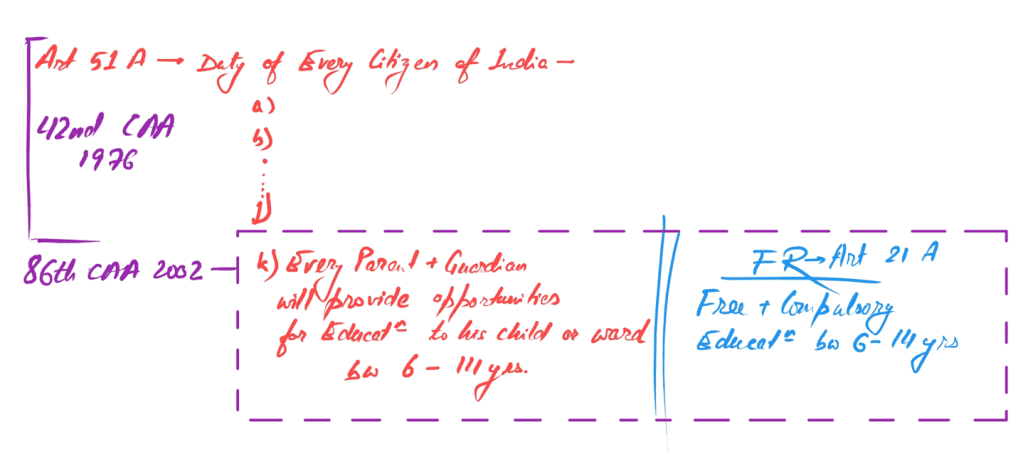
Article 51K as per 86th amendment- 2002 + added Art 21A
“It shall be the duty of every Indian who is a parent or guardian to provide opportunities for education to the child or as the case may be or ward between the age of 6 and 14 years”
 MY BOX