Paleolithic Age
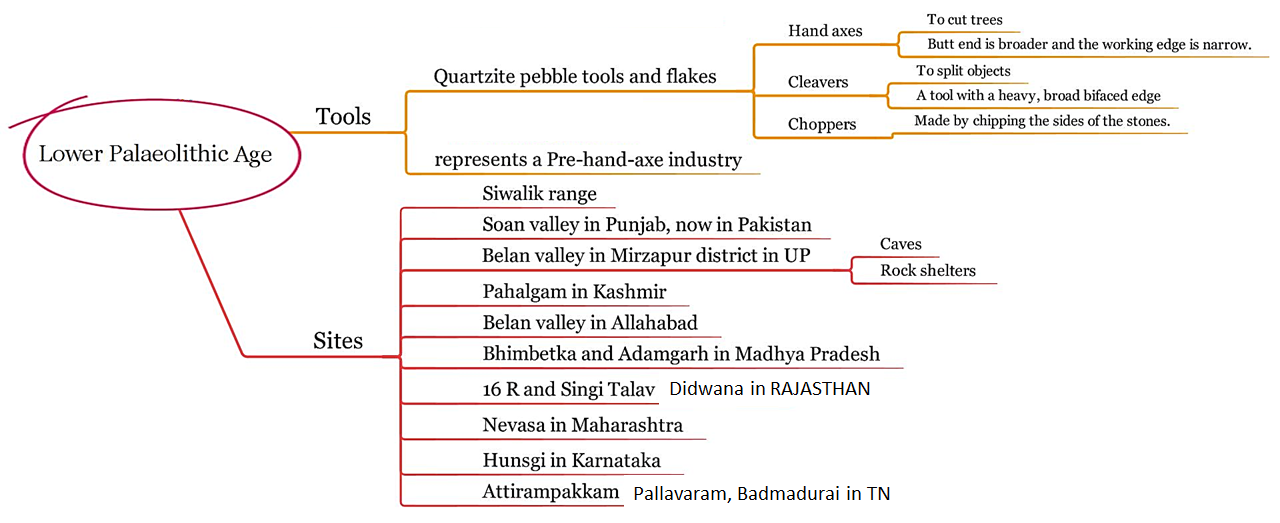
1853– Robert Bruce Foote- member of GSI- found Quartzite tools, Hand Axe in Pallavaram (TN)
1856– Le Mesurier– Arrow head in Nyarguhee (Vindhyas , Jabalpur)
1873– Prehistoric tools in Shivalik
19th century – Shivalik in Pakistan– Fossils – RAMAPITHECUS (f)+ SIVAPITHECUS (m) (12,2 millions yrs ago). Both are used as synonyms and were new genus– possible ancestor of Australopithecus.
1986– Acheulian stones were discovered in Bori, near pune , Maharashtra.
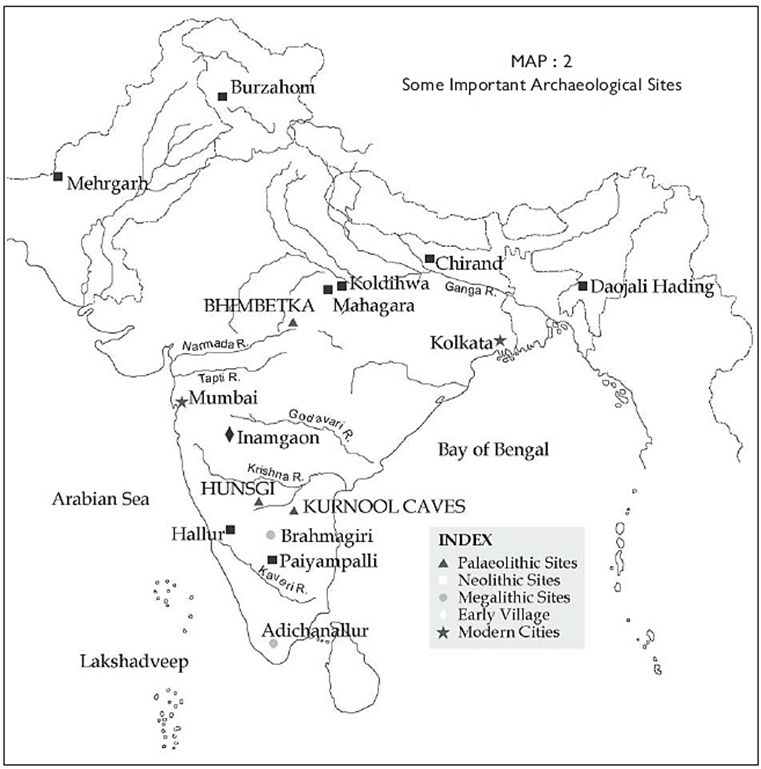
Kurnool caves – Ash found
Lower Paleo– Peistocene
Homo habilis
Homo eructus skull – Hathnora village in Sehore district, nearly 35 kilometres east of Hoshangabad in Madhya Pradesh in 1982.
Patne, Maharashtra – Ostrich egg shells are found
Hunsgi– tools made of limestone.
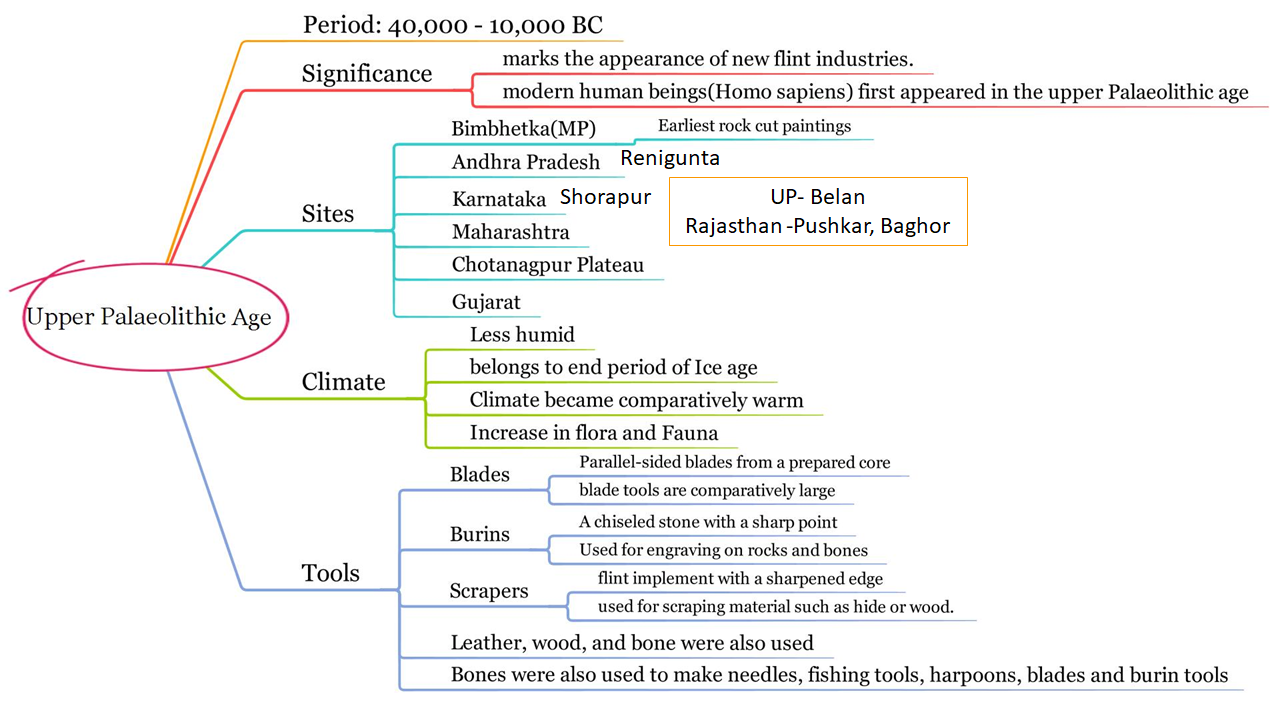
Middle PAleo- Last Pleistocene
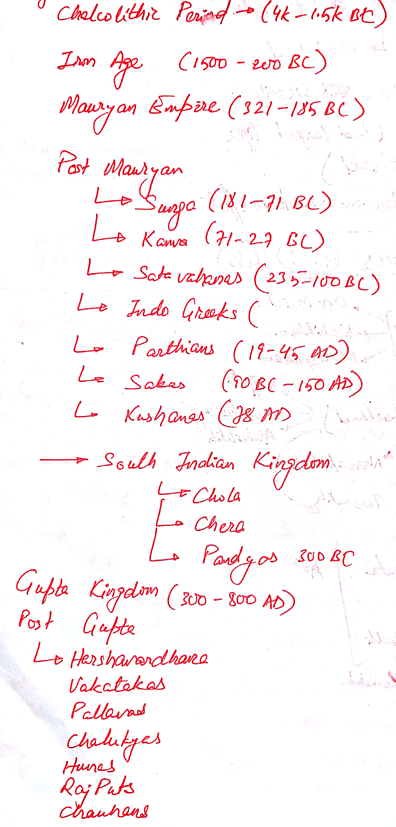
PM- NCI-MP
SK-SIP-SK
Tools
a) Axes (hand)
b) Borers
c) Choppers
d) Cleaves
e) Pebbles
f) Flakes
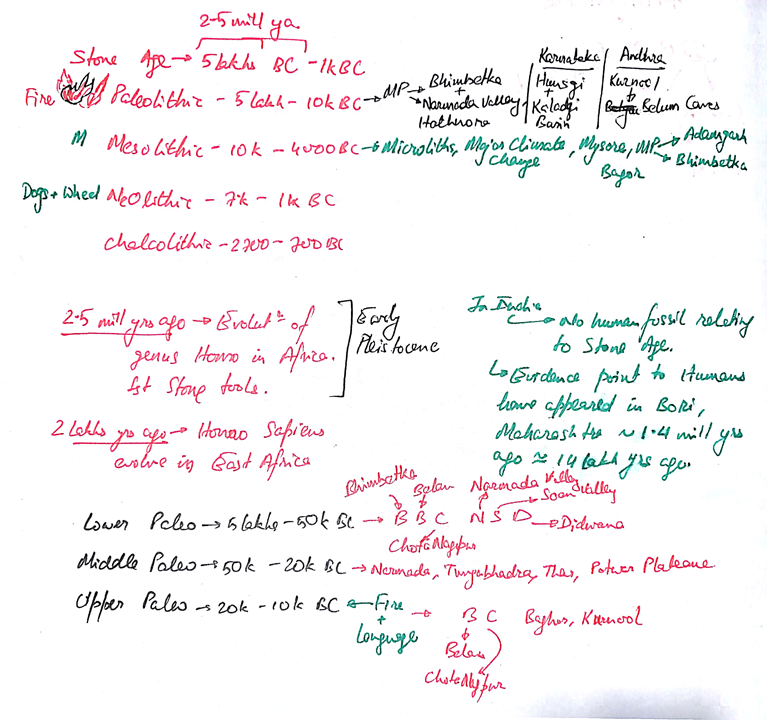
- Earliest human fossils found in Africa dates back to about 4.2 million years.
- The fossils of various periods and stages of human development have been found from many parts of the world like Africa, China, Java, Sumatra and southern Europe.
- The humans evolved over a period of these 42lakhs years and the present form reached about 50,000 years ago.
- Unfortunately, due to the climatic conditions, except the solitary find of a hominid fossil from Hathnaura in the Narmada Valley, no early human fossils have been found in India belonging to stone age.
- The regular use of tools, beginning 2.6 m.y. ago in east Africa is well attested and accompanies many earlier and later hominid fossils. In case of Indonesia several hominid remains have recently been dated between 1.8 and 1.6 m.y. In China the early stone tools are associated with human fossils dated between 1.7 and 1.9 m.y.
- The various strata of the Sivalik hills containing stone tools have been dated between 2 m.y. and 1.2 m.y.
- Early stone tools came from the archaeological site of Bori in Pune district of Maharashtra which is 1.38 m.y old. When we assess the evidence for early human settlement in India we find that it is later than that in the African region, but contemporary to the rest of the Asian countries.
Mesolithic Age
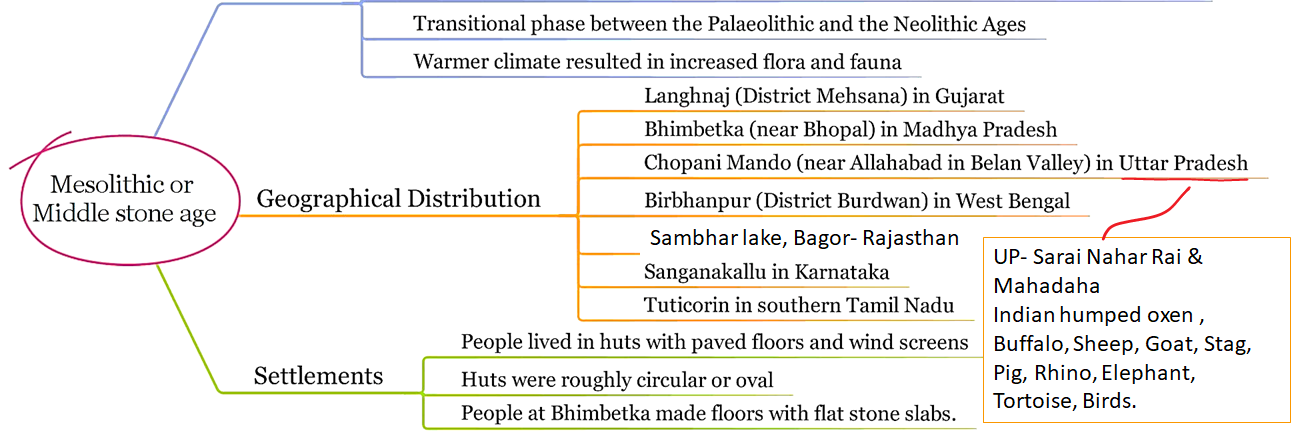
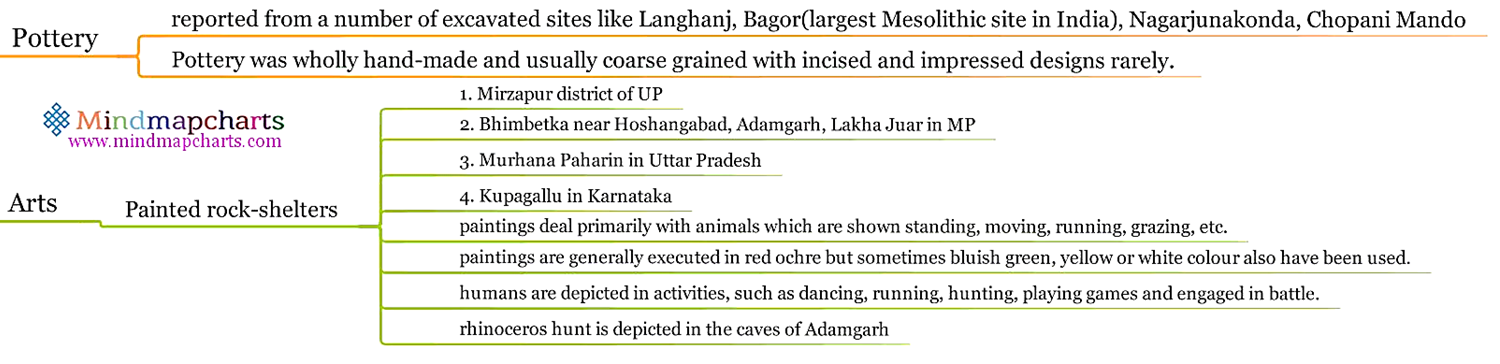
Langh Bhi Chop BirBal ki Sang Tuti
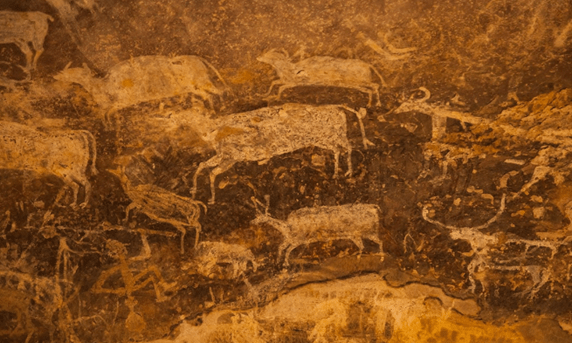
Domestication of animals in India = cattles were 1st found in Bhimbetka + Adamgarh
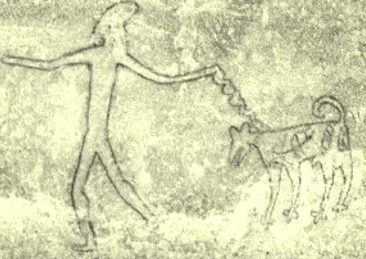
Bhimbetka painting depicting pet dog
Microliths
a) Arrow heads
b) Blades
c) Crescent
Neolithic Age
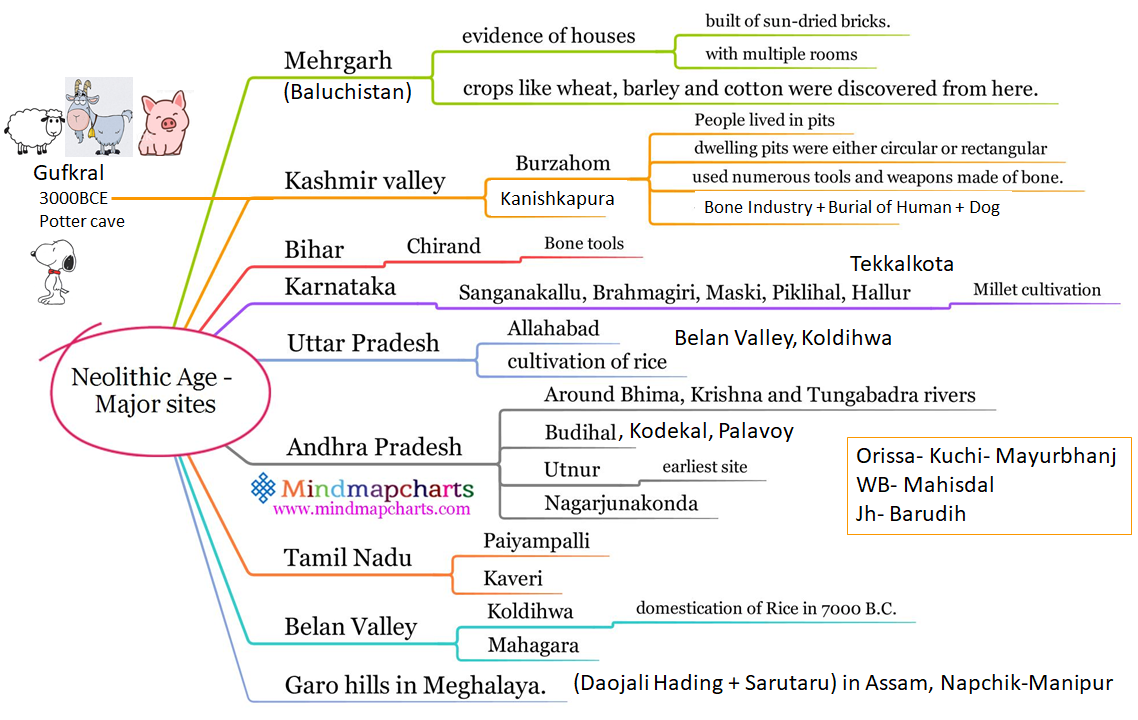
- Agriculture started therefore potteries
- 1st Rice cultivation – Belan Valley (Allahabad- 6000BC)
- Agriculture came from Persian/ Iranians— potter wheel
- Domestication of animals
- Village life
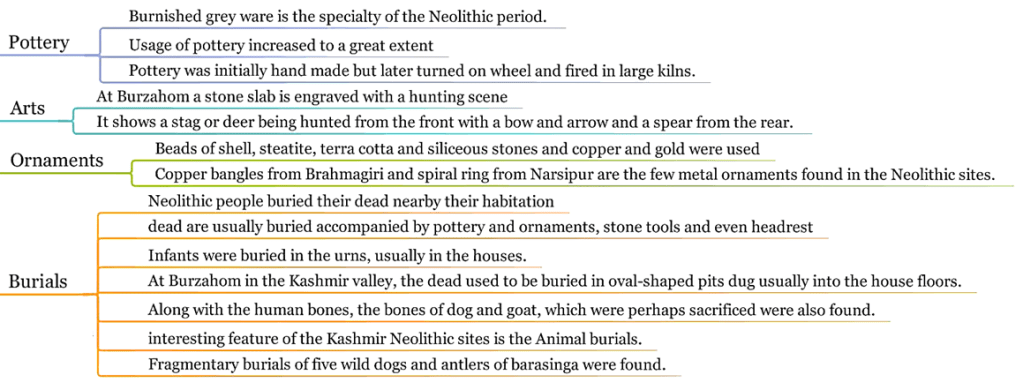
- Burial in N-S direction with belongings– shows afterlife belief
- Dog with master buried
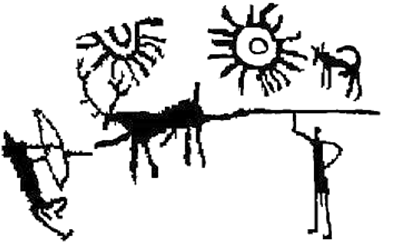
- Paintings of hunting with dogs

Tools
- Polished tools
- Antelope
- Oval shaped

 MY BOX